

The Battle of Berlin: The Final Blow to Hitler's Third Reich
The Battle of Berlin in 1945 was the final major offensive in Europe, marking the end of World War II.
Introduction:
In the spring of 1945, as the Second World War in Europe drew to a close, the once-mighty German Reich lay in ruins. The Soviet Red Army, having turned the tide of the war in the East, stood poised on the banks of the Oder River, ready to strike the final blow against Nazi Germany. Their target: Berlin, the capital and heart of Hitler's crumbling empire. The Battle of Berlin, which raged from April 16 to May 2, 1945, would be the last major offensive in Europe and the death knell for the Third Reich.
The battle was a culmination of years of bitter fighting between Germany and the Soviet Union, a titanic clash of ideologies and armies that had left millions dead and reshaped the map of Europe. For Stalin and the Soviet leadership, the capture of Berlin was not just a military objective but a matter of national pride and vengeance for the immense suffering inflicted on their country by Hitler's invasion. For the Germans, the defence of their capital was a desperate last stand, a fight to the finish in which surrender was not an option.

Soviet tanks advance through Berlin
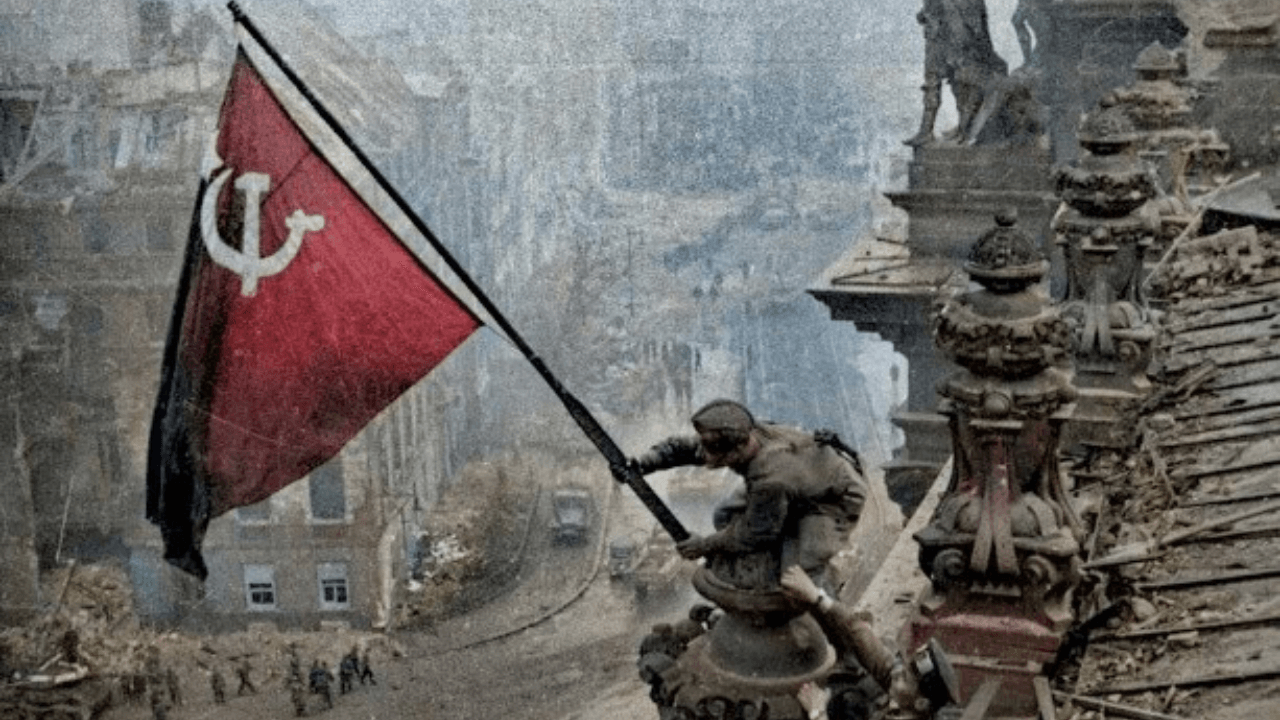
Battle of Berlin - Battlefield Tour
The Importance of Berlin:
Berlin in 1945 was not just the administrative capital of Germany but the symbolic heart of the Nazi regime. It was here that Adolf Hitler rose to power in the early 1930s, consolidating his grip on the nation and transforming Germany into a totalitarian state. The city was a showcase for the grandiose vision of the Third Reich, with wide boulevards, massive government buildings, and imposing monuments designed to project an image of strength, power, and permanence. Berlin was the nerve centre of the Nazi war machine, home to the regime's top leaders and decision-makers.
But Berlin was more than just a political capital - it was also a crucial industrial and transportation hub. The city's factories churned out a steady stream of weapons, vehicles, and other supplies to feed the voracious appetite of the German military. Berlin's extensive rail network and its position at the crossroads of Europe made it a vital link in the supply chain that sustained the Nazi war effort on multiple fronts.
As the Red Army approached Berlin in April 1945, the city took on an even greater significance. For the Soviets, capturing Berlin would be the ultimate prize, a way to avenge the staggering toll of 26 million Soviet citizens killed in the war and to assert their dominance in postwar Europe. Stalin was determined to take the city before his Western allies, advancing from the other direction. The Soviet leader knew that whoever controlled Berlin would have a major say in the future of Germany and the continent as a whole.
For Hitler and the Nazi leadership, the fall of Berlin would mean the end of their "Thousand Year Reich." The Führer had ordered the city to be defended to the last man, vowing never to leave the capital alive. He and his top lieutenants retreated to a bunker deep beneath the Reich Chancellery, directing the city's defences and clinging to increasingly unrealistic hopes of a last-minute reprieve. Hitler's propaganda minister, Joseph Goebbels, called on Berliners to fight to the death, warning that the Soviets would unleash a wave of destruction and atrocities if they took the city.
The Bleak Situation for the German Army:

The frontlines in late April 1945
As the Soviet forces prepared for their final offensive, the situation for the German Army was dire. The Wehrmacht, once the pride of the Third Reich, was a shadow of its former self. Years of continuous warfare had depleted its ranks, and the relentless Allied bombing campaigns had shattered its industrial base, making it increasingly difficult to replace lost equipment and personnel.
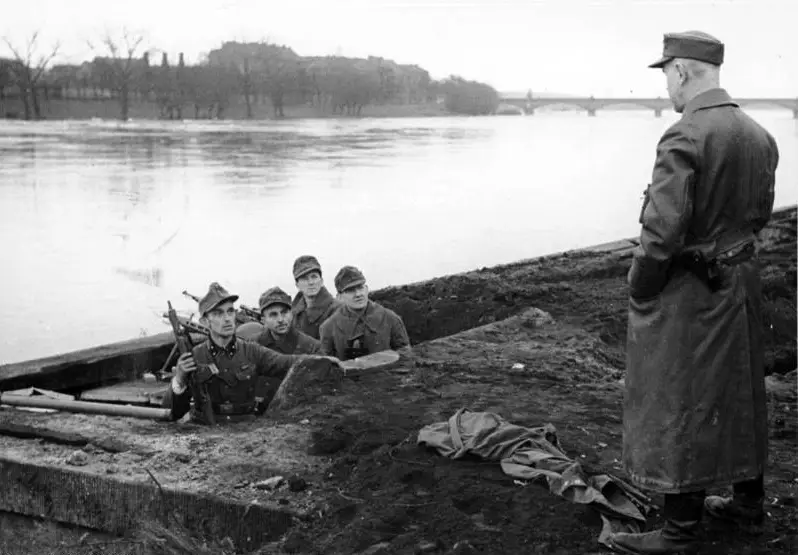
German soldiers dug in along the Oder river
The German High Command was acutely aware of the desperate situation. Resources were scarce; the troops were often young, inexperienced, or elderly men hastily conscripted from the Volkssturm, a national militia. The once-feared Panzer divisions were now few in number, and many tanks were old or in disrepair. Fuel shortages meant that even those that were operational could not be effectively deployed.
Despite these challenges, the German Army prepared to defend Berlin with a grim determination. General Helmuth Weidling, the commander of the Berlin Defense Area, organized the city's defences, knowing full well that there would be no reinforcements. The strategy was to turn Berlin into a fortress, with barricades, anti-tank obstacles, and fortified positions throughout the city. Civilians, including women and children, were pressed into service to dig trenches and build defences.
The German soldiers, many of whom were aware that they were fighting a losing battle, were motivated by a combination of fear, loyalty, and the knowledge that surrender to the Soviets could mean death or harsh captivity. Propaganda played a role as well, with Nazi officials exhorting the troops to fight to the last man to protect their homeland from the perceived barbarism of the advancing Red Army.
The German Army, under-equipped and outnumbered, faced the overwhelming might of the Soviet juggernaut. The stage was set for a brutal, no-quarter struggle that would reduce much of central Berlin to rubble. The battle for Berlin would not only determine the fate of the city but would also seal the fate of the Third Reich.

Seelow Heights Battlefield Tour
The Soviet Offensive:
The Soviet assault on Berlin codenamed "Operation Berlin," was a monumental military undertaking that involved some 2.5 million soldiers from the 1st Belorussian Front under the command of the renowned Marshal Georgy Zhukov and the 1st Ukrainian Front led by the equally formidable Marshal Ivan Konev. This massive force was supported by an awe-inspiring array of military hardware, including 6,250 tanks, 7,500 aircraft, and a staggering 41,600 artillery pieces. It was, by any measure, one of the largest and most complex military operations ever undertaken in the history of warfare.

Soviet artillery firing on German positions, 3 am April 16 1945
The offensive began on April 16 with a massive, earth-shaking bombardment of the German defences along the Oder-Neisse line. The sky lit up with the flash of thousands of guns, and the ground trembled under the weight of the explosive barrage. Zhukov's forces, the hammer of the Soviet offensive, attacked from the centre and north, while Konev's men, the anvil, hit the German lines from the south. Despite fierce and determined resistance from the outnumbered and outgunned Germans, who fought with the desperation of men who knew they were the last line of defence for their capital, the Soviets managed to break through. Slowly, inexorably, they pushed the defenders back towards the outskirts of Berlin.
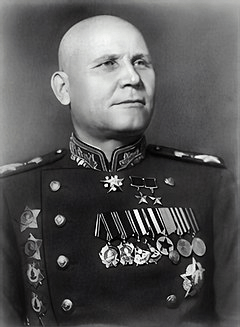
Marshal Ivan Konev
“It is we who shall take Berlin, and we will take it before the Allies.” - Six Meetings that Changed the 20th Century (2007)

Marshal Georgy Zhukov
“The longer the battle lasts the more force we'll have to use!” - A History of the Modern Age (1971)
In these opening days, one of the most critical and brutal battles was the fight for the Seelow Heights, a heavily fortified area east of Berlin that represented the last major obstacle before the city itself. Here, the Germans had constructed three formidable defensive lines bristling with trenches, anti-tank ditches, and extensive minefields. The battle raged for four long, bloody days, with the Soviets suffering heavy casualties as they threw themselves against the German defences. German guns cut down wave after wave of Soviet infantry and armour. However, still, they came on, driven by a combination of courage, desperation, and the implacable will of their commanders. Finally, on April 19, after a titanic struggle that left the ground littered with the dead and dying, the Soviets overran the last German positions on the heights, and the road to Berlin lay open.
The Battle for the City:
As the Soviet troops entered the outskirts of Berlin, they faced determined, even fanatical resistance from a hodgepodge of Wehrmacht and Waffen-SS units, Hitler Youth, and Volkssturm militia. The city had been turned into a fortress, with streets barricaded, buildings fortified, and critical intersections turned into strong points bristling with machine guns, anti-tank weapons, and panzerfaust-wielding defenders. The Soviets had to fight for every block and building in brutal, close-quarters combat, clearing out cellars and attics with grenades and flamethrowers and engaging in hand-to-hand fighting in the rubble-strewn streets.
One of the most iconic and symbolic moments of the battle came on April 30, when Soviet troops stormed the Reichstag, the historic parliament building that had been the seat of German power. The fighting was fierce and unrelenting, with the Soviets having to clear the building room by room, floor by floor, in a deadly game of cat and mouse with the die-hard German defenders. Snipers, machine guns, and booby traps took a heavy toll on the attackers, but they pressed on with grim determination. Finally, as the sun began to set on the evening of May 1, a group of Soviet soldiers managed to fight their way to the roof of the shattered building and raise the Soviet flag over the Reichstag, a red banner fluttering in the smoke-filled air. It was a moment of immense symbolic significance, signalling to the world that the heart of Nazi Germany had fallen and that the end of the war in Europe was at hand.

Soviet T-34 engaged in battle along a Berlin street

Staged Soviet photograph showing a sniper position
Meanwhile, in his dank, claustrophobic bunker deep beneath the Reich Chancellery, Adolf Hitler, the once all-powerful Führer of the Third Reich, lived out his final, desperate days. As the Soviet troops drew ever closer, the sounds of battle echoing through the concrete walls, Hitler, his mind and body ravaged by disease and despair, prepared for the end. In a hastily arranged ceremony, he married his longtime mistress Eva Braun, and then, on April 30, as Soviet soldiers fought their way into the Chancellery garden above, Hitler and Braun committed suicide, the Führer shooting himself in the head while his bride took poison. Their bodies were hastily cremated in a makeshift pyre in the Chancellery garden, a grim and ignominious end to the man who had once dreamed of conquering the world and establishing a thousand-year Reich.
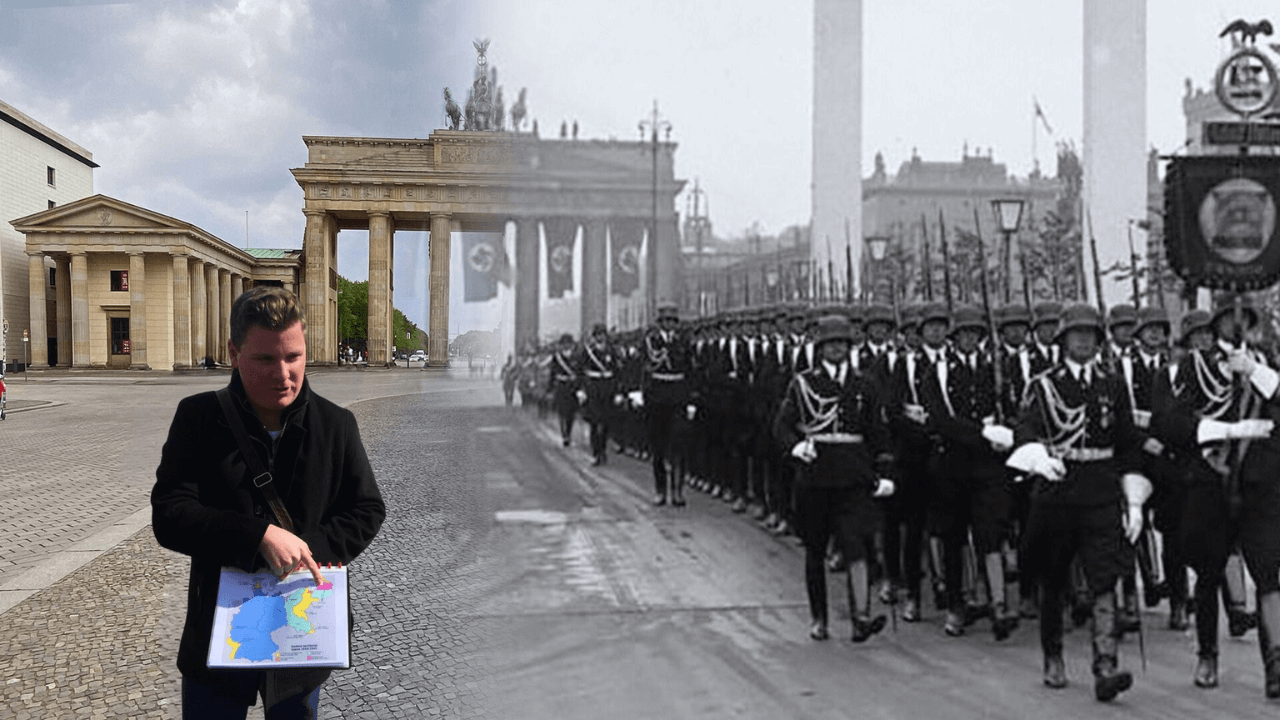
Hitler’s Berlin - the rise and fall
Aftermath and Legacy:
The Battle of Berlin, which raged from April 16 to May 2, 1945, ended with the unconditional surrender of the city's remaining defenders. The once-proud capital of the Third Reich lay in ruins, its streets littered with debris and the bodies of the fallen. The human cost of this final, decisive battle had been staggering: over 80,000 Soviet soldiers were killed, and more than 250,000 were wounded in the fierce fighting. German losses, both military and civilian, numbered in the tens of thousands. The civilian population of Berlin also suffered terribly, with countless thousands killed in the crossfire or by suicide as the Red Army closed in.

Soviet soldiers celebrate the fall of Berlin

White flags flow from windows - symbolising total surrender
The fall of Berlin marked the effective end of the Third Reich. With Hitler dead by his own hand in his underground bunker and the country occupied by Allied forces, the German High Command had no choice but to agree to unconditional surrender. The final capitulation came on May 8, 1945, bringing an end to the war in Europe and the nightmare of Nazi tyranny that had plagued the continent for six long years.
The battle also had far-reaching political consequences that would shape history for decades to come. The Soviet capture of Berlin, ahead of their Western allies, gave Stalin a significant bargaining chip in the following postwar negotiations. The division of Germany and Berlin into Soviet and Western zones of occupation set the stage for the Cold War, which would dominate global politics for the next four decades. The Iron Curtain that divided Europe into communist and capitalist spheres was born in the ruins of Berlin.
Today, the Battle of Berlin stands as a warning to the immense destructive power of modern warfare and the depths of human suffering it can cause. The scale of the fighting, the devastation wrought on the city, and the sheer loss of life on all sides serve as a grim reminder of the horrors of war. At the same time, the battle also serves as a tribute to the courage and sacrifice of those who fought to end the tyranny of Nazi Germany and bring peace back to Europe. The soldiers of the Red Army, who bore the brunt of the fighting and suffered the heaviest losses, showed incredible bravery and determination in the face of fierce resistance from a fanatical enemy.

Allied victory parade July 1945
The scars of the battle can still be seen in the streets and buildings of Berlin, a city that has risen from the ashes to become a symbol of resilience and renewal. The bullet holes and shrapnel marks on the facades of old buildings, the memorials to the fallen, and the museums dedicated to the history of the war all serve as reminders of the city's painful past. But Berlin has also become a vibrant, multicultural metropolis, a hub of art, culture, and innovation that looks to the future with hope and optimism.
In the end, the legacy of the Battle of Berlin is a complex one, marked by both tragedy and triumph. It represents the end of one of the darkest chapters in human history but also the beginning of a new era of peace, democracy, and international cooperation. As we reflect on the events of those fateful days in April and May 1945, we must remember the sacrifices made by those who fought and dedicate ourselves to the cause of building a world free from the scourge of war.
Conclusion:

Clearing the ravished streets of Berlin
The Battle of Berlin was the final cataclysmic act in the European theatre of World War II. It pitted the full might of the Soviet war machine against the fanatical but crumbling defences of the Third Reich in a struggle for the very heart of Germany. The battle left the city in ruins and cost tens of thousands of lives, but it also brought an end to the Nazi regime and its dreams of conquest and racial supremacy. Today, as we mark the 75th anniversary of this historic event, we remember the courage and sacrifice of those who fought and died in the battle, and we renew our commitment to building a world of peace and understanding.

The article was written by Matthew Menneke.
Matt is the founder and guide of 'On the Front Tours', offering military history tours in Berlin. Born in Melbourne, Australia, Matt's passion for history led him to serve in the Australian Army Reserve for eight years. With a degree in International Politics and a successful sales career, he discovered his love for guiding while working as a tour guide in Australia. Since moving to Berlin in 2015, Matt has combined his enthusiasm for history and guiding by creating immersive tours that bring the past to life for his guests.
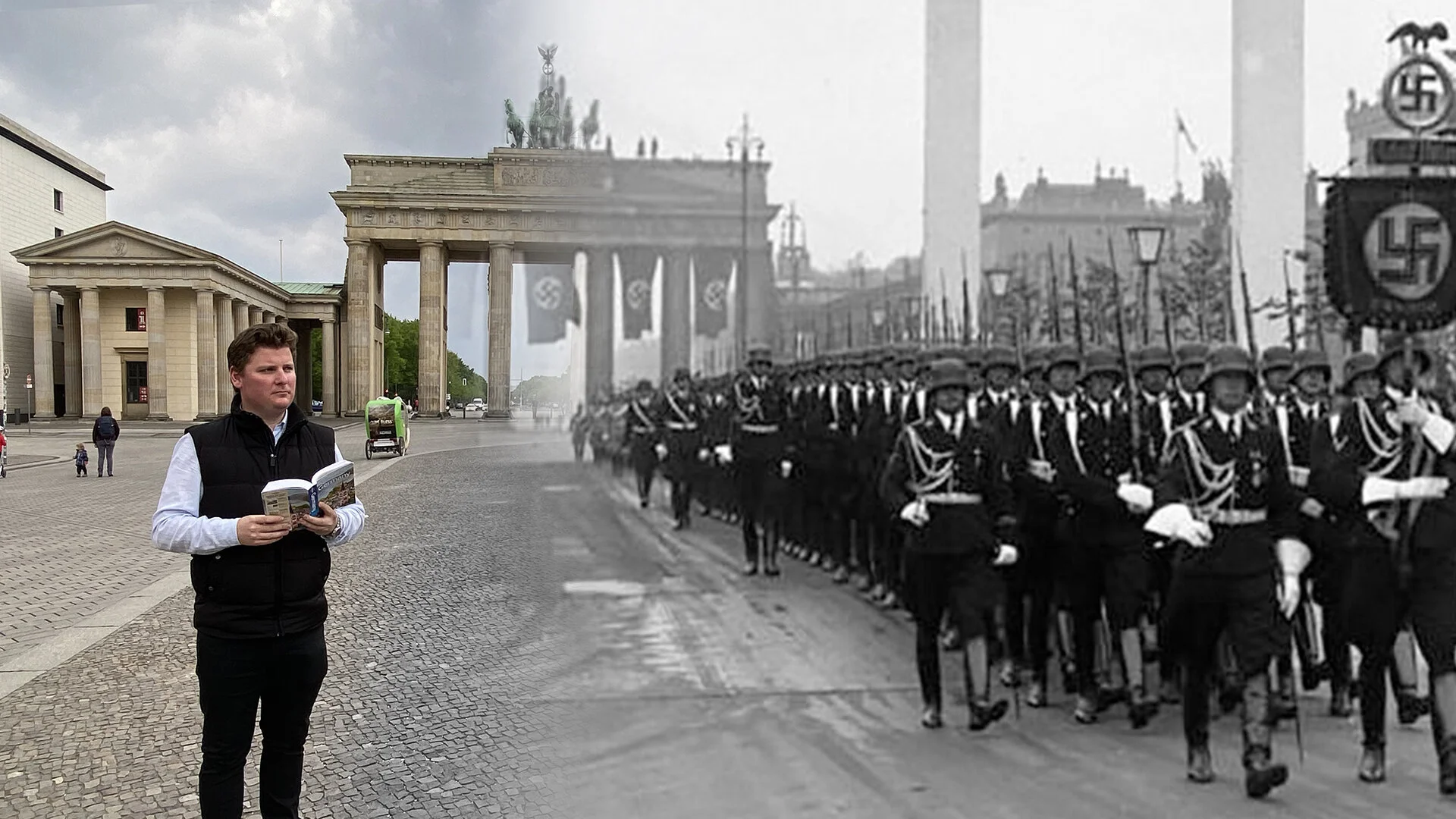
Reichstag: Among Top 10 WWII Sites to Visit in Berlin — On the Front Tours
Top 10 WWII Sites in Berlin: History, Memorials & Must-See Locations
Welcome to the On the Front blog, where we discuss all things WW2.
In this blog, I provide a breakdown of my top 10 World War II sites that everyone should see when visiting Berlin. Now I know what you are thinking: there is a lot of history in Berlin, and you are right, so for this list I based my decision on 3 main criteria:
First: These sites are significant for both History buffs and those just wanting to learn more about the Second World War
Second: These sites tell the story of the Nazi Party's rise and fall
Third: They are all within walking distance of each other
Introduction: Berlin at the Crossroads of History
Berlin stands as a city shaped by the tides of history, its streets and buildings bearing witness to both moments of brilliance and times of darkness. As the capital of Germany, Berlin played a pivotal role during the rise of the Nazi regime and throughout World War II. The city’s legacy is marked by cultural achievements and intellectual vibrancy but also by the scars of war, destruction, and oppression. Among the most notorious episodes in Berlin’s history are the Nazi book burnings of 1933, when university students and professors gathered to destroy books written by Jewish authors and other works labelled as “un-German”. These book burnings were more than just the destruction of written materials—they were a symbolic act of political and cultural opposition, signalling the start of a new era of state censorship in Nazi Germany. Today, Berlin’s history serves as a powerful reminder of the dangers of intolerance and the importance of safeguarding freedom of expression
The Reichstag
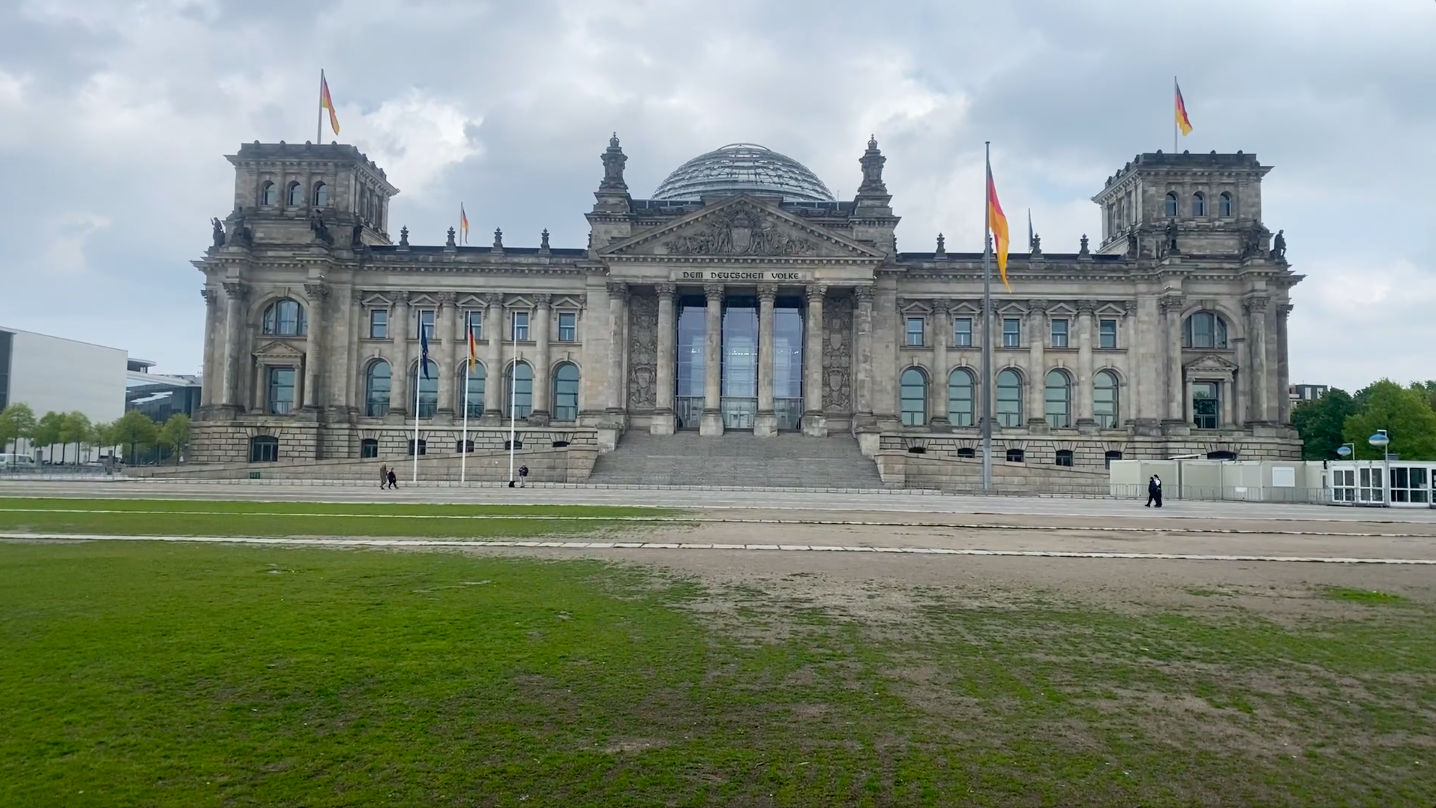
Commissioned in 1871 by Otto von Bismarck, the Reichstag was a symbol of the political unification of Germany, uniting the German-speaking states, with the exception of Austria, to form the German Empire.
The Reichstag, though, was not important to the Nazis, as it was left as a ruin after being destroyed by fire on the 27th of February 1933. Although the building itself was not important, the Nazis were able to capitalise on the fire and bring about sweeping reforms to solidify their hold on power. The Nazis used the Reichstag fire as a pretext to suppress political opposition, targeting dissenters and consolidating their control.
Fast forward 12 years, and you have the Soviets knocking on the door of Berlin. Seen symbolically as the crowning jewel for the Soviets, the Red Army fought bitterly to take the building, capturing the site on April 30th, 1945. The scars from the battle can still be seen in the façade today, although great effort has been made to patch the damage.
After the war, the Reichstag was left as a ruin until the collapse of the Soviet Union and Germany’s reunification in 1991. Extensive renovation was needed before the site officially reopened again as the German Parliament in 1999, once again reunifying the country politically.
The Brandenburg Gate

Undoubtedly, the national symbol for Germany, the Brandenburg Gate, was constructed in 1791. The Brandenburg Gate in many ways became the focal point of much of Nazi propaganda and celebrations, perhaps none more spectacular than Hitler's 50th birthday celebration. The streets were lined with National Socialist flags and pillars adorned with the swastika and the Nazi eagle.
The Brandenburg Gate today, however, represents a very different message. One of unity and freedom, not just for Germany but I think also for wider Europe and even the world. The symbolism has evolved over time, shifting from a political symbol to a symbol of unity following the fall of the Berlin Wall.
New Guardhouse

Constructed in 1813 in commemoration of the War of Liberation against Napoleon. In 1931, the New Guardhouse became a monument to the fallen German soldiers of the First World War under President Hindenburg and was used extensively by the Nazis for parades and to highlight German victimisation after the war under the unpopular Treaty of Versailles. Regular changing of the guard ceremonies would also take place, attracting large crowds.
After the Second World War, the monument was converted to a memorial to the Victims of Fascism and Militarism under the German Democratic Republic (GDR). The remains of an unknown soldier and concentration camp victim were interred under an eternal flame, surrounded by soil from taken battlefields and concentration camps.
Rededicated in 1993, the remains still lie in the monument under the statue of the “Mother”. The Käthe Kollwitz sculpture in the centre of the monument depicts a “mother” embracing her dead son, helpless and turned to stone in silent pain.
The monument is a moving sight in the middle of this busy city and stands as Germany's central memorial for the victims of war and tyranny.
The burning of the books

On 10 May 1933, German students and student leaders, particularly from university towns across Germany, gathered at Bebelplatz, adjacent to the historic and prestigious Humboldt University. These student leaders, acting in a nationwide action “against the un-German spirit,” organised the book burnings, not as a direct order from the Nazi Party, but through their own initiative and the involvement of local chapters. Students burned upwards of 25,000 volumes of books that were deemed “un-German.” The book burnings took place in many university towns, notably Berlin, with local chapters sometimes choosing different dates for their events based on local chapter preference—some aligning with the traditional date of the summer solstice for such bonfire celebrations.
During these events, students threw books onto the bonfires as part of scripted rituals, often performing the Nazi salute and following the lead of high Nazi officials present at the ceremonies. Radio broadcast time was carefully scheduled, and radio broadcasts brought the speeches, propaganda songs, and ceremonial chants to countless German listeners across the country. The books that student leaders burned included works by Jewish authors, socialists, critics of fascism, and other writers, such as Albert Einstein, Sigmund Freud, and Ernest Hemingway, among many others. This deliberate destruction of literature represents an attempt to erase foreign influences, Jewish intellectualism, and other forms of dissent from German culture. The phrase “wo man Bücher verbrennt” (“where they burn books”) became a chilling symbol of this cultural purge, echoing the warning in Heine’s famous quote. The book burnings were seen as an ominous sign of the regime’s broader intent to suppress intellectual freedom, using the public context of these events to send a message of cultural purification and the creation of the “future German man” moulded by Nazi ideals. The campaign also targeted the German language and national language, aiming to purify them from perceived corruption and non-Aryan elements. The evil spirit of past ideas and philosophies was invoked as justification for this literary purge, as the regime sought to overwrite Germany’s intellectual heritage.
The monument today depicts a sunken library showing what is missing with the ominous quote from Heinrich Heine:
“That was but a prelude; where they burn books, they will ultimately burn people as well.” - Heinrich Heine
The Nazi book burnings were not isolated incidents but rather a key part of the Nazi regime’s broader campaign to reshape German society according to their ideology. In the years leading up to World War II, the Nazis sought to eliminate dissent and enforce traditional German values by targeting any ideas or works they considered “un-German”. This literary purge was accompanied by widespread newspaper coverage and orchestrated radio broadcasts, which brought the Nazi message into countless German homes. The regime’s efforts extended far beyond burning books—they also persecuted Jewish authors, intellectuals, and anyone whose views did not align with Nazi ideology, destroying other written materials and silencing opposition. Institutions like the US Holocaust Memorial Museum offer further information on the significance of these events, helping us understand how the Nazi book burnings fit into the larger context of cultural control and propaganda in Germany during this era. The campaign to synchronise German culture was a crucial step in the Nazis’ path to power, setting the stage for the horrors of World War II.
Soviet memorial - Tiergarten

The overwhelming early success of the German Wehrmacht, aided by the use of Blitzkrieg tactics, enabled the German Army to conquer all of Western mainland Europe in just two years. Overconfident, Hitler now turns his attention to the east to defeat what he saw as the real enemy of National Socialism, the Soviet Union. Operation Barbarossa, launched on June 22nd, 1941, was the largest land invasion the world had ever seen. Expecting the Soviet Army to collapse, a quick victory was anticipated by Christmas.
The invasion would ultimately be their undoing. We cannot underestimate the brutality of the fighting in Eastern Europe, with Stalingrad serving as the turning point for the Soviets in 1942.
Three years later, on April 20th, 1945, the Soviet Red Army reached the outer city limits. The ensuing battle would be one of the bloodiest during the war, resulting in over 80,000 Soviets killed, 2,000 of whom are buried in the grounds. The Soviets quickly erected the memorial following Germany's surrender, using recycled material from Hitler's Reich Chancellery and the surrounding political buildings. Battle scars can still be seen in the moment from the recycled stone used in the construction.
Built in the British sector of Berlin, the move was initially welcomed until the construction of the Berlin Wall in 1961, after which it quickly became seen as a sign of communist provocation. Soviet Honour Guards were used to protect the monument from vandalism, but as tensions rose, the British government was forced to intervene and station British soldiers here as well to protect the monument from protestors.
Memorial to the murdered Jews of Europe
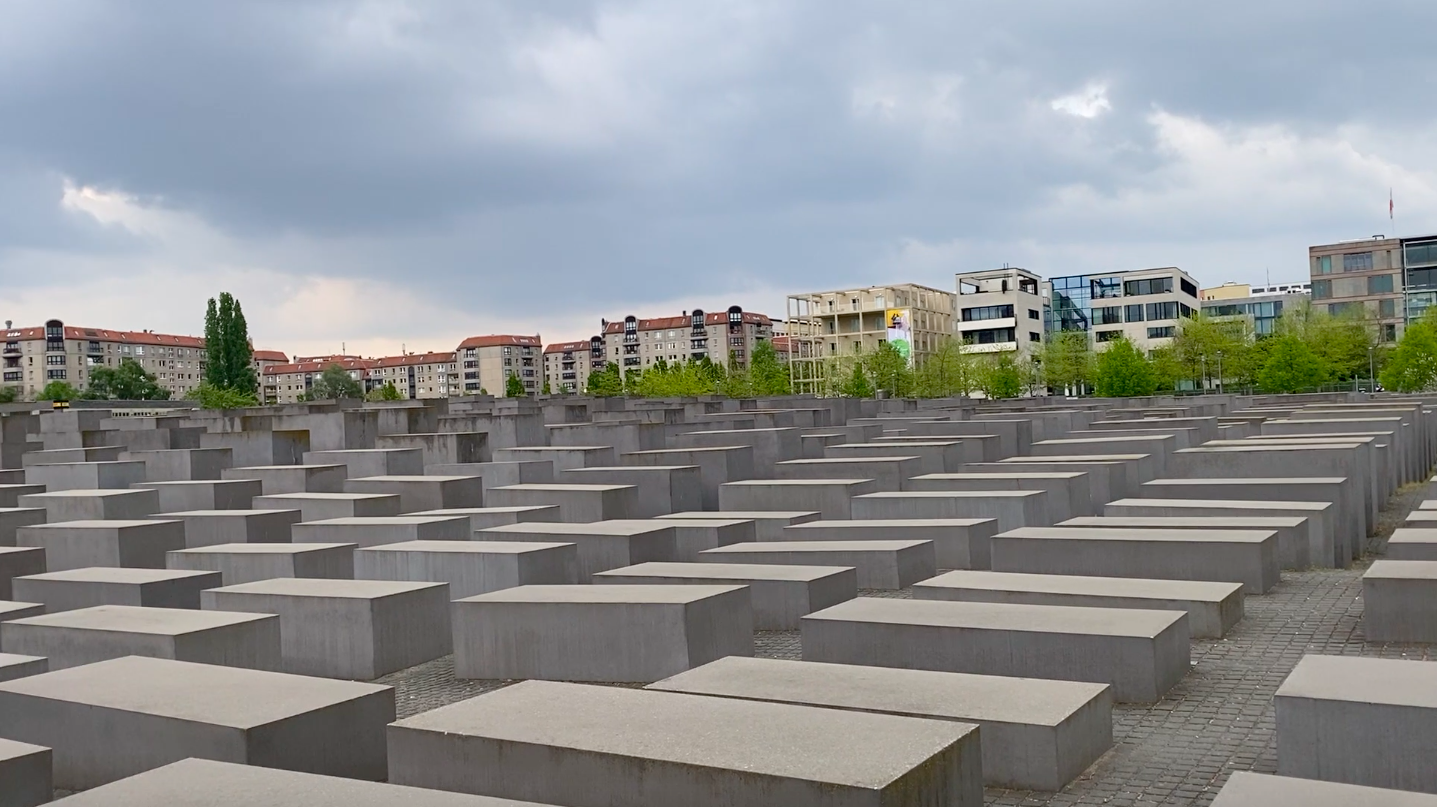
Located in the heart of Berlin, the memorial serves as a striking place of remembrance. Designed by New York architect Peter Eisenmann in 2005, there is no official explanation, making the memorial unique.
Open on all four sides, the space features 2,711 concrete blocks of varying sizes. The memorial slopes inward on uneven ground in an almost wave-like fashion, giving visitors a feeling of instability or uncertainty.
What I think makes this monument so special is that, as no official explanation has been provided, it is up to the visitor to develop their own understanding through interaction with the space. This, in my opinion, creates a much longer-lasting impression on the visitor. Located in close proximity are also the memorials to the murdered homosexuals and the Roma and Sinti, two further groups persecuted by the Nazis.
The Führerbunker / Hitler’s Bunker
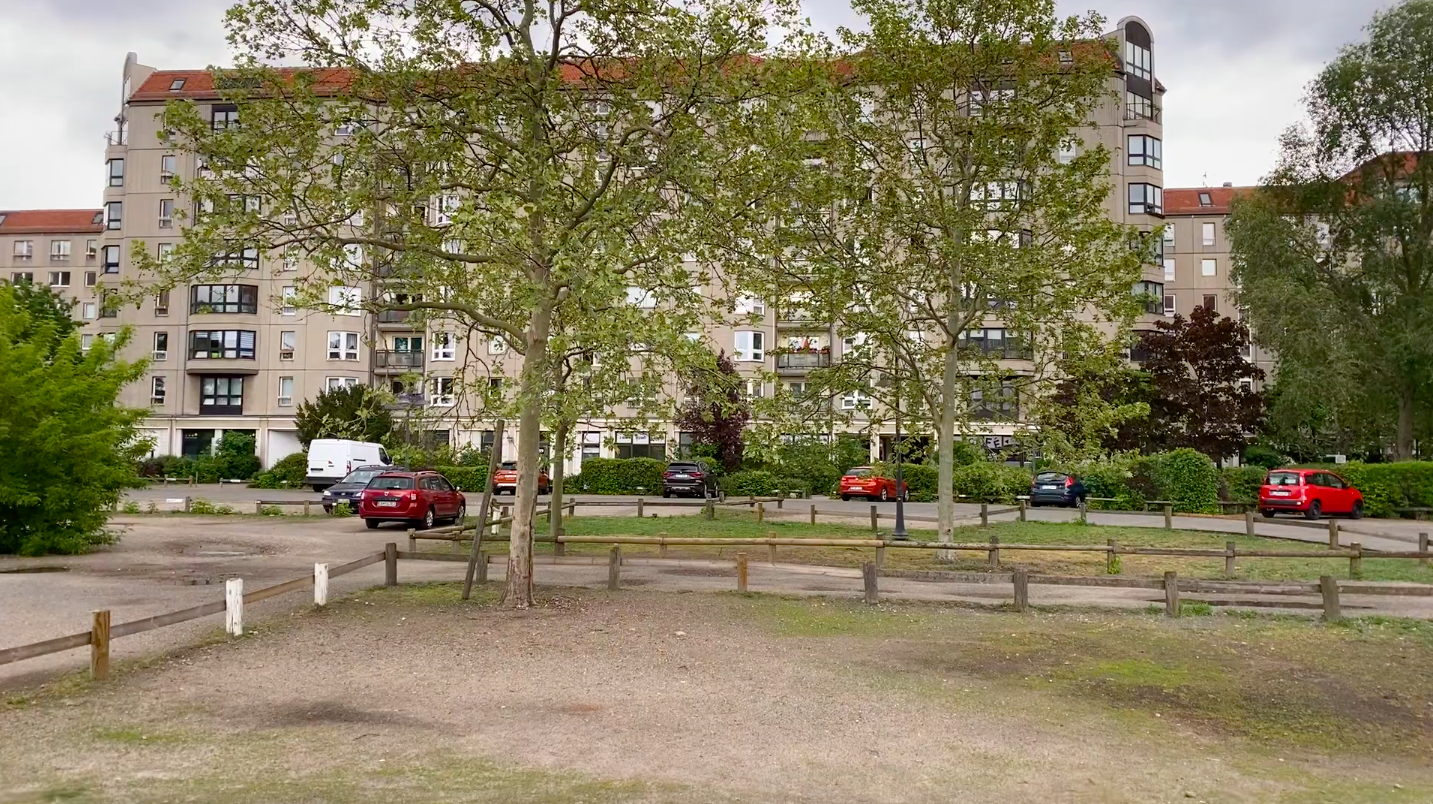
Located underneath what was the Reich Chancellery, Hitler's main office, was the Führerbunker. Construction first began in 1936, with an added phase of construction being completed in 1944.
Hitler moved into the bunker complex on the 16th of January 1945, along with his senior staff. Seldom leaving the safety of the bunker, he expected to attend military conferences in the undamaged sections of the Reich Chancellery or to walk his dog Blondi in the gardens. Hitler made his last trip to the surface on his 56th birthday, April 20, 1945, where he awarded the Iron Cross to boy soldiers fighting in the Hitler Youth.
In the days that followed, the situation in the bunker became desperate, with Hitler's ramblings of wonder weapons and moving fictitious army units with dreams of launching counterattacks to win the war becoming more and more delusional.
As the Soviet Army drew closer, Hitler accepted his time was up and, as an acknowledgement of her loyalty, would marry his long-time mistress, Eva Braun, in a civil ceremony on April 29th. Early the next morning, on the 30th of April, both Hitler and Eva would commit suicide. Hitler was adamant he did not want their bodies discovered out of fear they would be paraded through the streets and tasked his remaining loyal staff to have his and Eva's bodies incinerated. According to survivor testimony, the bodies wrapped in blankets were placed in a bomb crater and subsequently cremated—Hitler's remains have never been discovered.
Ministry for Aviation

At the time of its completion in 1936, in time for the Berlin Olympic Games, the Ministry for Aviation was the largest office building in Europe. Designed by architect Ernst Sagebiel, the building is the typical expression of National Socialist intimidation architecture, as its size and grandeur dominate the landscape.
The ministry, under the command of Hermann Goering, had a sole purpose: to support the Luftwaffe (the German Air Force) with aircraft and to design and develop new aviation technologies. The Luftwaffe was a key component of the German military and instrumental in the early success of the German Wehrmacht during World War II. Consequently, high-profile military parades took place in the streets. The ministry collapsed in 1945 due to severe shortages of fuel and material in the late stages of the war.
The building survived the war in remarkably good condition, suffering only minor damage. After the war, the building would serve as the headquarters of the Council of Ministers of the East German Government. Currently, it serves as the German Tax Office.
The Topography of Terror

A site of remembrance today, the Topography of Terror was the location of the SS headquarters under the command of Heinrich Himmler. The building complex housed the SS central command, the Gestapo, and the SS security service. The SS was the primary instrument of terror used by the Nazis to persecute their victims. The site consisted of several buildings, most notably the first-class Prinz Albrecht Hotel, which was commandeered by the SS in 1934. Combined, this location became a ‘house prison' to interrogate, torture, and execute prisoners.
In total, the Gestapo arrested more than 15,000 opponents to the Nazi regime. Who were such opponents? Anyone who dared speak against the Nazi Party: politicians, students, and protestors. Including those who neighbours and friends turned in for simply speaking ill of the Nazi party at home or at social engagements.
All that remains of the site today is the basement where prisoners were interrogated and tortured before being sent to concentration camps. A section of the Berlin Wall above is also managed by the exhibition and was not destroyed during reunification. These two sites combined serve as a warning to the world of what can happen if power is left unchecked. The ruins below represent the consequences of the Nazi Party and top the failures of Soviet communism.
Also on the site is the Topography of Terror exhibition. A fantastic museum that is free to visit, and if you're anything like me and enjoy reading everything, it will take you 3-4 hours to get through.
Anhalter Bahnhof
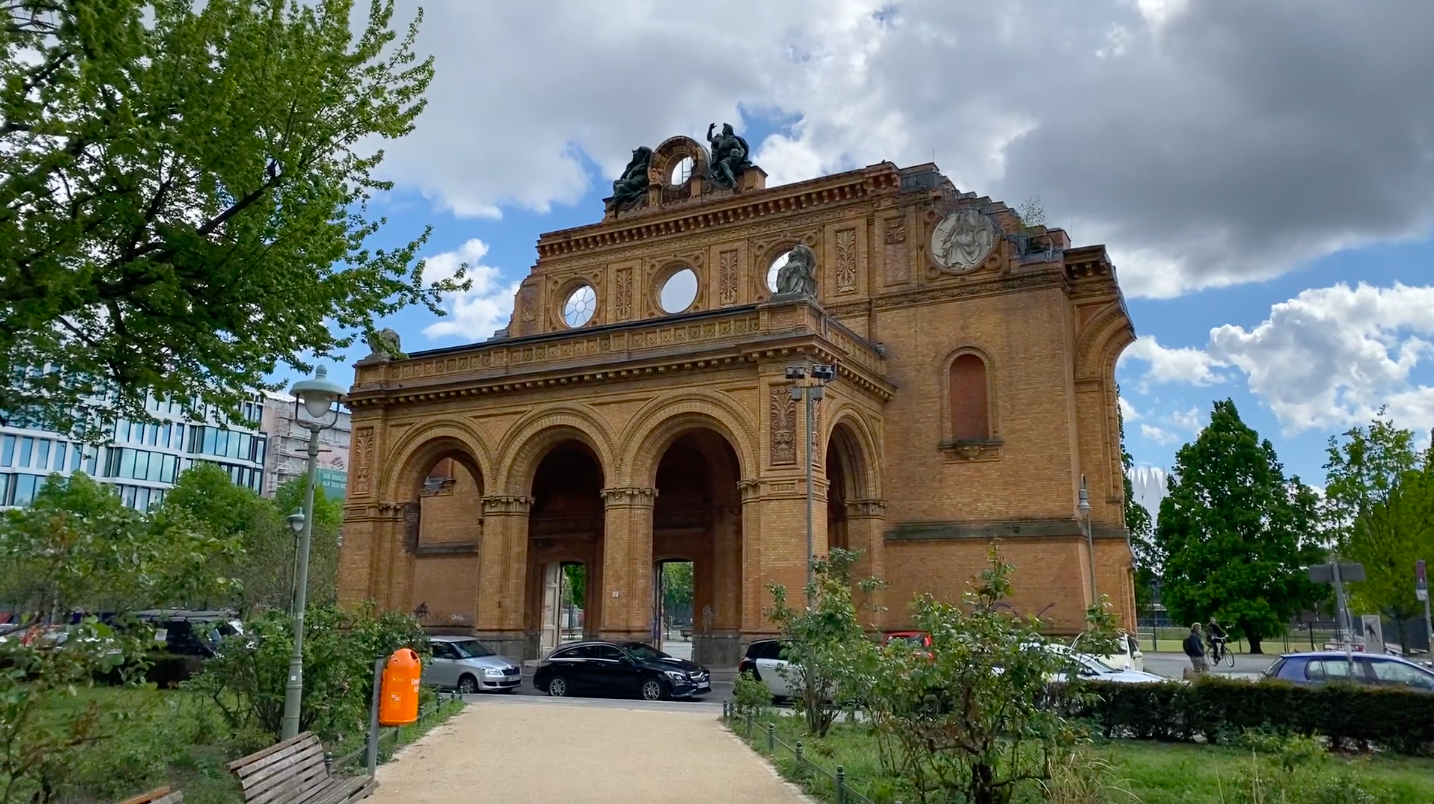
A relatively hidden site, Anhalter Bahnhof is one of the best places to get up close to the ruins of Hitler's Third Reich. Constructed in 1841, Anhalter Bahnhof was Berlin's largest and most opulent train station. With 44,000 passengers passing through the station each day. Badly damaged by Allied bombings, we have been left with the front façade of the station today. This fragment of Anhalter Bahnhof stands as a memorial to the Jewish community in Berlin, as Anhalter Bahnhof was 1 of 3 stations used in Berlin to deport some 55,000 Jews from the city.
In total, 9,500 Jews passed through the doors here in small groups of 50–100. Loaded onto specially marked passenger carriages, so as not to arouse suspicion. They were then transported to Theresienstadt in Nazi-occupied Czechoslovakia and from there to concentration camps.
The modern Anhalter Bahnhof exists today as part of an underground section of the S-Bahn, Berlin's train system. If you follow my top ten list here, it is a great place to end, as the train connection here can take you directly to central Berlin.
The Human Cost: Impact of the War on Berliners
For the people of Berlin, the Nazi regime’s policies—including the infamous book burnings—ushered in a period of fear, repression, and unimaginable loss. Jewish authors, intellectuals, and countless others found themselves targeted, their works destroyed, and their lives upended. The trauma of these events rippled through the city, as tens of thousands were forced to flee, imprisoned, or ultimately murdered. The book burnings were a chilling prelude to the violence that would follow, marking the beginning of a campaign that would devastate Berlin’s vibrant cultural life and lead to the deaths of so many. Today, the city honours the memory of the murdered Jews and all those who suffered under the Nazi regime through powerful memorials and museums. The Memorial to the Murdered Jews of Europe stands in the heart of Berlin as a stark reminder of the human cost of intolerance and the enduring need to remember the victims of the Holocaust.
Preserving Memory: How Berlin Honours Its WWII Legacy
Today, Berlin is deeply committed to confronting its past and ensuring that the lessons of history are not forgotten. The city is home to a wealth of museums, memorials, and historical sites, such as the Holocaust Memorial, the German History Museum, and the Berlin Wall Memorial, each offering insight into the city’s complex journey through the twentieth century. Beyond these physical spaces, Berlin invests in educational programs, cultural events, and commissioned articles that encourage reflection and dialogue about its history. In our digital age, preserving memory has become even more vital, as new generations access history through both traditional and digital means. The city’s dedication to remembrance is a testament to the importance of promoting tolerance and human rights. The words of Heinrich Heine—“Where one burns books, one will soon burn people”—echo through Berlin’s memorials, serving as a powerful warning against the dangers of censorship, oppression, and forgetting the past.
Conclusion
So that is my top 10 WW2 sites in Berlin. Please let me know your thoughts in the comments below if you agree with my list or if there are any other sites you think I should have included.
If you are interested in learning how to access these sites, please download the printable reader below.
Thank you for reading, and I'll see you next time, On the Front.
This article was written by Matthew Menneke.
Matt is the founder and guide of 'On the Front Tours', offering military history tours in Berlin. Born in Melbourne, Australia, Matt's passion for history led him to serve in the Australian Army Reserve for eight years. With a degree in International Politics and a successful sales career, he discovered his love for guiding while working as a tour guide in Australia. Since moving to Berlin in 2015, Matt has combined his enthusiasm for history and guiding by creating immersive tours that bring the past to life for his guests.

Humboldthain Flak Tower: A Giant Concrete Bunker of World War II
Updated: 25 June, 2025
When you think of Berlin’s Second World War history, images of bombed-out buildings and a divided city probably come to mind. But there’s another, often overlooked chapter of the city’s wartime story that still towers over the landscape today — literally. Rising from Berlin’s parks and streets like concrete giants, the massive structures known as Flak Towers cast long shadows over both the city’s past and present. The Berlin Flak Tower, in particular, stands as a powerful reminder of the city’s strategic importance and the immense efforts made to defend it during the war.
These weren’t just any defensive structures. Built in response to the escalating threat of Allied air raids, and in a desperate race against time to protect Nazi Germany’s capital from bombing, Berlin’s Flak Towers represent some of the most impressive — and intimidating — examples of wartime architecture you’ll find anywhere in Europe. As Berlin was a key target for Allied bombers, these towers played a crucial role in the city’s defence strategy.

See the Humbolthain Flak Tower
In this in-depth exploration of Berlin’s Flak Towers, we’ll delve into everything from their frenzied construction during the Third Reich to their fascinating afterlife as climbing walls, viewpoints, and historical landmarks. You’ll discover how these 55-meter (180-foot) concrete giants served as both fearsome anti-aircraft platforms, capable of firing 8,000 rounds per minute, and life-saving shelters for thousands of Berlin civilians.
The Humboldthain Flak Tower and its counterparts weren’t just defensive structures. They were self-contained fortresses, complete with hospitals, food storage, and even luxury amenities for high-ranking Nazi officials. Designed to withstand direct hits from artillery and bombers, these towers were built to last, and as you’ll see, they certainly have.
We’ll take you inside the architectural marvel that allowed these structures to be completed in as little as six months — a testament to both wartime urgency and remarkable engineering skill, regardless of their dark purpose.
You’ll also get a virtual tour of the Berlin Flak Towers that remain today, including the famous Humboldthain Tower, which you can still climb for spectacular views over the city. We’ll reveal the incredible challenges faced when trying to demolish these nearly indestructible buildings after the war, and how some have been brilliantly repurposed for peaceful uses.
Join us as we uncover this lesser-known side of Berlin’s wartime history and explore how these concrete titans continue to shape the city’s landscape today. Whether you’re a history enthusiast, architecture lover, or simply curious about Berlin’s past, this comprehensive exploration of Berlin’s concrete giants promises to be an eye-opening journey through time.
Why were the Flak Towers constructed during World War II, and what were they?
The word “Flak” comes from the German “Flugabwehrkanone” — literally “aircraft defense cannon.” These massive, fortress-like structures served two critical purposes during the war:
Housing powerful anti-aircraft cannon as the primary weaponry, specifically designed to defend against Allied bomber attacks
Providing bomb-proof shelter for thousands of Berlin civilians during air raids
Operating as command centres until Germany’s defeat in 1945

Allied aircraft over Berlin
The story of Berlin’s Flak Towers begins on August 25, 1940, when the first RAF bombing raid struck the German capital. This attack shattered Nazi propaganda claims that Berlin would never be bombed. An enraged Hitler immediately ordered the construction of these massive defensive structures, coordinated by the Luftwaffe and manned by German forces ready to repel both air and ground attacks.
Berlin’s flak towers were among the most formidable defensive structures built during World War II, designed to withstand the relentless onslaught of Allied air raids. These massive concrete structures dominated the city’s skyline, with walls up to 3.5 meters thick and reinforced with steel to absorb the impact of even the heaviest bombs. Each of the three flak towers in Berlin—Humboldthain Tower, Friedrichshain Flak Tower, and the Zoo Tower—was strategically positioned to create overlapping fields of anti-aircraft fire, ensuring that no enemy aircraft could approach the city unchallenged.
At the heart of each flak tower complex were the powerful 128mm Flak 40 anti-aircraft guns, capable of reaching high-altitude bombers and unleashing devastating barrages during bombing raids. These towers weren’t just gun platforms; they were technological marvels, equipped with advanced fire control systems in their command towers to coordinate targeting and maximise effectiveness against enemy aircraft.
Beyond their military might, the flak towers served as vital air raid shelters for Berlin’s civilian population. During the most intense air raids, thousands of people would crowd into these bunkers, seeking refuge from the destruction above. The robust construction of the towers provided a sense of security, even as the city endured some of the heaviest bombing of the war.
The three flak towers in Berlin functioned as a defensive network, their massive concrete structures serving both as a shield and a symbol of resistance during World War II. Today, the remnants of these towers—especially the Humboldthain Tower—offer a powerful glimpse into the city’s wartime experience and the extraordinary lengths taken to defend Berlin from Allied air raids.
Key features of Berlin's Flak Towers:
Location: Three pairs of towers were constructed near the Zoo, Friedrichshain, and Humboldthain in Berlin. These key points were selected to ensure that the city's airspace was fully covered.
Design: Each complex consisted of the G-Tower (Gefechtsturm, or battle tower) and the L-Tower (Leitturm, or fire-control tower). The G-Tower housed the primary armaments, and the L-Tower was equipped with radar and fire control systems to guide the cannons.
Dimensions: The G-Towers were enormous constructions roughly 70 m by 70 m and 39 m tall, or 13 stories. Due to their massive size, they stood out as landmarks in the Berlin skyline.
Construction: Walls up to 3.5 metres thick were constructed using steel-reinforced concrete. This sturdy design was intended to withstand artillery fire and direct bomb impacts. These towers were designed and built with the lessons from World War I in mind, especially the importance of solid defensive buildings.
Armament: Fitted with several lower calibre weaponry as well as eight potent 128mm Flak 40 cannons. The 128mm guns were among World War II's most effective anti-aircraft weaponry, able to fire rounds up to 35,000 feet into the sky.
Capacity: During air strikes, the Towers could shelter 15,000–30,000 individuals. Essential services and medical facilities were housed in the towers to accommodate the sheltered population.
Beyond Berlin:
Similar towers defended Hamburg and Vienna, as well as other cities, as part of Germany’s broader air defense strategy. After the war, most proved too robust to demolish easily. While some were buried or partially destroyed, others found new purposes — with the soviet administration often determining their fate in Berlin’s eastern sectors through occupation policies.
Today, several of these structures survive as powerful reminders of the war, with Berlin’s Humboldthain Tower transformed into a popular viewpoint and climbing wall.
Other cities: Similar towers were built in Hamburg and Vienna as part of a larger air defence network.
Post-war fate: Due to their robust design, most Flak Towers proved too difficult to dismantle after the war. While some were buried or partially destroyed, others were repurposed. The Soviet Union’s policies and goals frequently determined the fate of the towers in the Berlin area under Soviet occupation.
Present day: Some of these buildings remain as symbols of the conflict. For instance, a portion of Berlin’s Humboldthain Tower has been transformed into a viewing platform and climbing wall.
The Flak Towers in action: Defending Berlin's Skies
As Allied bombing campaigns intensified, Berlin’s Flak Towers became the backbone of the city’s air defences. These 55-meter concrete fortresses were designed to turn Berlin’s skies into a killing field for enemy aircraft. Here’s how these anti-aircraft towers Berlin defended the Nazi capital:
Devastating Firepower
Each tower could unleash 8,000 rounds per minute across a 360-degree field of fire, reaching targets up to 14 kilometres away. The main armament consisted of eight 128mm anti-aircraft guns, supplemented by smaller weapons for close-range defence against low-flying aircraft. At one point during the heaviest raids, the concentrated fire from the towers created a critical barrier that forced Allied bombers to alter their approach routes.
Coordinated Defence Network
The L-Tower (command tower) housed sophisticated radar and fire control equipment, connected to the main G-Tower through underground tunnels. This setup enabled precise targeting and coordinated fire between multiple towers across the city.
Civilian Protection
Beyond their military role, these Berlin WWII sites served as massive air raid shelters. During bombing raids, up to 30,000 Berliners crowded into the towers, which included medical facilities, air filtration systems, and radio stations to keep civilians informed.
Rapid Construction
Built between 1940 and 1944, these towers rose remarkably quickly despite their massive scale. The 3.5-meter-thick walls could withstand direct hits from 1,000-kilogram bombs, requiring enormous quantities of steel and concrete, as well as thousands of workers.

Quad 20mm machine gun atop G-Tower, Berlin.
Despite their impressive appearance, the Flak Towers’ actual combat effectiveness was limited. The guns atop the Humboldthain Flak Tower, for example, are believed to have shot down only 32 aircraft during the entire war. Several factors explain this relatively modest success:
Altitude Challenge: Allied bombers increasingly flew at heights that pushed the limits of anti-aircraft gun effectiveness
Evolving Tactics: The Allies developed sophisticated countermeasures, including night bombing and radar-jamming chaff
Overwhelming Numbers: The sheer volume of aircraft in later bombing raids simply overwhelmed the towers’ defensive capacity
Nevertheless, these Nazi architecture Berlin examples served as powerful psychological symbols, boosting civilian morale and projecting an image of German defiance against the Allied bombing campaign.
Beyond air defence: The multi-purpose concrete fortresses
The Berlin Flak Towers were far more than just anti-aircraft platforms. These versatile structures served multiple crucial functions that kept Berlin functioning during the war's darkest hours:

Civilians packing into the Flak Tower seeking shelter.
Life-Saving Shelters
Up to 30,000 civilians could find protection within these concrete walls during bombing raids. The massive reinforced interiors offered safety from the Allied bombs that regularly pounded the city above.
Emergency Medical Centres
The Zoo Tower housed an 85-bed hospital facility, providing immediate medical care to both military personnel and injured civilians. This eliminated the dangerous journey through bomb-damaged streets to reach medical help.
Military Command Centres
Several towers contained command posts that coordinated defensive operations and communications across the city. Their elevated positions provided strategic advantages for monitoring the skies and directing anti-aircraft fire, sometimes coordinating with Allied naval forces in the broader war strategy.
Cultural Treasures
In an unexpected role, the towers safeguarded priceless artworks and artifacts from Berlin's museums, helping preserve countless cultural treasures from wartime destruction.
Essential Infrastructure
Large water tanks in the upper levels provided emergency water supplies for firefighting and civilian needs during prolonged sieges. The towers also housed radio transmitters and early radar equipment, taking advantage of their height for enhanced communication and early warning capabilities.
Ammunition Storage
The robust construction allowed safe storage of large quantities of ammunition and explosives, keeping these vital military supplies protected from enemy attacks.
These multi-functional concrete behemoths demonstrated remarkable wartime adaptability, serving their communities in ways that extended far beyond their original design as defensive platforms.
The Battle of Berlin: Flak Towers as the last line of defence against Soviet troops
As the war entered its final phase and Soviet forces closed in on Berlin, the Flak Towers took on a dramatically different role. Originally built to defend against air attacks, these concrete giants became crucial strongholds in the city's desperate last stand against the Red Army.

Art work depicting the Battle of the Reichstag.
The Flak Towers underwent the following transformation:
From Sky to Ground Defence
The towers' guns were lowered to target approaching tanks and infantry rather than aircraft. Their elevated positions and massive concrete walls made them formidable obstacles for Soviet ground forces advancing through the city streets.
Last Bastions of Resistance
Some towers continued fighting long after Berlin's general surrender, becoming among the last structures to capitulate. Their robust construction and stockpiled supplies allowed defenders to hold out when other parts of the city had already fallen.
Strategic Positions
The Zoo Tower played a vital role in the final battle, positioned near the Tiergarten to provide covering fire for German forces retreating toward the Reich Chancellery. The Humboldthain tower served as a command centre for local defence operations, coordinating the movements of rapidly dwindling German forces.
Civilian Refuge
As street fighting raged above, thousands of civilians packed into the lower floors of these towers, seeking protection from the intense urban combat and bombardment. The medical facilities transformed into makeshift hospitals, treating both military and civilian casualties as Berlin's infrastructure collapsed around them.
Walk the Battlefields Today
The Flak Towers' final stand demonstrated both their strategic importance and robust design. Their transformation from protectors against aerial attacks to bastions in urban warfare marked their last act in the war — a far cry from their original purpose as guardians of Berlin's skies.
What happened to Berlin's Flak Towers after the war and during the Cold War?
The fate of Berlin’s Flak Towers after World War II varied dramatically, reflecting the complex post-war politics of the divided city. Each tower’s story tells us something different about how Berlin dealt with these massive reminders of its wartime past. The aftermath of the bombings left numerous bomb craters across the urban landscape, and in many cases, these bomb craters were filled with rubble from destroyed buildings and bunkers, reshaping the city’s topography.

Humbolthain Flak Tower after the war.

Humbolthain Flak Tower today showing the Gesundbrunnen train-line
Zoo Flak Tower: Completely Demolished
The British completely demolished the zoo flak tower in 1947, but it required multiple attempts due to its incredibly robust construction. The demolition became a public spectacle, drawing crowds of curious Berliners. Several controlled explosions were needed to finally bring down this massive structure, demonstrating just how well these fortifications were built.
Friedrichshain Tower: Rubble Mountain and Large Bunker Hill
Partially demolished and buried under rubble, this tower’s remains now form a rubble mountain and a large bunker hill in Volkspark Friedrichshain. This creative repurposing transformed a symbol of war into a peaceful recreational space where many visitors today walk unknowingly over the remains of a once-imposing military structure.
Humboldthain Tower: Adaptive Reuse
Only partially destroyed, this tower has been integrated into Humboldthain Park as one of Berlin’s most unique historical landmarks. Its proximity to the nearby train tracks complicated demolition efforts and influenced preservation decisions. Part of the structure now serves as a climbing wall Berlin residents and visitors enjoy, offering an unusual blend of history and modern recreation.

Zoo Tower showing the British explosion

Friedrichshain Tower following Soviet destruction
The different approaches to these structures reflect how various parts of the city handled the physical remnants of war. In East Berlin, Soviet influence and East German policies often sought to erase Nazi symbols, while in the west side of Berlin, western sectors sometimes found creative ways to repurpose these indestructible monuments.

Matthew sitting atop the Friedrichshain Tower
Visiting Berlin's Flak Towers today: A historical tour
While most of Berlin’s Flak Towers are no longer fully intact, you can still explore these remarkable WWII relics. These massive concrete structures, originally designed as anti-aircraft defensive systems and air raid shelters, now serve as important Berlin historical landmarks. Here’s your guide to experiencing these things to do in Berlin:

Matthew walking towards the Friedrichshain Tower

Sitting atop the Friedrichshain Tower ruins
Volkspark Humboldthain: The Crown Jewel
The partially destroyed Humboldthain Flak Tower, a visitor attraction, offers the most complete experience. Located within Volkspark Humboldthain, a park with significant historical and recreational importance, the tower stands as a reminder of Berlin’s wartime past and post-war transformation. A viewing platform at the top offers panoramic views of Berlin across the city. Berliner Unterwelten offers immersive tours that bring the history of the tower to life through guided storytelling and hands-on exploration of the interior — the only way to see inside these structures. The park is easily accessible via public transport, with the Gesundbrunnen train station just a short walk away. The designated meeting point for tours is clearly marked near the park entrance; follow the signs from the street to gather with your guide before starting your visit. Volkspark Humboldthain also features a beautiful rose garden, an open-air swimming pool for summer recreation, and scenic walking trails, making this one of the top Berlin park attractions.
Volkspark Friedrichshain: Hidden History
The “Mont Klamott” (rubble mountains) conceal the remains of the Friedrichshain Flak Tower. Hiking to the top offers both exercise and a historical perspective, with informational plaques that explain the area’s wartime history. The park also features sports facilities and a popular beer garden.
Berlin Zoo: Gone but Not Forgotten
While the Zoo Tower is no longer standing, its former location now houses the zoo’s hippopotamus enclosure. Visitors can contemplate where this massive structure once stood while enjoying the zoo’s diverse animal exhibits, itself a testament to Berlin’s post-war resilience.
Gesundbrunnen: Underground Experience
Though not a Flak Tower, this underground bunker complex offers a similar historical experience among Gesundbrunnen attractions. Guided tours take visitors through the tunnels and shelters that protected civilians during wartime Berlin, providing a chilling glimpse into life during the bombing campaigns.

The view from the Humbolthain Tower ruins
These Berlin WWII sites offer unique opportunities to connect with the city’s complex history. Whether you’re a dedicated history buff or simply curious about Berlin’s past, visiting these locations provides a tangible connection to the events that shaped modern Berlin.
The Legacy of Berlin's Flak Towers
These massive concrete structures represent far more than just World War II relics. They stand as silent witnesses to history, towering over modern Berlin's skyline while serving as powerful reminders of both the devastation of war and a city's remarkable ability to rise from the ashes.

Humholthain Flaktower looming over Berlin today
Originally built as instruments of war, these towers now function as monuments to peace and remembrance. Berlin's approach to confronting its past while moving forward is perfectly embodied in how these structures have been transformed — some converted into observation decks and climbing walls, others preserved as stark historical reminders.
What the Flak Towers Represent Today:
Engineering Marvel
These structures showcase the advanced construction techniques and materials available during the 1940s. Their impressive size and durability demonstrate German engineering capabilities, even in the desperate circumstances of wartime.
Symbols of Desperation
As the war turned against Nazi Germany, these towers symbolized a regime's last-ditch effort to protect its capital. Their hasty construction and imposing presence reflect growing paranoia and desperation as defeat approached.
Civilian Resilience
Despite constant bombing threats, Berliners used these towers as shelters, demonstrating ordinary people's determination to survive extraordinary circumstances. These structures witnessed countless acts of courage and endurance.
Post-War Challenges
The towers forced post-war Berlin to grapple with what to do with these indestructible monuments. Their reinforced construction made demolition nearly impossible, necessitating creative solutions for integrating them into the urban landscape.
Modern Transformation
Some towers have been brilliantly repurposed as cultural spaces, climbing walls, and data centres, showcasing Berlin's ability to reinvent its historical structures for peaceful purposes.
Educational Tools
These tangible reminders of war's horrors serve as powerful educational resources for generations who didn't experience the conflict firsthand, emphasising the importance of peace and reconciliation.
As you explore Berlin today, keep an eye out for these hidden giants among the city's historical landmarks. They offer unique perspectives on Berlin's wartime experience and its remarkable journey from conflict through division to reunification.
Don't miss the opportunity to join specialised tours focusing on these structures or visit those repurposed for public use. Each tower tells a compelling story, and understanding their history deepens your appreciation for Berlin's resilience and commitment to learning from its past.
Comparison with Flak Towers in other German cities
While Berlin's Flak Towers are the most famous, similar concrete fortifications rose in other German cities during World War II. These massive structures served as both anti-aircraft gun platforms and air-raid shelters. Here's how they compare across different cities:

Hamburg Flak Tower, source CC BY-SA 4.0
Hamburg: Creative Repurposing
Built three tower complexes like Berlin. Today, the Heiligengeistfeld tower houses a music school and nightclub, while St. Nicholas Church tower became a war memorial. The Wilhelmsburg tower was partially demolished and now serves as a renewable energy center.
Vienna: Preservation Champions
Constructed six towers — more than any other city. The Augarten tower remains largely intact and visible throughout the city. Other towers now house a digital art space, serve the Austrian Armed Forces, and even contain an aquarium. Vienna has been most creative in adaptive reuse.
Frankfurt and Munich: Complete Removal
Both cities chose total demolition after the war. Frankfurt had two complexes, Munich had one — all are gone, with residential areas and modern developments occupying their former sites.

Vienna Flak Tower, source CC BY-SA 4.0
Key Differences:
Preservation approach: Vienna retained most towers, Berlin kept some, while Frankfurt and Munich erased them completely
Repurposing creativity: Each city found unique solutions — Vienna leading in adaptive reuse, Hamburg balancing demolition with creative repurposing
Historical narrative: Berlin's towers play the most prominent role in wartime memory and tourism
Cultural integration: Vienna has most successfully integrated towers into contemporary city life
These comparisons highlight various approaches to addressing contentious historical structures. Berlin's towers spark ongoing discussions about the most suitable ways to memorialise complex historical events, while Vienna focuses on preservation and integration. Hamburg strikes a middle ground, and Frankfurt/Munich chose complete erasure in favour of post-war modernisation.
The Flak Towers during the Cold War
Berlin's Flak Towers gained new significance during the Cold War, transforming from anti-aircraft defences into powerful symbols of a divided city:
Border Monuments
Several towers straddled the line between East and West Berlin, serving as stark reminders of the city's division. The Zoo Tower loomed over both sides of the Iron Curtain, standing mere meters from the Berlin Wall.
Observation Posts
Both Soviet and Allied forces utilised the towers as observation points, leveraging their height and strategic locations to monitor activity across the divided city. The towers provided unmatched vantage points for surveillance operations.
Military Repurposing
West Berlin authorities converted the Humboldthain Tower into a radar station for air traffic surveillance, demonstrating how these wartime structures adapted to Cold War peacetime surveillance needs.
Symbols of Division
Towers in East Berlin were abandoned, becoming overgrown ruins that symbolised the war's lasting wounds. Their deteriorating condition contrasted sharply with West Berlin's efforts to repurpose similar structures.
Escape Routes
Some East Germans attempted daring escapes using the structures as launching points for makeshift zip lines or hot-air balloons, revealing the towers' unexpected role in the ongoing struggle for freedom.
Community Landmarks
Local communities in both sectors developed unique relationships with the towers. In the West, some became canvases for graffiti artists, while others were partially converted into climbing walls for adventurous youth.
The towers also served as unofficial memorial sites, where people gathered to reflect on the war and its aftermath. Their imposing presence provided constant reminders of the city's turbulent past and the broader division of Europe during the Cold War era.
Flak Tower Effectiveness Compared to Other Air Defense Systems
While impressive in scale and firepower, the Flak Towers showed mixed effectiveness compared to other contemporary air defense systems. These massive concrete fortifications presented both significant advantages and notable limitations:

128mm Duel Cannons
Advantages:
Superior Range: The towers' guns could engage high-altitude bombers more effectively than many ground-based systems, crucial as Allied aircraft flew at extreme altitudes to avoid anti-aircraft fire
Concentrated Firepower: Multiple heavy guns in a single location created formidable barrages that could disrupt enemy bombing formations
Enhanced Coordination: Centralized fire control systems enabled more coordinated attacks than dispersed batteries, improving accuracy and efficiency
Psychological Impact: The imposing structures boosted civilian morale and provided visible symbols of defense, offering shelter to thousands during raids
Disadvantages:
Fixed Positions: Unlike mobile units, towers couldn't be repositioned to respond to changing threats or avoid concentrated enemy attacks
Resource Intensive: Each tower consumed vast quantities of concrete, steel, and labor — resources that became increasingly scarce as the war progressed
Limited Adaptability: Fixed nature meant they couldn't easily adapt to evolving Allied tactics and strategies
Vulnerability: Despite thick walls, their known positions made them targets for precision attacks, and their size made camouflage impossible
Strategic Assessment:
The towers represented a significant investment in fixed defences when mobility and adaptability were becoming increasingly important in warfare. While technologically advanced, their strategic value was questionable compared to more flexible, distributed systems.
However, their role in maintaining civilian morale and providing shelter shouldn't be underestimated. These factors played crucial roles during intense bombing campaigns, even if their combat effectiveness was limited. The towers embodied the tension between impressive engineering and strategic practicality that characterised much of late-war German military thinking.
Urban Legends and Conspiracies
The imposing nature and mysterious post-war fate of Berlin's Flak Towers have given rise to numerous conspiracy theories and urban legends. These massive concrete fortifications continue to captivate imaginations, inspiring fantastical stories that blend historical fact with pure speculation:
Hidden Nazi Treasures
Many believe the towers still conceal sealed underground chambers containing secret Nazi archives or stolen art treasures. These theories suggest a vast network of tunnels and rooms within the structures, indicating unexplored areas that were deliberately sealed off from public access.
Supernatural Phenomena
Ghost stories and reports of paranormal activity have become associated with the towers, particularly those that are abandoned or partially demolished. Locals report hearing disembodied voices, seeing shadowy figures, and experiencing unexplained cold spots within and around the structures.
Cold War Secrets
Conspiracy theories suggest clandestine Cold War activities, including mind control experiments and surveillance operations. These ideas stem from the towers' strategic locations and potential use as communication hubs during Berlin's division.
Underground Networks
Some theorists propose that the visible towers are merely entrances to vast underground complexes or hidden cities. These stories involve elaborate tunnel networks connecting towers to other parts of Berlin or secret military installations.
Advanced Technology Claims
Fringe theories range from alien technology explaining their rapid construction and durability, to secret Nazi weather control programs, to the most outlandish claim that the towers serve as interdimensional portals.
While these theories lack credible evidence, they demonstrate the enduring fascination these structures hold. The combination of their imposing presence, wartime secrecy, and post-war demolition difficulties has created perfect conditions for speculative narratives.
These urban legends have significantly influenced the towers' cultural impact, inspiring novels, films, and tourist attractions. The mysterious stories surrounding these buildings ensure they remain sources of curiosity and speculation for years to come.
Educational Programs and School Trips
Berlin's remaining Flak Towers have become invaluable educational resources, offering unique opportunities for students to engage directly with history through these remarkable Berlin historical landmarks:
See the Humbolthain Flak Tower
Guided School Tours
Local history organisations, including Berliner Unterwelten tours, offer age-appropriate explorations of the Humboldthain Tower. Students learn about World War II air defence strategies, civilian experiences during bombing raids, and the broader context of wartime Berlin.
Interactive Learning Workshops
Hands-on activities help students understand architectural principles and wartime engineering. Workshops often include model-building exercises and discussions about urban planning, making these complex historical topics accessible and engaging.
Environmental Education
The integration of Flak Towers into Berlin's parks provides platforms for lessons on post-war urban development and ecology. Students study how nature has reclaimed these structures, particularly visible in Volkspark Friedrichshain's rubble mountains.
Digital Learning Experiences
Virtual reality tours allow safe exploration of inaccessible tower areas, while online resources provide in-depth historical context and visual reconstructions that bring the past to life.
Cross-Curricular Projects
Art classes use the towers as subjects for sketching and photography, while physics and engineering students examine construction techniques and structural integrity. These multidisciplinary approaches help students understand the connections between history and other fields.
These educational initiatives bring history to life while promoting critical thinking about war, peace, and urban transformation, ensuring that Berlin's Flak Towers continue to educate and inspire future generations.
Conclusion
These enormous concrete structures, once symbols of Nazi Germany's military might, now stand as powerful reminders of both war's devastation and a city's remarkable capacity to rise from destruction. Though originally built for violence, they now serve as compelling monuments to peace and historical memory.
The transformation of Berlin's Flak Towers from weapons of war to sites of remembrance exemplifies the city's capacity to confront its past while shaping its future. Some have become observation decks offering spectacular views of Berlin, while others serve as unique climbing walls, and all preserve important lessons about history and human resilience.
Whether you're a dedicated history enthusiast or simply curious about Berlin's past, visiting these massive structures will deepen your understanding of the city's wartime experiences and the enormous challenges it faced during reconstruction and division.
Standing atop the Humboldthain Tower, gazing across Berlin's sprawling cityscape, or walking through Volkspark Friedrichshain where nature has reclaimed the tower's remains, take a moment to consider the stories these monuments could tell and the lessons they continue to teach us.
Berlin's Flak Towers ultimately represent far more than wartime artifacts. They stand as powerful symbols of the city's transformation from destruction to renewal, from division to reunification. As we face our own contemporary challenges, these enduring monuments remind us to learn from the past, champion peace, and build a future where the darkness of conflict gives way to understanding and cooperation.
These concrete witnesses to history continue to shape Berlin's landscape and memory, ensuring that the lessons of the past remain visible and relevant for generations to come.
The article was written by Matthew Menneke.
Matt is the founder and guide of 'On the Front Tours', offering military history tours in Berlin. Born in Melbourne, Australia, Matt's passion for history led him to serve in the Australian Army Reserve for eight years. With a degree in International Politics and a successful sales career, he discovered his love for guiding while working as a tour guide in Australia. Since moving to Berlin in 2015, Matt has combined his enthusiasm for history and guiding by creating immersive tours that bring the past to life for his guests.