

The Battle of the Colmar Pocket (1944–1945): A Complete Battlefield Guide
Explore the Battle of the Colmar Pocket, a brutal winter campaign in Alsace where French and American forces fought to eliminate one of Germany’s last strongholds west of the Rhine.
Introduction: An Overlooked Campaign
The Colmar Pocket was a German-held bridgehead on the west bank of the Rhine, 65 kilometres long and 50 kilometres deep, that remained in enemy hands from November 1944 to February 1945. It was the last significant German presence in France, a semi-circular salient centred on the city of Colmar in central Alsace. The pocket was formed when the U.S. 6th Army Group liberated southern and northern Alsace but could not clear the centre. The Colmar Pocket was strategically important as it protected the industrial region of southern Germany from direct Allied assault across the Rhine. Between late January and early February 1945, the French First Army, reinforced by the U.S. XXI Corps, eliminated the pocket in a series of brutal winter battles.
The campaign is overshadowed by the Battle of the Bulge, which began on 16 December 1944 and dominated Allied attention through January 1945. Whilst the Ardennes offensive drew headlines and strategic focus, the Colmar Pocket remained a persistent threat on the southern flank of the Western Front. General Dwight D. Eisenhower called it "a sore" on the 6th Army Group front and insisted it be removed before the final Allied push into Germany. The fighting in the Colmar Pocket was part of the broader context of World War II, as the Germans sought to hold their positions in Alsace while launching their Ardennes offensive.
The fighting in Alsace was among the most bitter in France. The Germans considered Alsace and Lorraine to be German territory, annexed after the Franco-Prussian War and reclaimed in 1940. Hitler ordered a do-or-die defence of the region. The result was a winter campaign fought in Siberian conditions, across flooded plains, through fortified villages, and over snow-covered ridgelines. The fighting in the Colmar Pocket occurred during an exceptionally harsh winter, with temperatures dropping to -4°F (-20°C) and heavy snowfall complicating military operations. Casualties were heavy on all sides. The campaign involved French colonial troops, American infantry divisions, German mountain troops, Waffen-SS units, and armoured formations from both sides. It was a grinding, attritional fight that received little attention in popular histories of the war.
This guide explains the campaign's operational logic, the terrain that shaped it, and the key battles that decided it. It is written for those who wish to understand the battlefield as it was fought and as it can be visited today.
The Allies suffered approximately 29,000 casualties during the Colmar Pocket campaign, while German casualties were around 25,000.
Strategic Context: Late 1944 in Western Europe
By November 1944, the Allied advance across France had slowed. The logistical surge that followed the breakout from Normandy had reached its limits. Supply lines stretched back to the Channel ports, and the Allies faced the twin challenges of maintaining momentum and preparing for the final assault into Germany. The German Wehrmacht, though battered, had not collapsed. It had withdrawn to defensible positions along the Rhine and the Siegfried Line, and it retained the capacity to counterattack.
In Alsace, the situation was complicated by geography and politics. The region lies between the Vosges Mountains to the west and the Rhine River to the east. The Vosges form a natural barrier, with passes that funnel movement onto the Alsace Plain. The plain itself is flat, open, and cut by rivers and canals. It is ideal defensive terrain for a force with limited mobility but strong artillery and anti-tank capabilities.
General Siegfried Rasp commanded the German 19th Army, which held the Colmar Pocket from November 1944 to February 1945. Under the overall direction of Army Group Oberrhein and Heinrich Himmler, the 19th Army consisted of seven infantry divisions, one mountain division, and one Panzer brigade—all understrength but containing experienced veterans alongside newly formed units. Notable formations included the 198th Infantry Division and the 706th Volksgrenadier Division. These German forces manned defensive positions and mounted determined resistance against Allied attacks despite harsh conditions and heavy fighting. The pocket's strategic value lay not in isolation but in its function as a bridgehead: the Rhine crossings at Breisach and Chalampé provided critical supply lines that allowed the 19th Army to be reinforced and resupplied, enabling it to threaten the southern flank of any Allied advance into Germany.
The French First Army, commanded by General Jean de Lattre de Tassigny, had been tasked with clearing Alsace. The French had liberated Strasbourg on 23 November 1944, but they had been unable to collapse the pocket in December. The failure was due to a combination of factors: logistical constraints, the quality of replacement troops, and the strength of German defences. The French had also been forced to "whiten" their forces by sending experienced Senegalese and other colonial troops south and replacing them with French Forces of the Interior (FFI) troops of varying quality and experience. Whilst FFI troops were capable of defensive operations, they required significant training for offensive operations, particularly combined-arms operations. During the offensive to recapture the Colmar Pocket, French and American attacks engaged two German divisions—the 708th Volksgrenadier Division and the 189th Infantry Division—as part of the larger effort to weaken German defences.
The U.S. 6th Army Group, commanded by General Jacob Devers, provided support to the French. American divisions were committed to the fight, including the 3rd Infantry Division, the 28th Infantry Division, and elements of the 36th Infantry Division. The Americans brought firepower, logistics, and experience, but they were also stretched thin. The Battle of the Bulge had drawn reserves north, and the divisions committed to Alsace were often understrength or recovering from earlier battles. Coordinated Allied operations and a series of Allied attacks saw the army push German units back across the Rhine, steadily reducing the Colmar Pocket.
Aware that the Allies were tightening their grip on the Colmar Pocket and recognising that General Rasp's 19th Army could not indefinitely hold the bridgehead without relief, the German high command launched Operation Nordwind on 1 January 1945. This offensive represented the Germans' last attempt to seize the initiative in Alsace—an effort to recapture Strasbourg and relieve pressure on the pocket before Allied strength became overwhelming. German troops from the 198th Infantry Division and the 106th Panzer Brigade attacked north out of the pocket from 7 to 13 January, hoping to exploit the very weaknesses that plagued the French and American forces: stretched supply lines, inexperienced replacement troops, and the challenges of coordinated operations in difficult terrain. However, the French II Corps held the front south of Strasbourg and frustrated German attempts to recapture the city. The failure of Nordwind marked the end of German offensive capability in Alsace. From mid-January onwards, the initiative passed decisively to the Allies, who would now press their advantage against an increasingly desperate German defence.
Why Alsace Mattered
Geography
Alsace is a narrow corridor between the Vosges Mountains and the Rhine River. The Vosges run north-south along the western edge of the region, rising to over 1,400 metres in places. The mountains are heavily forested, with steep slopes and narrow passes. The St. Marie Pass and the Saverne Gap are the two main routes through the Vosges into Alsace. Control of these passes was essential for any force operating on the plain.
The Rhine River forms the eastern boundary of Alsace. It is a major obstacle, wide and fast-flowing, with few crossing points. The bridges at Breisach and Chalampé were the only intact crossings in the Colmar sector. The river was also a psychological boundary. For the Germans, the Rhine was the frontier of the Reich. For the Allies, it was the gateway to Germany.
Between the Vosges and the Rhine lies the Alsace Plain. The plain is flat and open, with excellent fields of fire. It is also a drainage basin for the Rhine, cut by numerous streams and canals. The Ill River, the Fecht River, the Colmar Canal, and the Rhône-Rhine Canal all cross the plain. In winter, these waterways flooded, turning the plain into a quagmire. The alluvium-coated bottoms of the canals made them treacherous for vehicles. The plain was also dotted with small villages, built of sturdy masonry, with multi-storey houses that offered commanding views of the surrounding fields. These villages became fortresses.
The geography of Alsace—with its mountains, rivers, and open plains—dictated troop movements and complicated logistics for both sides during the battle of the Colmar Pocket.
Political Importance
Alsace had been annexed by Germany after the Franco-Prussian War in 1871. It was returned to France after the First World War, annexed again by Germany in 1940, and was now being fought over for the fourth time in 75 years. For the Germans, Alsace was German soil, and it would be defended as such. For the French, Alsace was French territory, and its liberation was a matter of national honour. The political symbolism of the region shaped the conduct of the campaign. The Germans fought with a tenacity that was unusual for late 1944. The French fought with a determination that reflected the stakes involved.
Operational Logic
The Colmar Pocket was a bridgehead west of the Rhine. It was not an isolated garrison. It was a functioning defensive position, supplied and reinforced from Germany. The pocket threatened the southern flank of any Allied advance into Germany. It also tied down Allied forces that could have been used elsewhere. Eisenhower's directive to eliminate the pocket was based on operational necessity. The establishment of Allied lines around the Colmar Pocket was crucial for isolating and eventually defeating the German forces, as these lines encircled the area and prevented German troops from escaping or receiving reinforcements. The Allies could not advance into Germany with a German bridgehead in their rear.
The pocket also had logistical significance. The road network in Alsace ran north-south along the plain and east-west through the Vosges passes. The main Strasbourg-Colmar highway passed through Sélestat, a key junction in the northern part of the pocket. Control of Sélestat would cut German supply lines to the 19th Army. The bridges at Breisach and Chalampé were the lifelines of the pocket. If the Allies could reach the Rhine and destroy these bridges, the 19th Army would be cut off.
Formation of the Colmar Pocket by German Forces
The Colmar Pocket formed in November 1944 when German defences in the Vosges Mountains collapsed under pressure from the U.S. 6th Army Group, isolating the German Nineteenth Army. General Jean de Lattre de Tassigny's French First Army forced the Belfort Gap and destroyed the German IV Luftwaffe Field Corps near Burnhaupt in the southern Vosges. French forces reached the Rhine between Mulhouse and Basel. In the northern Vosges, the French 2nd Armoured Division spearheaded a U.S. Seventh Army advance through the Saverne Gap, liberating Strasbourg on 23 November 1944. These advances created a semi-circular German bridgehead centred on Colmar.
Hitler's decisions on 24 and 27 November 1944 committed General Siegfried Rasp's 19th Army to defend the Colmar region. On 26 November, the Germans formed Army Group Oberrhein under Heinrich Himmler, tasked with defending the front between the Bienwald and the Swiss border. The Germans mounted a defence in depth along the Rhine sector, employing fortified positions, land mines, and counterattacks to slow the Allied advance, particularly in villages and forested areas. The bridges at Breisach and Chalampé were critical for German supply lines.
The French First Army attempted to collapse the pocket in December 1944, but the offensive failed. The French deployed both highly experienced colonial units and "green" units that had recently received large influxes of FFI troops. Coupled with a weaker supporting-arms structure than that of other Allied field armies, this allowed the Germans to hold the Colmar Pocket against an unsuccessful French offensive from 15 to 22 December 1944.
The Battlefield Itself: Terrain Explained
The Vosges
The Vosges Mountains form the western boundary of the battlefield. They are heavily forested, with steep slopes and narrow valleys. The mountains rise to over 1,400 metres in places, and the passes through them are few and easily defended. The St. Marie Pass and the Saverne Gap are the two main routes through the Vosges into Alsace. Control of these passes was essential for any force operating on the plain.
The Vosges also provided observation. The high ground overlooking the plain offered commanding views of the battlefield. German forces on the Hohe Schwaertz ridgeline (hills 621, 666, and 672) could observe American positions forward of the passes and direct artillery fire onto the plain. The ridgeline was heavily fortified, with old First World War fieldworks repurposed as defensive positions. Foxholes and fighting positions from December 1944 are still visible in the woods and vineyards today.
The Rhine Plain
The Alsace Plain is flat and open, with excellent fields of fire. It is also a drainage basin for the Rhine, cut by numerous streams and canals. The Ill River, the Fecht River, the Colmar Canal, and the Rhône-Rhine Canal all cross the plain. In winter, these waterways flooded, turning the plain into a quagmire. The alluvium-coated bottoms of the canals made them treacherous for vehicles.
The plain offered little cover for attacking forces. Occasional woods provided some concealment, but most of the terrain was open farmland. The lack of cover made movement dangerous. Attacking forces were exposed to artillery, mortar, and machine-gun fire. The Germans used the terrain to their advantage, establishing defensive positions in villages and along canal lines.
Rivers and Canals
The Ill River runs north-south through the plain, parallel to the Vosges. It is a significant obstacle, particularly in winter when it floods. The river was crossed at several points during the campaign, often under fire. The Giessen River, a smaller stream, runs along the northern edge of Sélestat. It played a critical role in the fighting for that town, with American platoons trapped and captured after crossing it.
The Colmar Canal and the Rhône-Rhine Canal are man-made waterways that cross the plain. They are wide, deep, and difficult to ford. The Germans used them as defensive lines, and the Allies had to force crossings under fire. The canals also served as boundaries between sectors, with different units responsible for different stretches.
Vineyards and Elevated Ground
The plain is dotted with vineyards, particularly in the area around Riquewihr, Bennwihr, and Sigolsheim. The vineyards are planted on terraces, with low stone walls separating the rows. These walls provided some cover for infantry, but they also channelled movement and made it difficult to manoeuvre. The Germans used the vineyards to their advantage, establishing machine-gun positions and sniper hides.
Elevated ground was critical. Hill 351 (also known as "Bloody Hill" or Mont de Sigolsheim) overlooks the plain and the town of Sigolsheim. It was heavily fortified by the Germans and became the site of some of the most bitter fighting of the campaign. Hill 393, Hill 621, Hill 666, and Hill 672 were also contested. Control of these hills provided observation and fields of fire over the plain.
Villages
The villages of Alsace are built of sturdy masonry, with multi-story houses that offer commanding views of the surrounding fields. The Germans fortified these villages, turning them into strongpoints. Each house became a fortress, with machine guns in the windows and anti-tank weapons in the cellars. The villages were also connected by narrow streets, which channelled movement and made it difficult to bring armour to bear.
The fighting in the villages was brutal. It was house-to-house, room-to-room, and often hand-to-hand. The Germans defended with a tenacity that reflected the political importance of Alsace. The Allies attacked with a determination that reflected the operational necessity of eliminating the pocket. The result was a grinding, attritional fight that left many villages in ruins.
Order of Battle: Allied and German Forces
Allied Forces and Units
The Allied forces tasked with eliminating the Colmar Pocket brought together a formidable coalition of French and American units, each contributing distinct capabilities to the campaign. At the forefront stood the French First Army under General Jean de Lattre de Tassigny, which bore primary responsibility for reducing the pocket. De Lattre's command spearheaded the main offensive beginning 20 January 1945, coordinating multiple corps in a complex operation across difficult terrain.
The French First Army's composition reflected both France's military recovery and the challenges of late-1944 mobilisation. Regular French units formed the core, supported by experienced colonial troops including Senegalese infantry and Moroccan cavalry (spahis), whose combat effectiveness had been proven in Italy and southern France. The French Foreign Legion contributed hardened veterans accustomed to brutal fighting. Resistance forces—the French Forces of the Interior (FFI)—were integrated into the order of battle, though their training and equipment varied widely. While capable in defensive roles and local operations, many FFI units lacked the experience for complex combined-arms offensives.
American reinforcements proved critical to the campaign's success. The U.S. 3rd Infantry Division, battle-hardened from campaigns in North Africa, Sicily, Italy, and southern France, brought invaluable experience and firepower. The 28th Infantry Division, battered in the Hürtgen Forest and the Ardennes, was committed to the fighting around Colmar despite its losses. The 12th Armoured Division provided much-needed tank support, essential for breaking through fortified German positions. Additional American units, including the 36th Infantry Division and elements of the 63rd Infantry Division, rotated through the campaign as operational demands required.
The French-American partnership was essential but not without friction. Language barriers, different tactical doctrines, and competing national priorities occasionally complicated coordination. Yet the operational necessity of eliminating the pocket forced effective cooperation. American units provided firepower, armour, and logistical support that the French lacked, while French forces contributed local knowledge, determination to liberate their own soil, and the political legitimacy of a French-led campaign. The numerical advantage lay with the Allies, but the withdrawal of experienced colonial troops in late 1944—part of the French policy of "whitening" the army—and their replacement with less-trained FFI units reduced offensive capability precisely when it was most needed.
The Role of Tank Destroyers and Combined Arms
Tank destroyers played a decisive role in the Colmar Pocket campaign, providing Allied infantry divisions with the mobile firepower needed to counter German armour and fortified positions. The American M10 Wolverine, the most common tank destroyer in the theatre, was purpose-built for this mission. Mounting a 3-inch (76.2mm) gun on a modified Sherman chassis, the M10 combined the firepower to engage German tanks with the mobility to support rapidly advancing infantry. Its open-topped turret made crews vulnerable to artillery and small-arms fire, but in the fluid fighting across the Alsace Plain, the M10's speed and punch proved invaluable.
French armour, particularly the M4A2 Sherman tanks operated by units of the 2nd Armoured Division, worked in close coordination with American tank destroyers to form effective combined-arms teams. These teams integrated the strengths of each vehicle type: tank destroyers led the way, engaging German tanks and anti-tank positions at range, while French Shermans provided suppressive fire against infantry positions and followed up to consolidate gains. Infantry advanced under this armoured umbrella, clearing buildings and securing ground. The coordination was not always seamless—radio compatibility, language differences, and the chaos of combat complicated matters—but the doctrine was sound and, when executed well, devastatingly effective.
Terrain dictated how these vehicles were employed. On the open Alsace Plain, tank destroyers could exploit their mobility and long-range firepower, engaging German positions from advantageous positions. In village fighting, however, the narrow streets and sturdy masonry buildings negated these advantages. Tanks and tank destroyers became vulnerable to close-range Panzerfaust attacks and had to operate in tight coordination with infantry to methodically clear buildings. The winter conditions added another layer of difficulty: frozen ground improved trafficability in some areas but mechanical reliability suffered in the extreme cold. Engines had to be kept running or warmed periodically, fuel consumption increased, and crews endured brutal conditions inside unheated vehicles.
The effectiveness of Allied armour and tank destroyers was especially evident during the assaults on fortified villages like Jebsheim and Holtzwihr, where their ability to suppress German defensive positions and engage counterattacking armour proved critical to breaking through the German lines.
German Forces and Units
The German forces defending the Colmar Pocket were organised under General Siegfried Rasp's 19th Army, a seven-division force that had been fighting in Alsace since the autumn of 1944. Rasp's command operated under the direction of Army Group Oberrhein, a formation personally overseen by Heinrich Himmler—a political appointment that reflected the Nazi leadership's determination to hold Alsace at all costs. The 19th Army's mission was defensive: to maintain the bridgehead, tie down Allied forces, and prevent a breakthrough to the Rhine.
The German order of battle reflected the Wehrmacht's deteriorating manpower and material situation in late 1944. Experienced divisions like the 198th Infantry Division and the 708th Volksgrenadier Division formed the backbone of the defence, their ranks filled with veterans who understood defensive warfare and knew how to extract maximum value from fortified positions. These units were supported by armoured elements, including the 106th Panzer Brigade and the 654th Heavy Tank Hunter Battalion, equipped with formidable Jagdpanther tank destroyers. Yet even these experienced formations were understrength, their ranks thinned by months of continuous fighting and inadequate replacements.
Other units in the pocket were less capable. Newly formed Volksgrenadier divisions, hastily assembled from Luftwaffe and Kriegsmarine personnel, lacked the training and cohesion of regular infantry. Fortress battalions and static defence units, designed for garrison duty, found themselves committed to mobile defence for which they were ill-suited. The result was an uneven defensive capability: some sectors were held by determined, experienced troops who made the Allies pay dearly for every meter; others crumbled quickly under pressure.
The German supply situation was precarious. The 19th Army depended entirely on two Rhine crossings at Breisach and Chalampé for reinforcement, resupply, and evacuation of wounded. Allied air superiority made daylight movement dangerous, forcing the Germans to rely on nighttime supply runs. Ammunition was rationed, fuel was scarce, and food supplies were inadequate. Despite these constraints, the Germans maintained a functioning defensive system, leveraging their interior lines and the terrain's natural advantages to compensate for numerical and material inferiority.
German Defensive Tactics Explained
The German defence of the Colmar Pocket exemplified the Wehrmacht's mastery of defensive warfare, honed through years of fighting on the Eastern Front and refined in the grinding battles of late 1944. The Germans employed a defence-in-depth strategy, organising their positions into mutually supporting strongpoints rather than continuous lines. This approach allowed them to absorb Allied attacks, channel enemy forces into kill zones, and counterattack to restore lost positions. Every village, every hill, every canal crossing became a fortified position designed to exact maximum casualties from the attackers.
Village defence was particularly sophisticated. The sturdy masonry construction of Alsatian villages lent itself to fortification: machine guns were positioned in upper-story windows to cover approaches, anti-tank weapons were emplaced in cellars and ground-floor rooms to engage armour at close range, and snipers occupied concealed positions to harass advancing infantry. Narrow streets were blocked with rubble and covered by interlocking fields of fire, forcing attackers to clear each building methodically. Cellars were connected by breaching walls, allowing defenders to move unseen and reoccupy positions the Allies thought cleared. The result was a brutal, attritional fight in which every house had to be taken at close quarters.
The Germans made full use of the terrain's natural advantages. The Vosges ridgelines provided observation posts from which German artillery observers could direct fire across the plain with devastating accuracy. Hills like the Hohe Schwaertz ridgeline (hills 621, 666, 672) and Hill 351 at Sigolsheim were heavily fortified, with bunkers, trenches, and repurposed World War I fieldworks creating layered defensive positions. Rivers and canals, particularly when flooded by winter rains, became obstacles that channelled Allied attacks into predictable routes covered by pre-registered artillery and mortar fire.
The winter conditions favoured the defence. German troops, equipped with white camouflage and dug into prepared positions, could remain concealed while Allied attackers struggled through deep snow in the open. The cold reduced the effectiveness of Allied air support and artillery, as poor visibility limited observation and frozen ground made digging in difficult. German defenders, though suffering from the same cold, benefited from prepared shelters and the psychological advantage of fighting from cover.
The German defensive doctrine was fundamentally attritional: make the Allies pay for every meter, inflict casualties that exceeded their own losses, and hold long enough for political or strategic developments to shift the balance. It was a strategy born of desperation, but executed with professional skill. The Germans could not win the Colmar Pocket campaign, but they could—and did—make the Allies bleed for it.
The Winter Campaign, December 1944
The winter of 1944–45 was uncommonly cold for northwestern Europe. General de Lattre described the weather in Alsace as "Siberian" with temperatures of -20°C (-4°F), strong winds, and over three feet (1 metre) of snow. The cold affected everything. Weapons froze. Vehicles broke down. Soldiers suffered from frostbite and trench foot. Wounded soldiers endured even greater suffering, as the freezing temperatures and difficult evacuation conditions made their ordeal especially harsh. The wounded had to be evacuated on sleds, and freezing temperatures made administering plasma difficult.
The snow also affected visibility and movement. Patrols moved through waist-deep snow, and minefields were hidden beneath the surface. The Germans used the snow to their advantage, establishing defensive positions that were difficult to detect. The Allies struggled to maintain supply lines, with roads blocked by snow and ice.
The logistical crisis of autumn 1944 had dulled the fighting edge of Allied forces throughout northwestern Europe. Restricted logistical support limited the use of artillery ammunition and the number of divisions the Allies could effectively employ on the front lines. Faulty forecasts for the number of infantry replacements needed prevented U.S. rifle companies from maintaining full strength.
The French First Army's replacement system was limited by the amount of training infrastructure they had been able to re-establish since re-entering France in August 1944. The decision to "whiten" the French forces by sending experienced Senegalese and other colonial troops south and replacing them with FFI troops of varying quality and experience further strained the system. While FFI troops were capable of defensive operations, they required significant training for offensive operations, particularly combined-arms operations.
Under General Jean de Lattre de Tassigny's command, the French First Army launched an offensive from 15 to 22 December 1944 to eliminate the Colmar Pocket. The operation involved multiple French corps and divisions attacking from the north and west, attempting to break through German defensive lines and relieve pressure on the American forces. However, the offensive failed to achieve its objectives, making little progress against entrenched German defences.
The failure stemmed from multiple factors. The Germans held strong defensive positions in the villages of the Alsace Plain and in the fortified heights of the Vosges, making frontal assaults costly and difficult. The terrain itself—narrow corridors between mountains, dense forests, and frozen ground—favoured the defenders and hampered coordinated French operations. More critically, the French forces were severely understrength. Many of the newly integrated FFI replacement troops lacked the training and experience necessary for complex offensive operations, particularly combined-arms attacks that require coordination among infantry, armour, and artillery. The logistical constraints that plagued all Allied forces further limited French artillery support and the number of divisions that could be effectively committed to the assault. Facing these tactical and logistical disadvantages, the French offensive stalled against determined German resistance. The heavy casualties sustained during the failed December offensive forced the Allies to regroup and reconsider their strategy, ultimately leading to a more methodical approach to reducing the Colmar Pocket in January and February 1945.
Hill 351 and Sigolsheim
Hill 351, also known as "Bloody Hill" or Mont de Sigolsheim, overlooks the plain and the town of Sigolsheim. It was heavily fortified by the Germans and became the site of some of the campaign's most bitter fighting. The hill was the dominating feature in the entire sector. Control of the hill meant control of Sigolsheim, and control of Sigolsheim meant control of the approaches to Colmar.
On 9 December 1944, Able Company, 1st Battalion, 141st Infantry Regiment, 36th Infantry Division, under Lieutenant Martin "Marty" Higgins, moved off Hill 351 into Sigolsheim. They entered the village and captured German prisoners, achieving what no other American unit had managed—a breakthrough of the main German defensive line. However, Able Company had penetrated far ahead of the rest of the 141st Infantry Regiment. The other companies attacking alongside them had stalled against fierce German resistance in the village's outer positions and on the fortified heights, unable to keep pace with Higgins' men. This left Able Company isolated at the tip of a salient, with no friendly forces on their flanks or to their rear.
The Germans immediately recognised the danger and responded decisively. Rather than retreat, German forces holding Sigolsheim and the surrounding positions counterattacked from the flanks and rear to pinch off the American breakthrough. The main German defensive line, the "Kaysersberg-Sigolsheim Line," remained largely intact around the village and on the fortified heights. When American reinforcements attempted to push through to relieve Able Company, they ran into this unbroken German line. German machine gun fire from fortified houses, mortar barrages from the heights, and determined grenadier counterattacks stopped every relief attempt. The Americans could not break through to reach their isolated comrades.
Surrounded and cut off from the rest of the regiment, Able Company tried to hold a corner of town. Communications failed, reinforcements could not punch through, and German armour (Panzer IVs) and grenadiers attacked house by house. Company B, engaged nearby, also suffered heavy casualties as it faced fierce German resistance and was overwhelmed during the fighting for Sigolsheim.
The street fighting was savage. Bazooka shots were fired at German tanks. Americans used captured German ammunition. German tanks fired point-blank into houses to blast the GIs out. American soldiers faced intense enemy fire from German machine guns, mortars, and tanks, making every advance perilous. By 10 December, surrounded, out of ammunition, wounded, and with no relief, Higgins' men were overrun and captured. Survivors, including the wounded Higgins, were interrogated later that month by Heinrich Himmler himself, who was on the ground in Alsace directing operations.
The capture of Able Company was a tactical setback, but it also revealed the operational importance of Sigolsheim. Able Company had been the only American unit to pierce the German "Kaysersberg-Sigolsheim Line," the major defensive obstacle protecting Colmar. For a brief moment, the 141st Infantry Regiment and the 36th Infantry Division had a clear shot at Colmar. Had the breakthrough been successful, the campaign might have ended in December.
The 3rd U.S. Infantry Division's 15th Infantry Regiment attacked Sigolsheim on 22 December 1944. The fighting was brutal. The village was heavily fortified, with German troops dug into the rubble of the Capuchin monastery on Hill 351. The Germans poured continuous mortar and machine-gun fire on the approaches to the town. The Americans attacked with tank support from the 756th Tank Battalion, but the tanks struggled. Roadblocks and rubble prevented them from entering the village. One tank was knocked out, and two bogged down. By the end of the day, only one M4 Sherman of the 756th Tank Battalion remained of the original nine tanks.
The fighting continued through Christmas. On 24 December, the 15th Infantry Regiment launched its second attack on Sigolsheim. The assault was supported by artillery and fighter-bombers. The Germans defended with a tenacity that reflected their oath of "Defend or Die." One Waffen-SS soldier manned a machine gun with a cheek shot off. Another gunner remained at his post with a severe shoulder wound. Another stuck to his gun with three gaping leg wounds.
Throughout the battle, American soldiers demonstrated remarkable bravery, pressing forward despite heavy losses and relentless enemy fire.
On 26 December, Lieutenant Colonel Keith Ware, acting commander of the 1st Battalion, 15th Infantry Regiment, led a force of two officers, nine men, and one tank against 200 German Waffen-SS troops. Ware was in front of his attack force, repeatedly firing his BAR. He called up the tank, commanded by Sergeant Simon Bramblett, and Bramblett blasted machine guns and fortifications. After running out of BAR ammunition, Ware picked up an M-1 rifle from a wounded soldier and continued. The procedure continued: Ware fired on a target to define it, and Bramblett moved up and blasted it out. Ware personally accounted for five Germans killed and 20 captured. Bramblett cleared the hill of six German machine guns, four under the direction of tracer fire from Ware. The battle for Hill 351 lasted one hour, ending in victory around 15:00. For this action, Lieutenant Colonel Ware was awarded the Medal of Honour.
Today, Hill 351 offers a fantastic overview of the entire Colmar battlefield. There is an American Memorial on Mont de Sigolsheim, honouring U.S. and French troops who fought to reduce the Colmar Pocket. The Saint-Pierre-et-Saint-Paul Church in Sigolsheim still shows battle scars in the stone. Visitors can physically point to the spalling and damage from December 1944. Streets like Rue de Bennwihr and the Capuchin monastery site, where Able Company set up and was cut off, are identifiable for "then and now" storytelling.
Jebsheim: Gateway to Victory
By late January 1945, it was obvious that Jebsheim was the key German strongpoint protecting the north flank of Colmar and the last real bridgehead west of the Rhine. The town sat on a critical road network east of Colmar, tangled in small canals and the formidable Colmar Canal. The Germans had transformed Jebsheim into a fortress, with multi-layered defences anchored on the canals. The U.S. 3rd Infantry Division would play a crucial role in the assault on the Colmar Pocket, executing a series of coordinated attacks to capture key positions. The division committed the 254th Infantry Regiment (actually from the 63rd Infantry Division but attached to the 3rd Infantry Division for the Colmar fight), reinforced by French armour, including Combat Command B and I Corps, as well as French paratroopers, Foreign Legion, Moroccan cavalry, and Resistance elements.
The fighting in Jebsheim from 24 January to 2 February 1945 was savage. Armour and infantry in white camouflage moved through deep snow, with supporting tanks—including Sherman tanks and other Allied tanks—providing crucial firepower during the assaults. Weapons froze. House-to-house clearing was conducted under fire. German Jagdpanthers from Schwere Panzerjäger-Abteilung 654 counterattacked straight into the village, and during one key engagement, three enemy tanks were encountered by the advancing Allied forces. The town changed hands multiple times. Veterans later called it a slaughterhouse and "Alsatian Verdun."
The village layout was highly advantageous to the defender. The houses were built of sturdy masonry, with multi-storey construction that offered commanding views of the surrounding fields. The Germans fortified these houses, turning them into strongpoints. The snow and cold added to the advantage. The soldier who had a house at his disposal had shelter, warmth, and a commanding field of fire. The attacker had none of these.
On 26 January 1945, the 254th Infantry Regiment announced an attack on Jebsheim. Reports indicated that men were unable to fire their weapons due to frozen hands and weapons. The attack stalled. The 1st Platoon, G Company, 254th Infantry Regiment, led by Lieutenant Michael J. Myers, was the first American unit to enter Jebsheim. They held their position for almost 24 hours before reinforcements arrived.
The fighting reached its climax on 28 and 29 January. The Germans still held two-thirds of Jebsheim, supported by artillery and tanks in the Bois de la Hardt (a wooded area north of Jebsheim where German forces had positioned artillery and armour support). Fighting continued through the night of 27–28 January. The Germans launched a strong counterattack on 29 January, supported by seven Jagdpanthers of Kampfgruppe Plenge (654th Heavy Tank Hunter Battalion). The enemy gained a foothold but was thrown back south. The Germans returned at 18:00 (6:00 PM) again with armoured support. This counterattack was also stopped. German diehards remained dug in at the last farms, determined to fight to the death. Some fighting devolved into hand-to-hand combat with knives.
By 2 February, the final three houses were taken, including farmhouse No. 12 in the upper village, which saw the bloodiest fighting of the entire sector. The capture of this farm at approximately 15:00 (3:00 PM) marked the end of the Battle of Jebsheim. Prisoners surrendered. At 19:00 (7:00 PM), the radio of Boulanger's Sub-Group announced laconically: "Jebsheim mopped up, 600 prisoners, 500 dead."
Casualties were huge on both sides. Approximately 500 Germans were killed, nearly 200 French soldiers, and at least as many Americans died (the 254th Infantry Regiment alone had 66 KIA). Total: approximately 900 soldiers killed and approximately 2,000 wounded. The village was described as "a slaughterhouse" and "Alsatian Verdun." Despite the carnage, only 5 of the 600–700 civilians sheltering in makeshift refuges were killed. Despite the ruthless fighting, no atrocities were committed against civilians by either side. Soldiers "played a fair game" with residents, including women and children.
Today, Jebsheim invites visitors to walk the same streets where soldiers fought house-to-house in January 1945. The village's spatial layout remains largely unchanged: Grand Rue runs north-south as the main axis, with Rue des Vosges branching east toward the Maison Rouge sector—the area where the final German strongpoints held out. The Croix du Moulin (Mill Cross Memorial) stands on the site of the old mill, a natural starting point for understanding the battle's geography. Its trilingual inscription ("You are united in Death, we unite in Peace") and circular base listing all units (U.S., French, German) that fought here anchor the visitor's sense of place.
St. Martin's Church, with its distinctive façade, dominates the village centre. The damage visible on its stonework—spalling and pockmarks from small-arms fire—tells the story of the fighting's intensity. Fully restored in 1956, the church stands as both a war memorial and a symbol of civilian resilience. The French flag flying from its tower is itself part of the liberation story, a daily reminder of the cost of reclaiming Alsace.
Walking the streets, visitors will notice the contrast between restored and original elements. Many buildings have been reconstructed or heavily repaired, their modern facades concealing 1945 battle scars. But careful observation reveals the originals: stone walls with bullet holes, cellars that served as shelters, and the layout of farmhouses and courtyards that determined the fighting's brutal progression. The Maison Rouge sector, in particular, preserves enough of its original structure to allow visitors to identify where German field hospitals operated, where Pak 40 anti-tank guns were positioned, and where the last farm complexes were defended to the death.
Casualties and Consequences
The Colmar Pocket was eliminated by 9 February 1945. The campaign achieved its strategic objective: the German 19th Army was driven back across the Rhine, and the last enemy bridgehead on French soil was destroyed.
Allied casualties for the Colmar campaign totalled approximately 21,390 men. French forces suffered 13,390 casualties, while American forces suffered 8,000 ("Colmar Pocket"). Within these totals, specific units bore particularly heavy losses. The French 1st Division recorded 220 killed, 1,240 wounded, 96 missing, and 550 cases of trench foot. The U.S. 28th Infantry Division and the U.S. 3rd Infantry Division both suffered significant casualties during the fighting. The toll on both sides was severe.
German losses were heavier. The 19th Army suffered between 22,000 and 38,500 men killed, wounded, or captured ("Colmar Pocket"). The Germans also lost 70 armoured fighting vehicles ("Colmar Pocket"). Although not completely destroyed, the 19th Army lost the bulk of its experienced combat troops. Only the 708th Volksgrenadier Division escaped somewhat intact. The Germans were forced to reform in Baden, using large infusions of inexperienced Volkssturm replacements to fill the gaps left by grievous losses on the plains of Alsace.
The elimination of the Colmar Pocket allowed the Allies to concentrate on Operation Undertone and prepare for the Rhine crossing in March 1945. For the fourth time in 75 years, the province of Alsace had changed hands between France and Germany.
After the battle, the French granted the U.S. 3rd Infantry Division the right to wear the Croix de Guerre, and the president awarded the division the Distinguished Unit Citation. The U.S. 109th Infantry Regiment (28th Division) was also granted the right to wear the Croix de Guerre. The Colmar Pocket Memorial honours American soldiers from the 3rd, 28th, and 36th Infantry Divisions.
Why the Colmar Pocket Is Overlooked
The Colmar Pocket is overshadowed by the Battle of the Bulge, which began on 16 December 1944 and dominated Allied attention through January 1945. The Ardennes offensive was a strategic surprise, a dramatic counterattack, and a threat to the Allied advance into Germany. It involved iconic units (the 101st Airborne at Bastogne), dramatic actions (the defence of St. Vith), and a clear narrative arc (German offensive, Allied defence, Allied counterattack). The Colmar Pocket, by contrast, was a grinding, attritional fight in a secondary theatre. It lacked the drama of the Bulge and was fought by less well-known units.
The campaign was also politically French-led. The French First Army was the primary force committed to the fight, with American divisions in support. This meant that the campaign received less attention in American histories of the war. The French perspective on the campaign has been documented, but it has not been widely disseminated in English-language sources.
Finally, the campaign was fought in winter, in difficult terrain, and with heavy casualties. It was not a war of manoeuvre. It was a war of attrition. The villages were destroyed. The casualties were heavy. The weather was brutal. It was not a campaign that lent itself to heroic narratives or dramatic storytelling. It was a campaign that reflected the reality of war in late 1944: grinding, attritional, and brutal.
Visiting the Colmar Pocket Today
The Colmar Pocket battlefield is accessible and well-preserved. Many of the key sites can be visited, and the terrain is largely unchanged. The villages have been rebuilt, but the street layouts remain the same. The hills and ridgelines are still visible, and the fields of fire are still clear. The battlefield is a living landscape, and it is possible to stand where the soldiers stood and see what they saw.
One of the most significant sites is the Colmar Pocket Museum, located in the village of Turckheim. The museum is dedicated to the battles that occurred during the winter of 1944-1945 and serves as a memorial to the sacrifices made in the region. It features personal testimonies and artifacts that highlight the experiences of soldiers and civilians during the battle, including winter uniforms and other war-related items. The museum also offers a film about the battles. Many of the artifacts on display were donated by local residents and veterans, further emphasising the community's connection to the events. The Colmar Pocket Museum plays an important educational and emotional role in preserving the memory of the campaign and illustrating the collaboration between Allied forces.
Additionally, the Audie Murphy Memorial, dedicated to the most decorated soldier in WWII, is located near the fighting area.
Sélestat
Sélestat is a good starting point for understanding the northern part of the pocket. The town sits on the Strasbourg-Colmar highway, and it was a key junction in the German supply network. The fighting for Sélestat in early December 1944 was brutal, with house-to-house clearance and river crossings under fire. Key streets from 1944 photos are still identifiable: Rue du Président Poincaré (where a knocked-out Sherman was photographed), the Giessen River and Giessen Bridge area (where American platoons were trapped and captured), and the sites of blown Ill River bridges. The town itself is a good stand-in for explaining how the Americans squeezed the enemy from the north.
Riquewihr and the Hohe Schwaertz
Riquewihr is a picturesque wine town that was taken by elements of the U.S. 36th "Texas" Division around 5 December 1944. The town itself is intact and ridiculously pretty, which is a nice contrast to the fact that it was under artillery and infantry assault in December 1944.
The Hohe Schwaertz ridgeline (hills 621, 666, and 672) overlooks Riquewihr and the plain. Some surviving foxholes and field positions are still visible in the woods and vineyards. Visitors can literally stand in a German or U.S. fighting position from 12 December 1944 and point to the slopes down toward the village. The Kientzheim-Riquewihr road and the spur toward Kaysersberg and Bennwihr give a perfect "ground view" of German approach routes and kill zones.
Sigolsheim and Hill 351
Hill 351 ("Bloody Hill") overlooks Sigolsheim and offers a fantastic overview of the entire Colmar battlefield. There is an American Memorial on Mont de Sigolsheim, honouring U.S. and French troops who fought to reduce the Colmar Pocket. The Saint-Pierre-et-Saint-Paul Church in Sigolsheim still shows battle scars in the stone. Visitors can physically point to the spalling and damage from December 1944. Streets like Rue de Bennwihr and the Capuchin monastery site, where Able Company set up and was cut off, are identifiable for "then and now" storytelling.
Bennwihr
Bennwihr was almost totally destroyed during the fighting in December 1944. The "Monument aux morts dit Monument de la Fidélité à Bennwihr" and the "wall of the martyr" are the only structures left standing after the battle. Photos and then-and-now comparisons of the main street, the ruined church, and wrecked German and U.S. armour positions can be matched on the ground.
Holtzwihr and the Audie Murphy Memorial
There is an Audie Murphy Memorial at the exact spot where he stood on a burning M10 tank destroyer on 26 January 1945. The memorial is just north of Holtzwihr, tucked along a country lane near the treeline. The memorial plaque explicitly honours the 3rd U.S. Infantry Division and the French forces under the 1st French Army who liberated Holtzwihr on 27 January 1945. There is also an information panel, and the ground itself is still open farmland, so visitors can physically demonstrate the field of fire toward Holtzwihr and Maison Rouge.
Jebsheim
The Croix du Moulin (Mill Cross Memorial) stands on the site of the old mill in Jebsheim, with a trilingual inscription ("You are united in Death, we unite in Peace") and a circular base listing all units (U.S., French, German) that fought in Jebsheim. Surviving German bunkers and pillboxes around Jebsheim are still identifiable. St. Martin's Church façade was damaged in January 1945 and was only fully restored in 1956. Streets like Grand Rue, Rue des Vosges, and the Maison Rouge sector still match then-and-now photos. Visitors can point out where the German field hospital was, where the Pak 40 was, and where the last farm complexes were defended to the death.
Musée Mémorial des Combats de la Poche de Colmar
The Colmar Pocket Museum, located in the village of Turckheim, is dedicated to the battles of the winter of 1944-1945 and serves as a memorial to the sacrifices made in the region. The museum features personal testimonies and artifacts that highlight the experiences of both soldiers and civilians during the Colmar Pocket battles. Among its exhibits are many artifacts from the war, including winter uniforms, as well as a film about the battles. Many items displayed in the Colmar Pocket Museum were donated by local residents and veterans. The museum is an essential stop for anyone wishing to understand the Colmar Pocket.
Conclusion: The Colmar Pocket in World War II
The Battle of the Colmar Pocket was a grinding, attritional campaign fought in Siberian conditions across flooded plains, through fortified villages, and over snow-covered ridgelines. It was overshadowed by the Battle of the Bulge, but it was no less important. The elimination of the pocket allowed the Allies to close on the Rhine and prepare for the final assault into Germany. It was a campaign that reflected the reality of war in late 1944: grinding, attritional, and brutal.
The battlefield is accessible and well-preserved. The terrain is largely unchanged, and the key sites can be visited. The villages have been rebuilt, but the street layouts remain the same. The hills and ridgelines are still visible, and the fields of fire are still clear. The battlefield is a living landscape, and it is possible to stand where the soldiers stood and see what they saw.
This guide has explained the campaign's operational logic, the terrain that shaped it, and the key battles that decided it. It is written for those who wish to understand the battlefield as it was fought and as it can be visited today. The Colmar Pocket was a forgotten campaign, but one that mattered. It was a campaign that cost lives and shaped the final months of the war in Europe.

Top World War II Museums in Berlin: A Visitor's Guide
Explore Berlin’s WWII history through its top museums—powerful sites that reveal the rise of Nazism, stories of resistance, and the lasting impact of war and remembrance.
Berlin, a city steeped in history, stands as a poignant reminder of the tumultuous events of World War II and its dark past. The German capital offers a unique opportunity to explore this dark chapter of human history through its numerous museums and memorials. These institutions not only preserve the past but also serve as powerful reminders of the consequences of totalitarianism and the importance of safeguarding democracy. Berlin’s transformation from the epicentre of Nazi power to a symbol of reconciliation and remembrance highlights the significance of the city's history, making it an unparalleled destination for those seeking to understand the complexities of 20th-century history. The DDR Museum is a key destination for understanding life in East Germany during the Cold War, with its interactive exhibits and authentic recreations of East German living conditions.
In this comprehensive guide, we’ll explore the top 14 World War II museums in Berlin, each offering a unique perspective on the war, its causes, and its aftermath. Whether you’re a history buff or simply seeking to understand this pivotal period, these museums provide invaluable insights into the complexities of World War II and its lasting impact on Germany and the world. If you are interested in exploring the city's history, visiting Berlin and its historical sites is highly recommended. From the grand institutions that tackle the broader narratives of the war to the intimate spaces that tell personal stories of resistance and survival, Berlin’s museums offer a multifaceted approach to understanding this critical period in history. The German Historical Museum is a key cultural institution that showcases Germany’s extensive history, including World War II, through diverse collections and exhibitions.
Introduction to World War II in Berlin
Berlin, the capital of Germany, played a pivotal role during World War II. As the epicentre of the Nazi regime, the city witnessed some of the most significant and devastating events of the 20th century. Berlin's political evolution from the German Empire to the Nazi era significantly influenced its central role in these historical events. From the rise of Adolf Hitler to the fall of the Berlin Wall, Berlin’s landmarks and museums serve as poignant reminders of its tumultuous past. The city’s numerous World War II sites, including the Jewish Museum and various memorials, offer a profound glimpse into the era’s history and the broader context of Berlin's history, making Berlin an essential destination for those seeking to understand the impact of the war.

Soviet artwork depicting the Battle of the Reichstag, May 1945
Brief Overview of World War II in Berlin
World War II had a profound and lasting impact on Berlin. The war, which began in 1939, saw Berlin become a primary target for Allied bombing raids, resulting in extensive damage and loss of life. The city was also the stage for significant events such as the Battle of Berlin in 1945, which marked the final major offensive in the European theatre. The capture of Berlin by Soviet forces in May 1945 signalled the end of the war in Europe, leading to the city’s division and the onset of the Cold War. These events have left an indelible mark on Berlin, shaping its history and identity. The preservation of Berlin's wartime history is evident in its many museums and memorials, which serve as reminders of the city's role during World War II and educate visitors about its past.
Importance of Visiting World War II Museums in Berlin
Visiting World War II museums in Berlin is essential for understanding the city’s history and the war’s impact on its people. These museums offer unique perspectives on the events of the war and, like many Berlin museums, showcase the city’s diverse and accessible cultural institutions. They feature personal stories, artefacts, and detailed exhibits that bring history to life.
By exploring these museums, visitors can gain deeper insights into the complexities of the war, the horrors of the Nazi regime, and the resilience of those who lived through it. These institutions not only educate but also serve as powerful reminders of the importance of remembering and learning from the past.
Essential World War II Museums in Berlin
While Berlin boasts numerous sites related to World War II, the following 15 museums stand out for their historical significance, comprehensive exhibits, and educational value. Let’s dive into what makes each of these museums a must-visit destination for those interested in World War II history. Guided tours are available for many of these important WWII sites in Berlin, allowing visitors to experience their historical significance firsthand. Each of these institutions contributes to a fuller understanding of the war, its causes, and its far-reaching consequences, helping visitors to grasp the complexities of this period and its relevance to our world today.
Berlin's WWII museums are comparable to those found in other major European cities, such as Paris, Prague, Krakow, and London, which are also renowned for their historical tours and significant sites.
Topography of Terror
Location: Niederkirchnerstraße 8, 10963 Berlin
Opening hours: Daily, 10:00 AM - 8:00 PM
Admission: Free

The Topography of Terror, a significant terror museum in Berlin, stands on the former site of the SS Reich Security Main Office and the Gestapo Headquarters, where the secret state police orchestrated much of the Nazi regime’s repression and surveillance. This free museum and documentation centre offers a chilling look into the Nazi regime’s apparatus of terror and persecution. The location itself is a powerful reminder of the physical proximity of evil, as visitors stand on the very ground where the architects of the Holocaust planned their atrocities.
Key features:
Extensive outdoor and indoor exhibits chronicling the rise and fall of Nazism
Displays on Nazi propaganda and the site’s history
Remnants of the Berlin Wall adjacent to the museum
Detailed timelines and biographical information on key Nazi figures
Regular special exhibitions focusing on specific aspects of Nazi terror
The Topography of Terror provides a sobering examination of the Nazi power structure and its devastating consequences, making it an essential stop for understanding the mechanisms behind the Third Reich. The museum’s approach is unflinching, presenting visitors with hard facts and stark realities that challenge easy assumptions about the nature of evil and the human capacity for cruelty.
German Resistance Memorial Centre
Location: Stauffenbergstraße 13-14, 10785 Berlin Opening hours: Tuesday-Sunday, 9:00 AM - 6:00 PM Admission: Free

Housed in the historic Bendlerblock, where Claus von Stauffenberg and other resistance members attempted to assassinate Hitler, this museum honours those who opposed the Nazi regime and resisted the Nazi dictatorship. The site itself is imbued with historical significance, allowing visitors to stand in the very spaces where brave individuals plotted to overthrow tyranny.
Key features:
Exhibits on various resistance groups and individuals
Documents and photographs detailing resistance activities
The memorial courtyard where resistance members were executed
Biographical sketches of key resistance figures
Information on the July 20, 1944, plot to assassinate Hitler
The German Resistance Memorial Centre offers a powerful counterpoint to the narrative of widespread German support for the Nazis, highlighting the courage of those who risked everything to oppose tyranny. The museum also commemorates the silent heroes who resisted Nazi persecution, ensuring their acts of bravery are not forgotten. It serves as a reminder that even in the darkest times, there are always those who stand up for what is right, often at great personal cost.
House of the Wannsee Conference
Location: Am Großen Wannsee 56-58, 14109 Berlin Opening hours: Tuesday-Sunday, 10:00 AM - 6:00 PM Admission: €6 for adults, free for students and under 18

This villa, where Nazi officials met in 1942 to coordinate the implementation of the “Final Solution,” now serves as a museum and memorial to the Holocaust, marking the site of the infamous Wannsee Conference. The contrast between the beautiful lakeside setting and the horrific plans made here serves as a stark reminder of the banality of evil.
Key features:
Exhibits on the Wannsee Conference and its participants
Documents and photographs related to the Holocaust, including archival materials and exhibits highlighting the significance of Eastern Europe during the Holocaust
Educational programs on antisemitism and racism
Detailed information on the process of planning the Holocaust
Exploration of the roles of various Nazi agencies in implementing genocide
The House of the Wannsee Conference provides a chilling look at the bureaucratic planning behind the Holocaust, emphasising the importance of recognising and resisting systemic evil. It demonstrates how genocide can be planned in mundane settings by seemingly ordinary individuals, challenging visitors to reflect on the nature of complicity and moral responsibility.
Museum Blindenwerkstatt Otto Weidt
Location: Rosenthaler Straße 39, 10178 Berlin Opening hours: Monday-Sunday, 10:00 AM - 8:00 PM Admission: Free

Entrance to the Otto Weidt Museum
This small museum tells the story of Otto Weidt, a brush manufacturer who employed and protected blind and deaf Jews during the Nazi era, representing the broader Jewish population targeted during the Holocaust. The intimate scale of the museum allows visitors to connect personally with the stories of those who worked here and the man who risked everything to protect them.
Key features:
Preserved workshop space
Personal stories of those Weidt helped save
Exhibits on everyday resistance during the Holocaust
Details on the methods Weidt used to protect his workers
Information on the fate of those Weidt tried to save
The Museum Blindenwerkstatt Otto Weidt offers an inspiring example of individual courage in the face of overwhelming evil, demonstrating how ordinary people can make extraordinary differences. It serves as a powerful reminder that resistance can take many forms and that even small acts of kindness and bravery can have profound impacts.
Memorial and Museum Sachsenhausen
Location: Straße der Nationen 22, 16515 Oranienburg Opening hours: March-October: Daily, 8:30 AM - 6:00 PM; November-February: Daily, 8:30 AM - 4:30 PM Admission: Free

The main entrance to Sachsenhausen Concentration Camp
Located just outside Berlin, Sachsenhausen was one of the first concentration camps established by the Nazi regime. Today, it serves as a powerful memorial and museum. The vast scale of the camp and the preserved structures provide a visceral understanding of the concentration camp system that words alone cannot convey. Additionally, the Memorial to the Murdered Jews of Europe in Berlin serves as a significant Holocaust memorial and a poignant site for remembrance of the Jewish victims of the Holocaust.
Key features:
Preserved and reconstructed camp buildings
Exhibits on the camp’s history and its prisoners
Memorial sites within the campgrounds. The memorial consists of commemorative plaques, sculptures, and preserved structures that honor the victims and provide space for reflection.
Information on the different groups persecuted by the Nazis
Details on the camp’s role in the larger concentration camp system
Sachsenhausen provides a sobering look at the reality of the concentration camp system, offering visitors a chance to reflect on the horrors of the past and the importance of human rights. Walking through the camp gates, seeing the barracks, and standing in the roll call area creates an emotional impact that lingers long after the visit.
Berlin Story Bunker
Location: Schöneberger Straße 23A, 10963 Berlin Opening hours: Daily, 10:00 AM - 7:00 PM Admission: €12 for adults, €6 for children
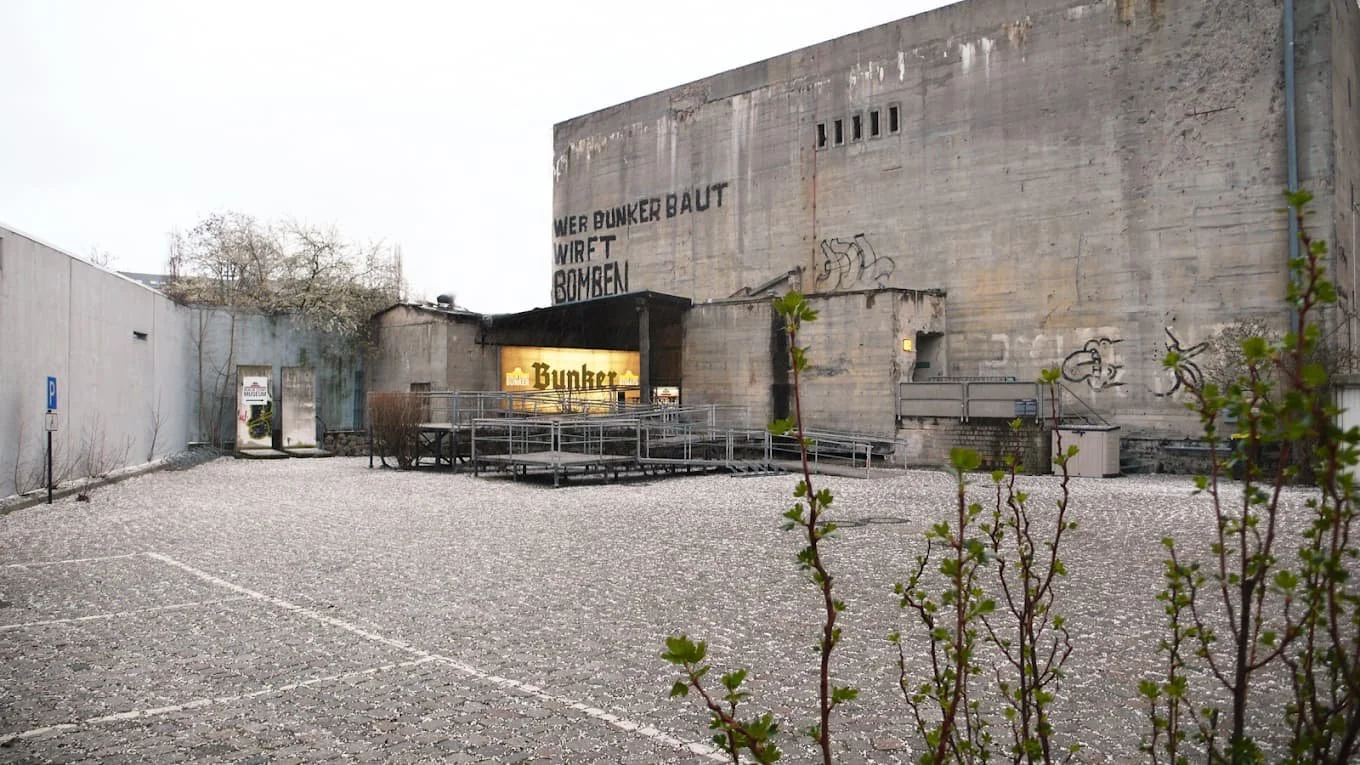
Entrance to the Berlin Story Bunker Museum
Housed in a former air raid shelter, this museum offers a comprehensive overview of Berlin’s history, with a significant focus on World War II. The bunker’s unique setting adds an extra layer of authenticity to the exhibits, allowing visitors to experience some of the claustrophobic reality of wartime Berlin.
Key features:
Exhibits on Hitler’s rise to power and the Nazi era, including interesting exhibits that attract visitors with engaging content about Hitler, the Nazi regime, and World War II history
Reconstructed bunker rooms
Multimedia presentations on Berlin during the war
Information on daily life in Berlin during the bombing campaigns
Exhibits on the fall of Berlin and the immediate post-war period
The Berlin Story Bunker provides an immersive experience that helps visitors understand the context and consequences of World War II in Berlin. By covering a broad sweep of history within the confines of an actual wartime structure, the museum also features exhibits about where Hitler spent his last days in the Führerbunker, highlighting the historical significance of this period. It offers a unique perspective on how the war impacted the lives of ordinary Berliners.
Nazi Forced Labour Documentation Centre
Location: Britzer Straße 5, 12439 Berlin Opening hours: Tuesday-Sunday, 10:00 AM - 6:00 PM Admission: €5 for adults, free for under 18
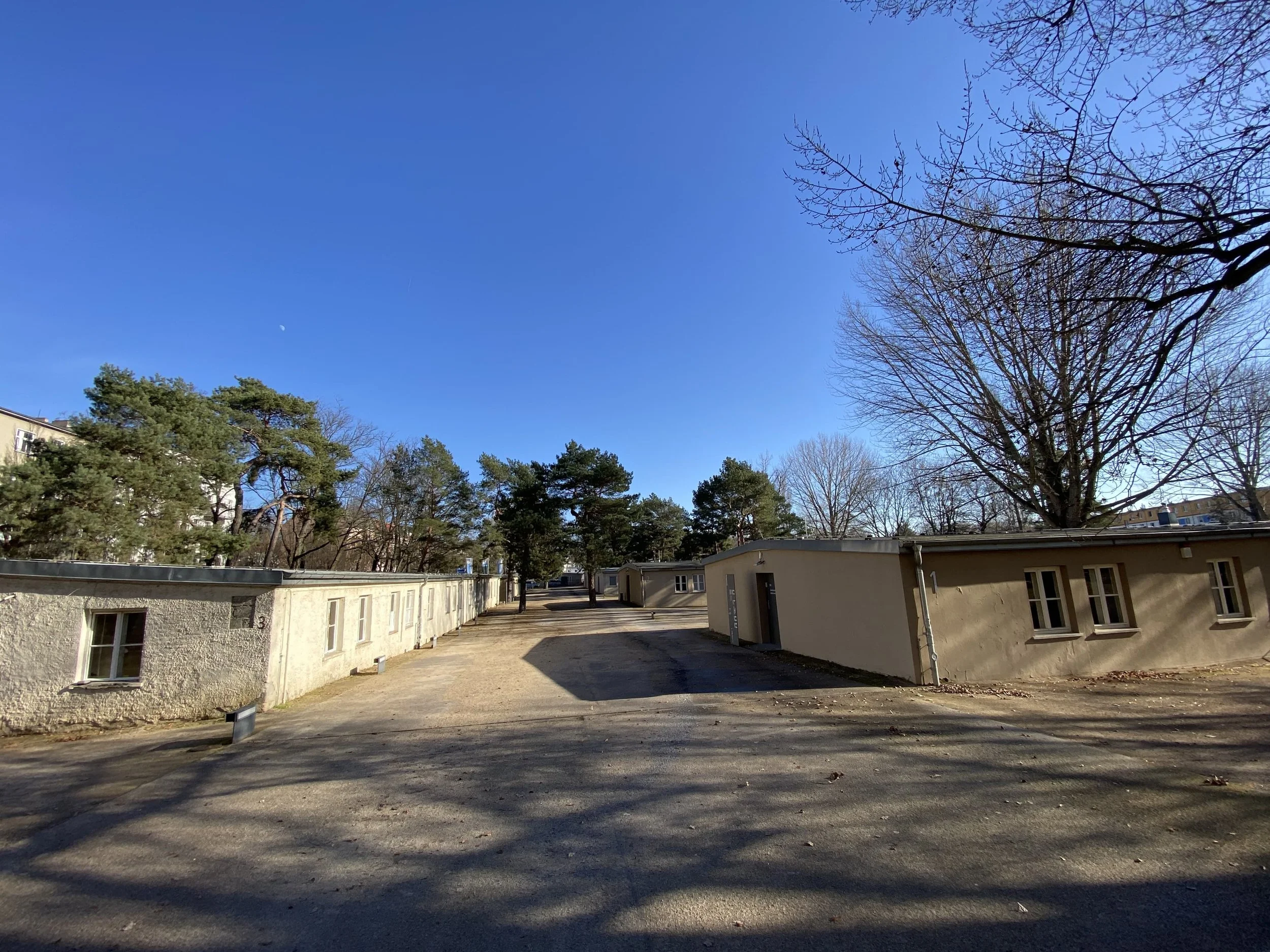
Barracks of the former labour camp.
This museum, located on the site of a former forced labor camp, documents the Nazi regime’s extensive use of forced labor during World War II. It focuses specifically on Nazi forced labor and its historical significance, highlighting the scale and impact of this system. The preserved buildings and exhibits provide a tangible link to a often-overlooked aspect of Nazi oppression.
Key features:
Preserved barracks and air raid shelter
Exhibits on the daily lives of forced labourers
Personal stories and testimonies
Information on the companies that used forced labour
Details on the post-war struggles for recognition and compensation
The Nazi Forced Labour Documentation Centre sheds light on a often-overlooked aspect of Nazi oppression, honouring the millions of people forced to work under brutal conditions. It challenges visitors to consider the ongoing legacy of this exploitation and the responsibilities of corporations and governments in addressing historical injustices.
Anne Frank Centre
Location: Rosenthaler Straße 39, 10178 Berlin Opening hours: Tuesday-Sunday, 10:00 AM - 6:00 PM Admission: €6 for adults, €3 for concessions
While Anne Frank’s story is most closely associated with Amsterdam, this Berlin centre offers a unique perspective on her life and legacy. By connecting Anne’s story to the broader context of the Holocaust and contemporary issues of discrimination, the centre makes history relevant to today’s visitors.
Key features:
Exhibit “All About Anne” detailing her life and diary
Information on the Holocaust and its impact on children
Exhibits covering Jewish life in Germany from the Middle Ages to the present
Educational programs on antisemitism and discrimination
Interactive elements are designed to engage younger visitors
Connections between Anne’s story and contemporary human rights issues
The Anne Frank Centre personalises the Holocaust through the story of one young girl, making the enormity of the tragedy more accessible and relatable. By focusing on Anne’s hopes, dreams, and everyday experiences, the centre helps visitors, especially young people, connect emotionally with the human cost of the Holocaust.
Memorial SA Prison Papestrasse
Location: Werner-Voß-Damm 54A, 12101 Berlin Opening hours: Thursday-Sunday, 1:00 PM - 6:00 PM Admission: Free
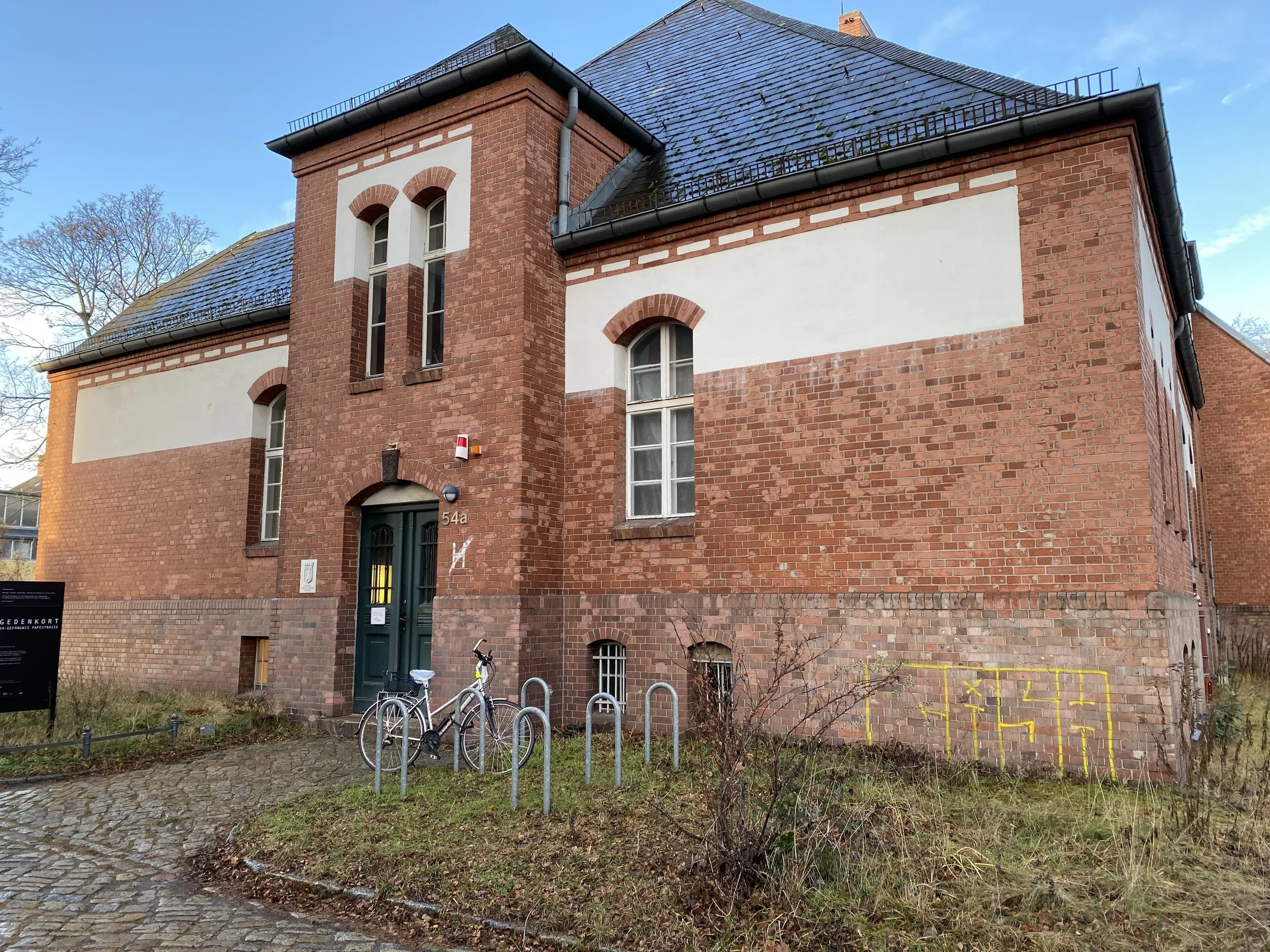
Main building entrance
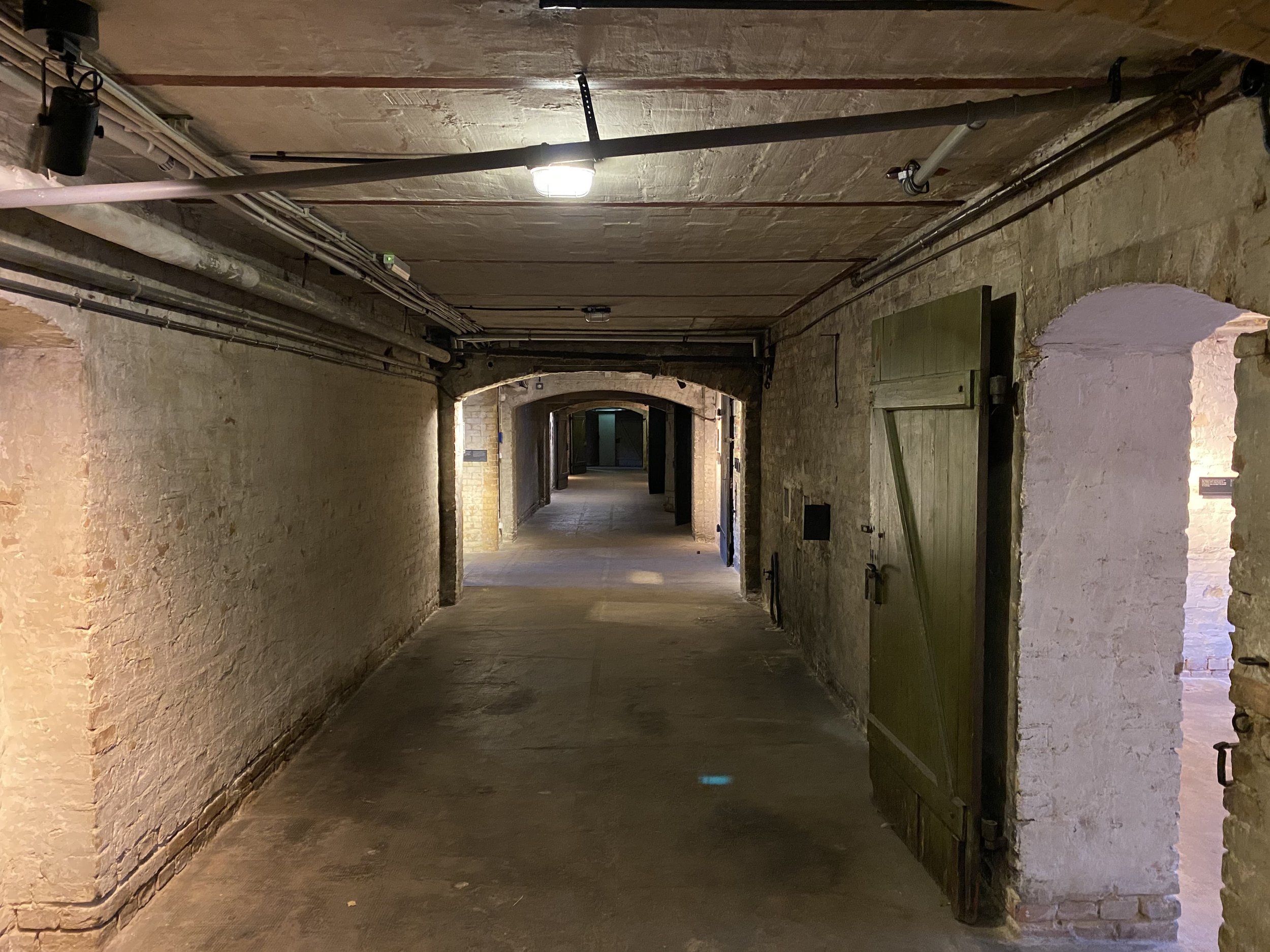
Inside the memorial and museum building
This hidden site was one of the earliest SA prisons, where political opponents and Jews were detained and tortured in 1933. Its unassuming exterior belies the horrors that occurred within, serving as a powerful reminder of how quickly and quietly repression can take root.
Key features:
Preserved prison cells
Exhibits on early Nazi persecution
Information on the SA's role in establishing Nazi power
Personal stories of those imprisoned here
Details on the methods used to intimidate and suppress opposition
The Memorial SA Prison Papestrasse offers insight into the early days of Nazi terror, demonstrating how quickly democratic norms can be eroded. It serves as a warning about the dangers of political violence and the importance of protecting democratic institutions from the very beginning of any authoritarian movement.
German-Russian Museum Berlin-Karlshorst
Location: Zwieseler Straße 4, 10318 Berlin Opening hours: Tuesday-Sunday, 10:00 AM - 6:00 PM Admission: Free
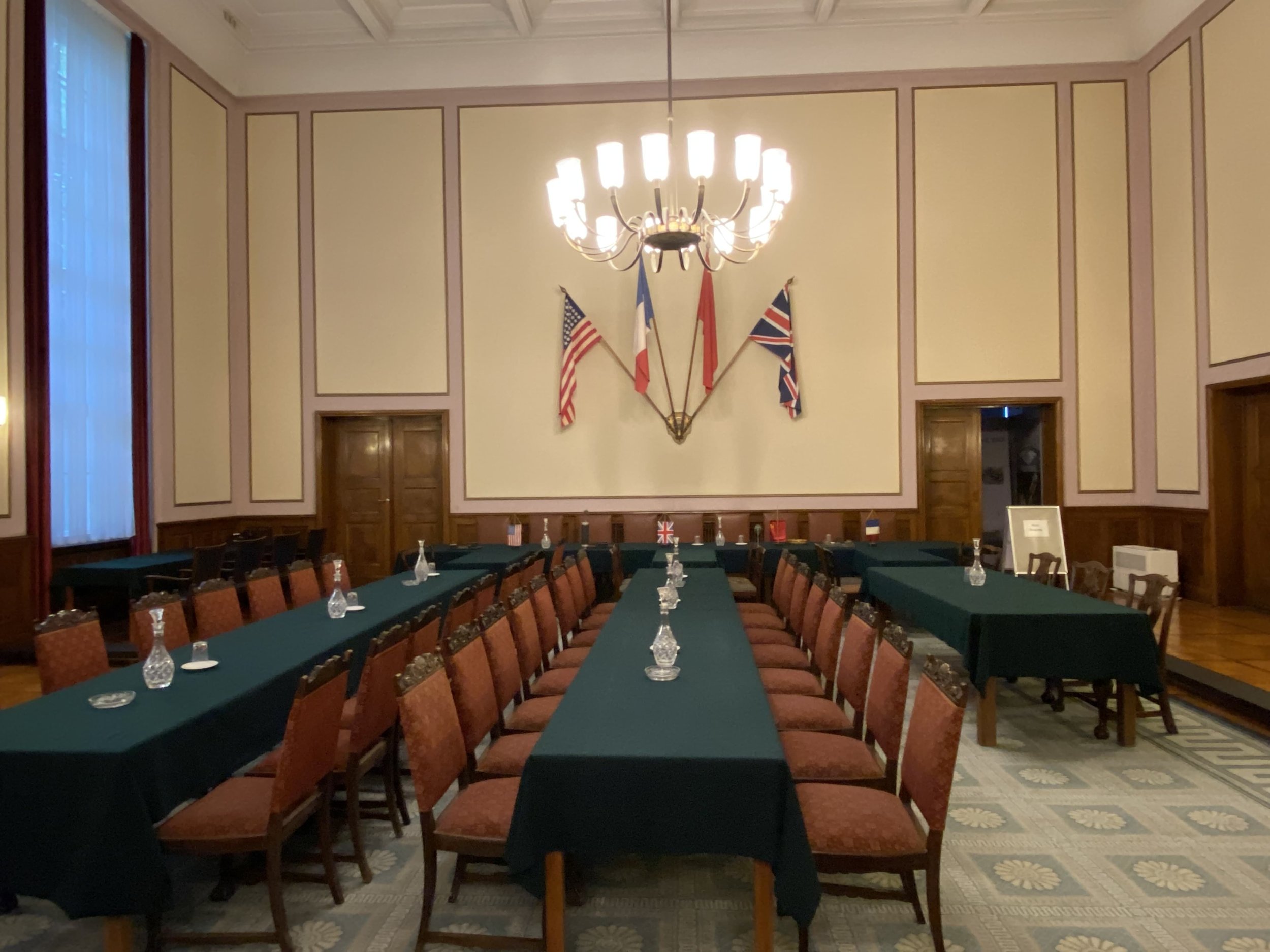
The place of surrender
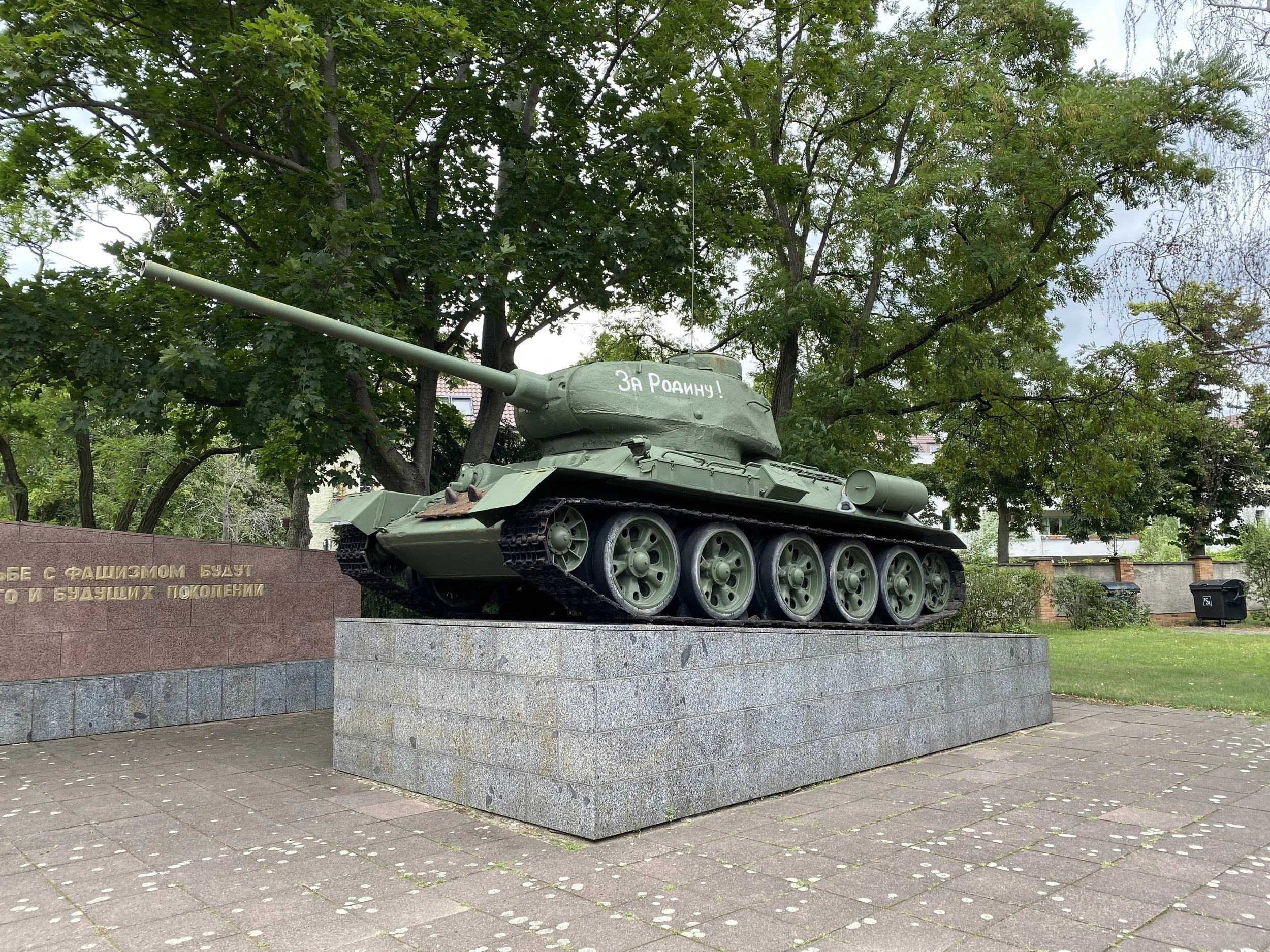
T34/85 on display outside the exhibition
Housed in the building where Germany’s unconditional surrender was signed in 1945, this museum, also known as the German-Russian Museum, focuses on the war between Germany and the Soviet Union. Its location in former East Berlin provides an additional layer of historical context, bridging World War II and the Cold War era.
Key features:
Exhibits on the Eastern Front of World War II
The room where the surrender was signed
Soviet and German military equipment
Exhibits and memorials dedicated to the Soviet soldier, highlighting their role and sacrifice
Information on the impact of the war on civilians
Details on the immediate aftermath of the war and the division of Germany
Museum Berlin-Karlshorst offers a unique perspective on the end of World War II in Europe and the beginning of the Cold War era. By focusing on the often-overlooked Eastern Front, it provides a more complete picture of the war and its devastating impact on both military personnel and civilians. The significance of Soviet memorial sites in Berlin, such as those in Tiergarten, Treptower Park, and Pankow, further commemorates the contributions and sacrifices of the Soviet soldiers during WWII.
Kaiser Wilhelm Memorial Church
Location: Breitscheidplatz, 10789 Berlin Opening hours: Daily, 9:00 AM - 7:00 PM Admission: Free

The church as seen from the main street.

Close-up of the battle damage still visible in the facade
While not primarily a museum, this church, damaged during World War II and preserved as a memorial, houses exhibits on its history and the war's impact. The juxtaposition of the ruined old church and the modern new church provides a powerful visual metaphor for Berlin's destruction and rebirth.
Key features:
Preserved ruins of the original church
Exhibits on the church's history and wartime destruction
Modern chapel integrated with the ruins
Information on the bombing of Berlin
Details on the decision to preserve the ruins as a memorial
The Kaiser Wilhelm Memorial Church serves as a powerful symbol of both destruction and reconciliation, embodying Berlin's post-war journey. It reminds visitors of the devastating impact of war on cultural heritage and the different ways societies choose to remember and rebuild.
Olympic Stadium
Location: Olympischer Platz 3, 14053 Berlin Opening hours: Daily, 9:00 AM - 7:00 PM (tours available) Admission: €8 for adults, €5 for concessions

The main entrance to the Olympic Stadium
Built for the 1936 Olympics, this stadium played a significant role in Nazi propaganda efforts and was designed by renowned architect Werner March. It has exhibits on its history. The grand scale of the stadium and its architectural features explain the Nazi regime’s use of spectacle and monumentality to impress and intimidate.
Key features:
Tours covering the stadium’s Nazi-era history
Exhibits on the 1936 Olympics and their political context, including the stadium’s use for propaganda events during the Nazi era
Preserved architectural features from the Nazi period
Information on the stadium’s post-war use and renovation
Details on specific athletes and events from the 1936 Olympics
The Olympic Stadium offers insight into how the Nazi regime used sports and spectacle for political purposes, demonstrating the intersection of politics and culture. It challenges visitors to consider how authoritarian regimes can co-opt cultural events and institutions for propaganda purposes.
German Historical Museum
Location: Unter den Linden 2, 10117 Berlin Opening hours: Daily, 10:00 AM - 6:00 PM Admission: €7 for adults, €3.50 for concessions

The German Historical Museum stands as one of Berlin’s premier destinations for anyone seeking to understand the complexities of World War II and the broader sweep of German history. Located in the heart of central Berlin, this renowned institution offers a comprehensive journey through the country’s past, with a particular emphasis on the events and consequences of the Second World War. The museum’s permanent exhibition features an extensive section dedicated to the Nazi regime, providing visitors with a detailed look at the rise of Adolf Hitler, the mechanisms of Nazi rule, and the devastating impact of World War II on Germany and the rest of Europe.
Through a rich collection of artefacts, original documents, photographs, and personal testimonies, the German Historical Museum sheds light on the experiences of individuals and communities during this turbulent era. Visitors can trace the origins of the Nazi party, witness the unfolding of World War II, and explore the aftermath as Germany grappled with defeat, division, and eventual reunification. The museum also addresses the broader context of the Second World War, examining its effects on German society, the European continent, and the world at large. For those interested in the intersections of war, memory, and national identity, the German Historical Museum is a must-visit destination on any Berlin itinerary.
Other World War II Sites in Berlin
In addition to its renowned museums, Berlin is home to numerous other World War II sites that offer valuable insights into the city’s history. These sites provide a unique perspective on the events of the war and the subsequent division of the city. Visitors can also explore a variety of Cold War sites, such as the Stasi Museum and Berlin Wall Museum, which highlight the city's role during the Cold War period. Many of these locations feature areas known as no man's land, which held historical and symbolic significance as spaces of separation during Berlin's division, further enriching the visitor’s understanding of Berlin’s past.
Berlin Wall Memorial at Bernauer Strasse
The Berlin Wall Memorial at Bernauer Strasse is a must-visit site for anyone interested in World War II and Cold War history. Located at the site of the former Berlin Wall, which divided the city into East and West Berlin, the memorial offers a poignant reminder of the city’s division and the impact of the Cold War on its residents. Checkpoint Charlie, a historic border crossing and now a museum site, is another significant location that highlights the era's tensions and the city's divided past. The memorial features a preserved section of the wall, a museum, and a chapel, providing a comprehensive overview of the wall’s history and significance. Visitors can also see the last remaining watchtower and a reconstructed section of the wall, offering a glimpse into how it looked during the Cold War.

Peering through the Berlin Wall.
The nearby Brandenburg Gate stands as a symbol of both division and reunification, playing a central role during the Cold War and German reunification. The East Side Gallery, an iconic section of the Berlin Wall, is renowned for its artistic murals and status as the longest open-air gallery, commemorating the wall's historical and cultural significance. The Berlin Wall Memorial at Bernauer Strasse is a powerful testament to the city’s turbulent history and a vital site for understanding the broader context of World War II and its aftermath, especially the significance of the moment when the Berlin Wall fell in 1989.
Tips for Visiting Berlin’s World War II Museums
To make the most of your exploration of Berlin’s World War II museums and memorials, a bit of planning goes a long way. Consider investing in a Berlin Museum Pass, which grants you access to many of the city’s top cultural attractions, including the German Historical Museum, the Jewish Museum, and the impressive Museum Island complex. This pass not only saves you money but also streamlines your experience, allowing you to skip lines at some of the most popular World War II sites.
It’s wise to map out your itinerary in advance, as some museums—especially those with high visitor numbers or special exhibitions—may require reservations or have limited opening hours. Guided tours are highly recommended for history buffs, as they provide expert insights into the significance of each site and help contextualise the exhibits within the broader narrative of World War II and Berlin’s history. Whether you’re delving into the archives of the German Historical Museum, reflecting at the Jewish Museum, or exploring the treasures of Museum Island, a little preparation ensures a richer, more meaningful visit to Berlin’s WWII landmarks.

Planning Your Trip
When organising your journey to Berlin’s World War II sites, timing and preparation are key. The city is vibrant year-round, but the best months for visiting are typically from May to September, when the weather is pleasant and outdoor memorials are most accessible. If your interests include specific World War II or World War I events, consider aligning your trip with significant anniversaries, such as the construction of the Berlin Wall or the liberation of Sachsenhausen concentration camp. These dates often feature special exhibitions, commemorative ceremonies, and unique opportunities to engage with Berlin’s living history.
Before you set out, be sure to check the opening hours and ticketing policies for each concentration camp, museum, or memorial on your list, as they can vary by season and may be affected by public holidays or special events. Planning ahead ensures you won’t miss out on key experiences and allows you to make the most of your time exploring the city’s World War II heritage.
Best Times to Visit
The ideal time to explore Berlin’s World War II museums and memorials is during the spring and summer, when the city’s parks and open-air sites are at their most inviting. These months offer longer daylight hours, making it easier to fit multiple World War II attractions into your day. However, if you prefer a quieter, more contemplative atmosphere, the winter months can be equally rewarding. Visiting during the off-season means fewer crowds and a more sombre ambience, which can be particularly fitting for sites of remembrance and reflection.
Regardless of when you visit, it’s important to check the current opening hours for each museum or memorial, as some may operate on reduced schedules during the colder months or close temporarily due to weather conditions. A quick look at the attraction’s website or a phone call ahead of time will help you plan your visit and avoid any surprises.
Ticketing and Reservations
Many of Berlin’s World War II museums and memorials offer free or reduced admission, especially for students, seniors, and groups, making it accessible for all visitors to engage with the city’s history. However, some of the most popular attractions may require advance reservations or have limited capacity, particularly during peak travel seasons. To streamline your experience, consider purchasing the Berlin Welcome Card, which includes free or discounted entry to numerous museums and unlimited use of public transportation throughout the city.
You can buy the Berlin Welcome Card online or at tourist information centres, train stations, and participating museums. Always check the official website of each World War II site for the latest ticketing information and to secure your reservation in advance. This is especially important for high-demand locations or special exhibitions, ensuring you won’t miss out on any of Berlin’s essential WWII experiences.
Conclusion: Preserving Memory, Promoting Understanding
Berlin’s World War II museums collectively offer a profound and multifaceted exploration of one of history’s darkest chapters. From the grand institutions to the intimate memorial sites, each venue contributes to a fuller understanding of the war, its causes, and its far-reaching consequences.
These museums serve several crucial functions:
Education: They provide factual information about the war, the Holocaust, and the Nazi regime, ensuring that future generations understand the realities of this period.
Remembrance: By preserving artefacts, stories, and sites, they honour the victims and ensure that their experiences are not forgotten.
Warning: Many of these museums explicitly connect historical events to contemporary issues, serving as a warning against the dangers of authoritarianism, racism, and antisemitism.
Reflection: They encourage visitors to consider complex moral questions and reflect on individual and societal responsibilities in the face of injustice.
Reconciliation: By honestly confronting the past, these institutions contribute to Germany’s ongoing process of coming to terms with its history.
Visiting these museums can be an emotionally challenging experience, but it is also a deeply enriching one. They offer not just a window into the past but a mirror in which we can examine our present and consider our future. In a world where the lessons of history are all too often forgotten, Berlin’s World War II museums stand as vital guardians of memory and promoters of understanding.
As you plan your visit to Berlin, consider incorporating several of these museums into your itinerary. Each offers a unique perspective, and together they provide a comprehensive view of this critical period in history. By engaging with these sites, you contribute to the ongoing work of remembrance and education, helping to ensure that the lessons of the past continue to inform our present and shape our future. Additionally, Museum Island serves as a significant cultural and historical hub in Berlin, highlighting its various museums and their poignant connections to the city’s past. As one of the most prominent cities within the European Union, Berlin’s influence extends across Europe, underscoring its importance as a major cultural and historical centre in the EU.

Matthew Menneke
This article was written by Matthew Menneke.
Matt is the founder and guide of 'On the Front Tours', offering military history tours in Berlin. Born in Melbourne, Australia, Matt's passion for history led him to serve in the Australian Army Reserve for eight years. With a degree in International Politics and a successful sales career, he discovered his love for guiding while working as a tour guide in Australia. Since moving to Berlin in 2015, Matt has combined his enthusiasm for history and guiding by creating immersive tours that bring the past to life for his guests.

Hitler's Bunker Berlin Location: The Ultimate Guide for History Buffs on How to Find It
Explore the eerie site of Hitler's Führerbunker in Berlin. Learn its history, how to find it today, and gain insights into the Nazi dictator's final days.
Written By Matthew Menneke

Emergency Exit of Hitler’s Bunker, July 1947

Location of the Bunker courtayrd today, 2020
For World War II history enthusiasts, few sites are as intriguing as the location of Adolf Hitler’s final days in the Führerbunker, where he spent his last moments before his suicide.
Inside Hitler’s bunker in the spring of 1945, the scene was eerie and surreal, with abandoned furniture and debris, bloodstains on the sofa, papers, an SS officer’s cap, a looted safe, and the shallow trench where the bodies of Hitler and Eva Braun were burned after their suicides. While the bunker no longer exists, you can visit where this concrete fortress once stood.
In this post, we’ll guide you to the exact location and share some fascinating facts about Hitler’s last hideout.
Where is the site of Adolf Hitler's Bunker?
The remains of the Führerbunker lie beneath a rather nondescript parking lot in central Berlin's government district. Here are the key details:
Address in Central Berlin
Gertrud-Kolmar-Straße, 10117 Berlin, Germany
Coordinates
52°30′45″N 13°22′53″E
Nearby Landmarks
Just south of the Memorial to the Murdered Jews of Europe
120 meters north of the former site of the New Reich Chancellery building on Voßstraße
A short walk from the Brandenburg Gate and the Reichstag building
The bunker's emergency exit once led to the garden of the Old Reich Chancellery, but today, that spot is occupied by the parking lot and some residential apartment buildings constructed by the East German government in the 1980s.
Visiting Hitler’s Bunker in Berlin?
See the Führerbunker site as part of our Hitler's Berlin walking tour
The bunker may be gone, but much of the history surrounding it is still visible if you know where to look. On our Hitler's Berlin – The Rise and Fall Tour, we visit the former Führerbunker site and explore the nearby locations that tell the story of the rise of Nazi Germany, the regime's crimes and its eventual destruction in 1945.
2-hour guided walking tour · Central Berlin · From €35
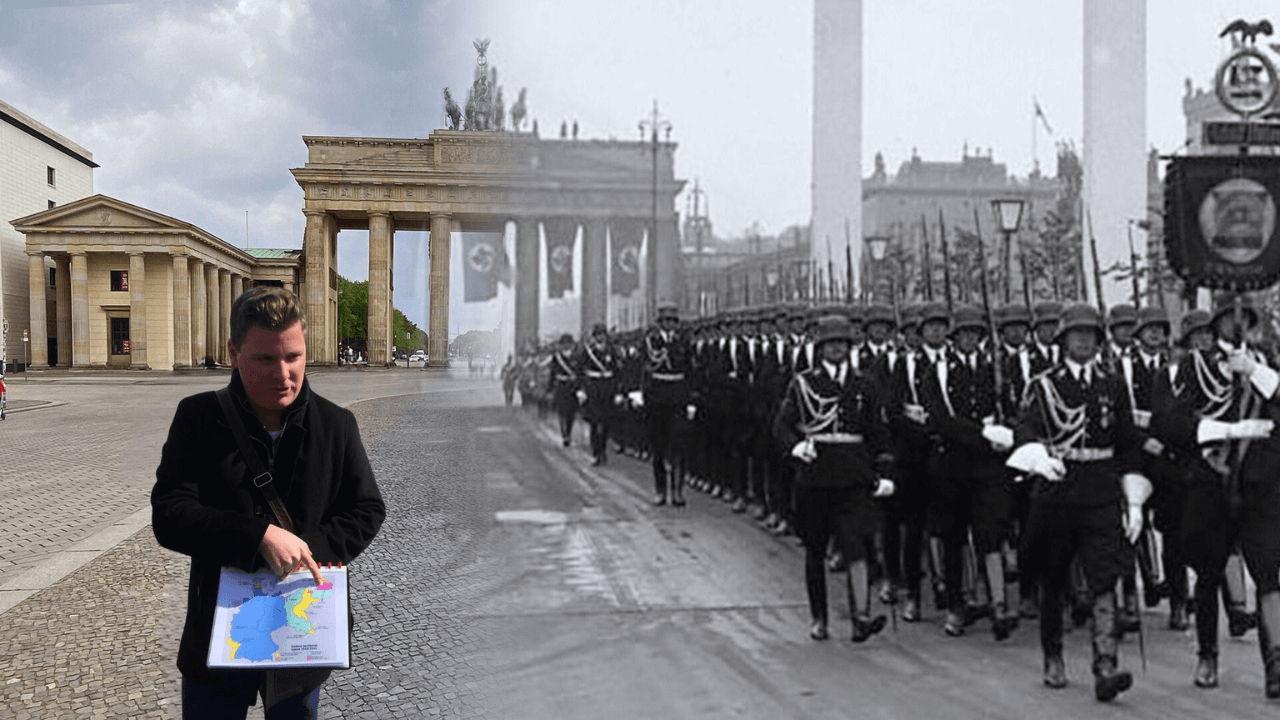
A Brief History of the Führerbunker
The Führerbunker was part of a large subterranean bunker complex constructed in two phases - a Vorbunker in 1936 and the Führerbunker proper in 1944. Some quick facts:
Located 8.5 meters (28 ft) beneath the garden of the Old Reich Chancellery
Consisted of about 30 small rooms
It had a roof up to 3 meters thick made of reinforced concrete
It included an emergency exit to the Chancellery Gardens and a connection to the Vorbunker
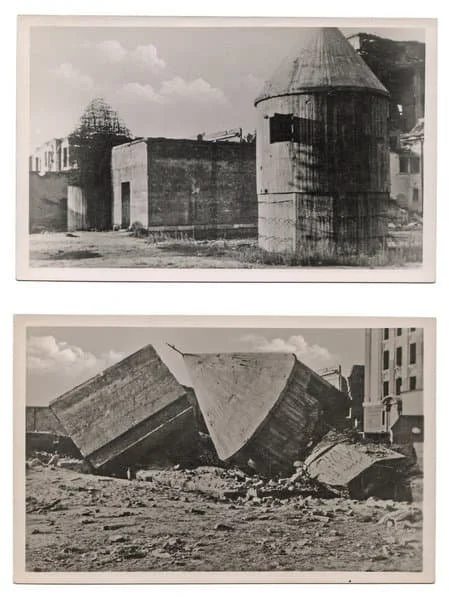
Stages of Soviet demolition in 1947.
Adolf Hitler spent the last months of his life in the Führerbunker, moving in on January 16, 1945, as the Red Army closed in on Berlin. It was here that Hitler married Eva Braun on April 29, just one day before the couple committed suicide on April 30 as the Soviet troops reached the nearby Reichstag.
According to Hitler’s instructions, the bodies were burned in a shell crater in the Chancellery garden near the bunker’s emergency exit. Today, a small information panel marks this location for visitors. Hitler’s death marked the end of the Thousand-Year Reich as Russian troops approached Berlin amidst constant bombing raids.
Finding the Führerbunker Today near the Reich Chancellery
After the war, the Soviet forces made some attempts to demolish the bunker with explosives, but much of the underground complex remained intact. The bunker was partially burned and stripped of valuables by the retreating German troops.

Guided tour my Matthew, discussing the history of the bunker

Guided tour my Matthew, showing the bunker location
However, the East German government undertook several initiatives to destroy or fill the underground rooms in the following years. The hinge of the door to Hitler's bunker was burned off by advancing Russian combat engineers.
When the area was redeveloped in the late 1980s, some sections of the old bunker complex were uncovered, but for the most part, these were destroyed. The site was intentionally left unmarked for many years.
It wasn't until 2006 that a small plaque with a schematic of the bunker was installed at the corner of In den Ministergärten and Gertrud-Kolmar-Straße. The panel provides some historical details in both German and English.
Tips for Visiting
The site is outdoors and publicly accessible 24/7, free of charge.
Closest public transport is the Mohrenstrasse U-Bahn station (U2 line) or the Brandenburger Tor station (S1, S2, S25, S26)
Combine your visit with other nearby WWII sites like the Topography of Terror museum, the Memorial to the Murdered Jews of Europe, and the Soviet War Memorial in Tiergarten.
For more context, consider joining a guided walking tour that covers Hitler's bunker and other Third Reich sites.
Layout and Interior of the Führerbunker
The Führerbunker was divided into the upper Vorbunker and the lower Führerbunker. The Vorbunker contained Hitler’s private suite, offices for his secretaries, and a guard room.
The lower level housed Hitler’s personal study, bedrooms for Hitler and Eva Braun, a conference/map room, a medical room, and quarters for high-ranking officers and staff. Hitler’s sitting room was also located on this level, where he spent much of his time during the final days.
Other key features of the bunker included:
A machine gun nest covering the main entrance
An emergency exit stairway to the Chancellery Gardens
Air raid doors that were gas-tight and had a thickness of 1.6 meters
Its own diesel power plant and air-conditioning system
A communications centre with a switchboard connecting to the outside

The diagram above provides a detailed layout of the Führerbunker complex, including the upper Vorbunker and lower Führerbunker levels.
Critical areas like Hitler’s study, the conference room, and living quarters for Hitler, Eva Braun, and other high-ranking Nazi officials are marked. The map helps visualise the claustrophobic, maze-like nature of the underground bunker where Hitler spent his final days as the war came to an end above ground.
Hitler's Final Days in the Führerbunker
As the war turned decisively against Germany in early 1945, Hitler retreated to the relative safety of the Führerbunker, where he could continue to direct the final defence of Berlin. Despite pleas from his generals to leave the doomed city, Hitler stubbornly refused, insisting that he would lead the fight to the end.

Destruction and chaos is the only description of the bunker after Hitler’s suicide

A crushed globe and a bust of Hitler amid rubble outside the ruined Reich Chancellery.
Picturing Hitler’s bunker, photographs taken inside reveal eerie scenes of ruins, abandoned furniture, bloodstains, and other haunting artifacts, providing a detailed glimpse into the last days of the Third Reich.
In the claustrophobic confines of the bunker, Hitler grew increasingly isolated and paranoid, raging against his fate and those he believed had betrayed him. Even as the end drew near, he clung to fantasies of a miraculous reversal, at one point exclaiming, “I will not leave Berlin, I will defend it! I can still win this war!”

Sifting through the debris trench where it was believed Hitler and Eva’s body’s were found

Discarded fuel cans located near the bunker
But as the Soviet troops drew ever closer and all hope of victory evaporated, Hitler finally accepted the inevitable. On April 30, 1945, with the enemy blocks away, he bid farewell to his staff and, together with Eva Braun, whom he had married just hours before, retired to his private quarters.
There, the man responsible for the most destructive war in human history took his own life, shooting himself in the head as Braun swallowed a cyanide capsule. Their bodies were hastily cremated in the shell-cratered garden above.
Myths and Conspiracy Theories Surrounding Hitler's Bunker
In the decades since Hitler's death, the Führerbunker has become a magnet for urban legends and conspiracy theories. Some claim that Hitler did not actually die in the bunker but instead escaped to South America or Antarctica. Others suggest that the bunker held occult artifacts or secret Nazi technology.

A Russian soldier stood in Adolf Hitler’s bunker, Berlin, 1945.
War correspondents examined a couch stained with blood located inside Hitler’s bunker.
Another popular conspiracy theory asserts that Hitler's bunker was connected via underground tunnels to the Berlin subway system, allowing high-ranking Nazis to flee the city undetected. While the bunker did have an emergency exit to the subway, there is no evidence it was used for escape or that such tunnels existed.
Despite the lack of credible evidence, these myths and conspiracies continue to capture the public imagination, a testament to the enduring fascination and revulsion surrounding one of history's most notorious figures. As long as the mysteries of Hitler's final days persist, so too will the legends and theories that swirl around his last refuge.
The Significance of the Führerbunker
For many, the site of Hitler's bunker is a sobering reminder of the evil and destruction wrought by Nazi Germany. It was here that Hitler spent his final days, increasingly detached from reality, as German and Soviet troops fought fiercely in the streets above, marking the downfall of the Third Reich.

An SS officer’s cap, with the infamous death’s-head skull emblem.
The fact that the bunker is now little more than an anonymous parking lot is, perhaps, a fitting end for a man responsible for the deaths of millions. As Berlin historian Sven Felix Kellerhoff puts it, "The National Socialists wanted to build a glorious new metropolis here, but they were only able to build an underground concrete block."
Yet even without visible ruins, the bunker's legacy looms large in the German historical consciousness. It has been the subject of numerous books, films, and documentaries, including the acclaimed 2004 film "Downfall" (Der Untergang).
The Führerbunker in Popular Culture
The Führerbunker has captured the imagination of filmmakers, writers, and game developers, featuring in numerous works of popular culture:
The 2004 German film "Downfall" (Der Untergang) offers a chilling portrayal of Hitler's final days in the bunker. The film's claustrophobic atmosphere and Bruno Ganz's haunting performance as Hitler have left an indelible mark on the public consciousness.
Other notable film appearances include "The Bunker" (1981), "The Death of Adolf Hitler" (1973), and "Speer und Er" (2005).
The Führerbunker has been a setting in video games such as Sniper Elite V2 and Call of Duty: World at War.

Der Untergang film poster
These depictions, while often dramatised for entertainment purposes, have played a significant role in shaping public perceptions of Hitler's final days and the end of World War II in Europe.
They serve as a reminder of the enduring fascination with this dark chapter in history and the ongoing efforts to understand and come to terms with the legacy of the Third Reich.
Germany's Complex Relationship with Its Nazi Past
The Führerbunker's fate also reflects Germany's complex relationship with its Nazi past. For decades after the war, many Germans preferred to ignore or downplay the country's complicity in Hitler's crimes. The bunker, like other Nazi sites, was left to decay - an unpleasant reminder best forgotten.

Nazi Party eagle that once loomed over a doorway of the Reich Chancellery, Berlin, 1945.
But as a new generation has come of age, attitudes have shifted. Many now believe that Germany must confront its history head-on, however painful that may be. The decision to leave the bunker site unmarked has come under particular scrutiny, with some arguing that it allows visitors to overlook or even deny what happened there.
Others, however, believe that the absence of any monument speaks more eloquently than a plaque or statue ever could. By refusing to glorify the bunker, they argue, Germany denies Hitler the immortality he craved and forces us to grapple with the banality of evil.
As the debate continues, the Führerbunker remains a flashpoint - a symbol of Germany's ongoing struggle to come to terms with its darkest chapter. How the country remembers this site in the years to come will say much about its relationship with the past and its vision for the future.
The Führerbunker's Enduring Legacy: From Neo-Nazi Rallies to Dark Tourism Satire
In the years since the war, the site of the Führerbunker has attracted a range of visitors, from curious tourists to neo-Nazi pilgrims. One of the most notable incidents occurred in 1987 when a group of far-right extremists attempted to stage a rally at the site on the anniversary of Hitler’s death. Police swiftly broke up the gathering, but it highlighted the enduring allure of the bunker for those who still harbour fascist sympathies.
The site has recently become a popular destination for historians and documentarians seeking to shed light on the war’s final days. In 2004, a team of researchers used ground-penetrating radar to map out the bunker’s subterranean remains, revealing the extent of the complex and the location of important rooms like Hitler’s study.

Neo-Nazi demonstration in Leipzig, Germany, in October 2009
Other visitors have included survivors of the Nazi regime, some of whom have made emotional pilgrimages to the site to confront their past. In 2013, a group of Holocaust survivors from Israel visited the bunker as part of a trip to Berlin, laying a wreath at the site in memory of those who perished under Hitler’s rule.
In the aftermath of World War II, an American soldier was photographed offering a mocking Nazi salute inside the bombed-out ruins of the Berliner Sportspalast, a site often used for Third Reich political rallies. This gesture was a disrespectful act within the historical context of the war's end.
Despite its dark history, the Führerbunker has been the scene of more lighthearted moments. In 2015, a British artist staged a tongue-in-cheek “holiday” at the site, complete with beach chairs, umbrellas, and a sign proclaiming it “Hitler’s Beach Bunker.” The installation was intended as a satirical comment on the commercialisation of dark tourism.
As the years pass and the living memory of the war fades, the Führerbunker is likely to remain a magnet for those seeking to understand one of history’s darkest chapters. While the site may be unassuming, its legacy continues to loom large in the world’s imagination.
The Contrasting Fates of Notorious Führer Sites
The Führerbunker's understated fate stands in stark contrast to other notorious Nazi sites like the Wolf's Lair and the Eagle's Nest.
Hitler's Eastern Front military headquarters, the Wolf's Lair:
Heavily damaged by retreating German forces
It still attracts thousands of visitors each year
Features extensive ruins and a museum examining the 1944 assassination attempt on Hitler

Hitler's reinforced bunker at the Wolfsschanze
The Eagle's Nest, Hitler's mountaintop retreat in Bavaria:
Captured largely intact by American troops
It turned into a tourist destination
Visitors can tour the lavish complex and take in panoramic views of the Alps

The Eagles Nest
The differing approaches to these sites reflect the complexities of preserving dark heritage:
Some argue that places like the Wolf's Lair and Eagle's Nest provide valuable historical insights.
Others worry that they risk glorifying the Nazi regime.
The Führerbunker, in its unassuming anonymity, sidesteps this dilemma but raises its own questions about remembrance and erasure.
Ultimately, there is no easy answer for dealing with the physical remnants of a painful past. But by grappling openly with these challenges, as Germany continues to do, we can learn from history's darkest chapters and build a more just future.
Further Reading and Resources
For those interested in delving deeper into the history of Hitler's bunker and its role in the final days of World War II, consider exploring these additional resources:
"The Bunker" by James P. O'Donnell - This classic book, based on interviews with survivors, provides a gripping account of the last days in the Führerbunker.
"Inside Hitler's Bunker: The Last Days of the Third Reich" by Joachim Fest - Renowned historian Fest offers a meticulously researched and vividly written chronicle of the bunker's final chapter.
"Berlin: The Downfall 1945" by Antony Beevor - While not solely focused on the Führerbunker, Beevor's acclaimed book gives a comprehensive overview of the Battle of Berlin and the regime's collapse.
The German Resistance Memorial Center - Located in Berlin, this museum is dedicated to those who fought against the Nazi regime, including the July 20 plotters who attempted to assassinate Hitler at the Wolf's Lair.
Conclusion
A pilgrimage to the site of Hitler's bunker is a must for any WWII history buff visiting Berlin. While the bunker itself is long gone, standing where the Führer met his ignominious end is a powerful experience that brings the war's final days to vivid life.
By understanding what happened in this small patch of Berlin real estate, we can better grasp the magnitude of the conflict that reshaped the 20th century - and honour the memory of the millions who suffered under Hitler's brutal regime.
Explore the history on the ground
If you're visiting Berlin and want to understand what happened here beyond simply finding the bunker location, join us on our Hitler's Berlin – The Rise and Fall Tour.
Walk through the former government district with an expert guide and explore the locations connected to Hitler's rise to power, the Nazi dictatorship and the final collapse of the Third Reich in 1945.
2 hours · Central Berlin · From €35
The article was written by Matthew Menneke.
Matt is the founder and guide of 'On the Front Tours', offering military history tours in Berlin. Born in Melbourne, Australia, Matt's passion for history led him to serve in the Australian Army Reserve for eight years. With a degree in International Politics and a successful sales career, he discovered his love for guiding while working as a tour guide in Australia. Since moving to Berlin in 2015, Matt has combined his enthusiasm for history and guiding by creating immersive tours that bring the past to life for his guests.