

Nazi Germany Collapse: The Battle of Halbe and the True Horror of War's End
In April 1945, as Berlin fell, 200,000 German soldiers and civilians fought to escape a Soviet trap in Halbe. A brutal, forgotten battle where survival meant impossible choices.
By Matthew Menneke
In the dense pine forests southeast of Berlin, 80 years ago this spring, one of World War II’s most desperate and brutal battles unfolded in near-complete obscurity. While the world’s attention focused on Adolf Hitler’s leadership during the final days in Berlin's bunker and the fall of the German capital, nearly 200,000 German soldiers and civilians fought a savage running battle through the Spree Forest, desperately trying to escape Soviet encirclement and reach American lines to the west.
The Battle of Halbe, fought from April 24 to May 1, 1945, represents everything horrific about the war’s final days on the Eastern Front. It’s a story of impossible choices, blurred lines between soldier and civilian, and the lengths people will go to avoid a fate they consider worse than death. Yet despite its scale and significance, this battle remains largely forgotten, overshadowed by the more famous siege of Berlin and relegated to the margins of popular World War II history.

Translation: Street in the Halbe Pocket, May 1945
The Forgotten Battlefield of the Battle of Halbe That Still Echoes Today
Walking through the forests around Halbe today, you encounter an eerie silence that belies the hell that unfolded here eight decades ago. The pine trees stand tall and peaceful, but beneath the forest floor lie the remnants of one of the war’s most desperate battles. Unlike the famous World War I battlefields of France, where the earth annually yields its buried artefacts in what farmers call the “iron harvest,” Halbe’s relics remain largely undisturbed on the surface.
Shrapnel still litters the forest floor—destroyed vehicles rust where they fell. Personal equipment, weapons, and even pieces of Enigma machines can still be found by those who know where to look. Among all the discoveries, the regular surfacing of human remains is the most haunting. The German War Graves Commission conducted major burials in 2020 and 2022, each time interring roughly 80 bodies discovered since their previous efforts. The Halbe Forest Cemetery now contains about 24,000 German burials, making it the largest World War II cemetery in Germany, with about 10,000 graves marked simply as “unknown”. Many of these are unidentified soldiers killed during the battle, reflecting the tragic scale of casualties and the difficulty in identifying all the fallen.
This ongoing discovery of the dead serves as a stark reminder that we may never know the true scale of what happened here. Conservative estimates suggest 60,000 people were killed or wounded in the battle, including 30,000 dead. But nobody knows how many civilians died – the number could have reached 10,000.

Halbe War Graves Cemetery
The Eastern Front: The War’s Most Brutal Theatre
The Eastern Front stands as the most savage and colossal theatre of World War II, where the fate of Europe was decided in a clash of titanic armies and ideologies. Here, Adolf Hitler’s German army launched its infamous invasion of the Soviet Union in June 1941—Operation Barbarossa—unleashing a conflict that would dwarf all others in scale and brutality. Stretching from the icy Baltic Sea to the sun-baked shores of the Black Sea and from the Polish border deep into the heart of the Soviet Union, this front became a vast killing ground.
Initial rapid advances marked the German invasion, but the Soviet Union, under Joseph Stalin, marshalled its immense resources and manpower to resist, turning the tide in a series of epic battles. The Eastern Front witnessed the siege of cities like Leningrad, the industrial inferno of Stalingrad, and the armoured clash at Kursk—the largest tank battle in history. It was not just a military struggle but a war of annihilation, with both sides committing atrocities on a scale rarely seen before or since. Millions of soldiers and civilians perished, entire towns were erased, and the relentless advance and retreat of ground forces scarred the landscape itself.
For four years, the German army and the Soviet Union fought a war of attrition, with the Eastern Front consuming men and materiel at a staggering rate. The brutality of this theatre set the stage for the desperate final battles of 1945, as the Red Army closed in on Berlin and the remnants of the German armed forces made their last stand.

German infantry advancing on foot. Unknown location, Russia.
When the German Ninth Army Became a "Caterpillar"
The battle began as the inevitable result of the Red Army’s massive offensive toward Berlin. On April 16, 1945, over 3 million Soviet soldiers launched a three-front attack across the Oder-Neisse line. The German Ninth Army, under General Theodor Busse, had been defending the Seelow Heights against Marshal Georgy Zhukov’s 1st Belorussian Front, but was outflanked by Marshal Ivan Konev’s 1st Ukrainian Front attacking from the south. The Soviet advance threatened the Ninth Army's front lines, and soon soviet pincers closed around the German forces, trapping them.
By April 21, Soviet forces had broken through German lines and begun the encirclement that would trap approximately 80,000 German troops in the Spree Forest region. Many German troops, along with an estimated 150,000 to 200,000 civilians – not just local residents of towns like Halbe, but German refugees fleeing westward from East Prussia and Silesia as the Red Army advanced – were caught in the pocket.
General Busse described his breakout plan to General Walther Wenck of the Twelfth Army using a vivid metaphor: the Ninth Army would push west “like a caterpillar.” The Tiger II heavy tanks of the 102nd SS Heavy Panzer Battalion would lead this caterpillar’s head, while the rear guard would fight just as desperately to disengage from pursuing Soviet forces. Fleeing German forces, mixed with civilians, attempted to escape the encirclement in what became a 60-kilometre running battle through hell.

Destroyed German vehicles, Halbe, 1945
The Soviet Advance: The Red Army Closes In
By the spring of 1945, the tide of war had turned decisively in favour of the Soviet Union. The Red Army, hardened by years of brutal combat and driven by the desire to end Nazi Germany’s reign of terror, launched a series of relentless offensives that would bring the war in Europe to its bloody conclusion. Under the command of Marshal Georgy Zhukov and Marshal Ivan Konev, the 1st Belorussian and 1st Ukrainian Fronts spearheaded the Soviet advance, coordinating massive assaults that overwhelmed the exhausted German army.
The soviet army’s strength was overwhelming: millions of soldiers, thousands of tanks, and a seemingly endless barrage of artillery fire. As the Red Army surged westward, the German army—once the most formidable fighting force in Europe—was now battered, depleted, and demoralised. Nazi Germany’s hopes of holding back the Soviet advance evaporated as the Red Army’s pincers closed around Berlin, cutting off escape routes and encircling entire German formations.
The final Soviet offensives were marked by speed and ferocity, with soviet troops determined to crush any remaining resistance. The German army, unable to withstand the onslaught, was forced into a chaotic retreat, leaving behind countless dead and wounded. For many German soldiers, the prospect of falling into Soviet hands was terrifying, fueling desperate attempts to break out and surrender to the Western Allies instead. The Red Army’s relentless push not only sealed the fate of Berlin but also ensured that the Eastern Front would be remembered as the crucible in which Nazi Germany was finally destroyed.

Soviet troops advance into Berlin's urban suburbs.
The Impossible Choice: Fight or Surrender
Understanding why the Battle of Halbe happened at all requires grasping the impossible situation facing German soldiers and civilians in April 1945. For Wehrmacht personnel, surrender to the Soviets meant almost certain death or years in the gulag system. The statistics were stark: Germany lost 3 million soldiers during the war but lost an equivalent number–nearly 2 million more–in Soviet captivity between 1945 and 1954, when the last German prisoner was finally released.
For SS personnel, the choice was even starker – Soviet forces rarely took SS prisoners alive. For civilians, particularly women, surrender meant facing the systematic rape and brutalisation that had characterised the Red Army's advance through Eastern Europe. As one historian noted, "There are no civilians, there are no non-combatants really at this stage, particularly in the minds of the Soviets, as they're pushing ever so closer to Berlin."
This created a powerful motivation that transcended military discipline or Nazi ideology. General Busse motivated his troops not with promises of victory, but with hope: "Let's go west. Let's live. Let's get across the Elbe. Let's surrender to the Americans." The plan was to break through to Wenck's Twelfth Army and then continue west to American lines, where they expected more humane treatment.
The Soviets understood this psychology perfectly. Their propaganda leaflets dropped over German positions read: "All your hopes are destroyed." But for many Germans, any hope, however slim, was better than the certainty of Soviet captivity.
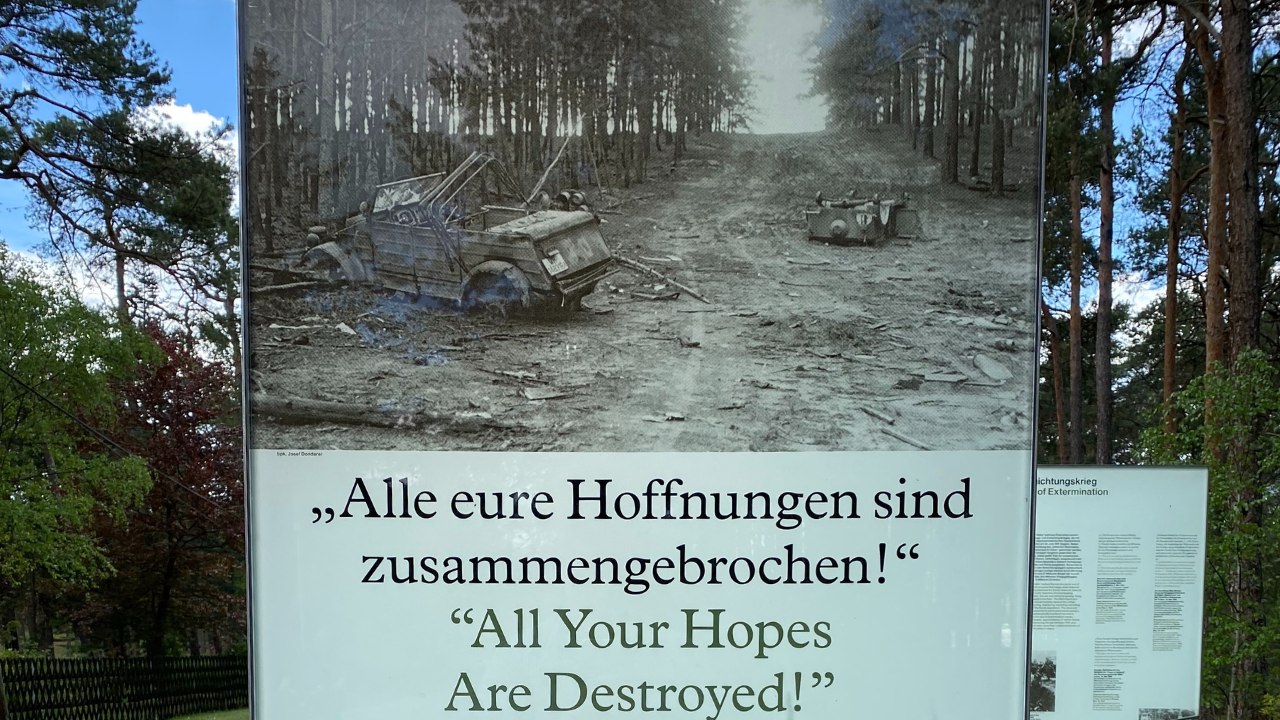
Information panel located at the Halbe War Graves
Artillery Rain and Tree-Burst Hell
The tactical reality of the Battle of Halbe was dominated by one factor above all others: Soviet artillery. Facing the German breakout were approximately 280,000 Soviet troops with 7,400 guns and mortars, 280 tanks and self-propelled guns, and 1,500 aircraft. Among these forces, the 1st Guards Breakthrough Artillery Division played a crucial role in smashing through German defences and using concentrated firepower to open gaps for Soviet advances. The Soviets had learnt to use the forest terrain to their advantage, deliberately timing their artillery shells to explode at tree-top height.
This technique, which had previously devastated American forces in the Battle of Hürtgen Forest, created a deadly rain of wooden splinters that supplemented the metal fragments from the shells themselves. The sandy soil of the pine forests made digging foxholes impossible, leaving German troops with virtually no protection from this aerial bombardment.
Soviet aircraft relentlessly targeted German positions and supply lines, further isolating the encircled forces and hampering any organised resistance.
As one witness described it: “It’s the artillery which is bringing raining effectively death down from above. And there’s nothing you can do against artillery. It just comes. Doesn’t matter how skilled you are as a soldier… it just comes down to effectively dumb luck that it doesn’t hit you.”
The German forces found their armour largely useless in this environment. Tanks were vulnerable to destruction on the roads and struggled to gain proper traction on the sandy forest soil. The Soviets countered with dug-in Soviet tanks, establishing fortified positions that were difficult to dislodge and provided strong defensive fire against German breakout attempts. The dense forest terrain reduced visibility to mere metres, creating constant danger of ambush for both sides. Smoke from burning sections of forest, set alight by shell fire, provided some concealment from Soviet aerial reconnaissance but also disoriented German troops who lacked compasses and couldn’t see the sun for navigation. Both sides operated with few or no maps, which increased the chaos and confusion during the battle.

Destroyed vehicles along a forest track
The Civilian Tragedy Hidden in Plain Sight
Perhaps the most overlooked aspect of the Battle of Halbe is the civilian tragedy that unfolded alongside the military action. Thousands of non-combatants were caught in the battle zone, including local residents and refugees who had been fleeing westward for months.
In the town of Halbe itself, some civilians took pity on very young soldiers – the so-called “Kindersoldaten” or child soldiers – and allowed them to change out of their uniforms into civilian clothes. But the line between civilian and combatant had long since blurred. The Volkssturm, Germany’s civilian militia, had been pressed into service with basic weapons, and by this stage of the war, anyone capable of holding a Panzerfaust might be handed one and told to face a Soviet tank.
The civilian death toll remains unknown, but estimates suggest it could have reached 10,000. These deaths occurred not just from the fighting itself, but from the systematic targeting of civilian columns by the Soviet attack, as Soviet forces deliberately aimed their artillery and bombardments at specific targets, including groups of fleeing civilians. When American and Soviet forces linked up at the Elbe River, the famous footage of soldiers shaking hands over the bridge was actually staged. The real meeting point, just days earlier, was deemed unsuitable for filming because it was “peppered on the Soviet side of the river with all dead civilians that the Soviet artillery had been targeting”.
Spree forest track today
The Halbe Forest Cemetery: Memory Amid the Pines
Nestled among the tall, whispering pines, the Halbe Forest Cemetery stands as a solemn testament to the sacrifice and suffering of the Battle of Halbe. Here, in the heart of the forest where so many fell, thousands of German soldiers lie buried—many in mass graves, their identities lost to the chaos of war. Simple wooden crosses and understated markers bear silent witness to the final days of World War II, when the forests around Halbe became a killing ground for soldiers and civilians alike.
The cemetery, maintained by the German War Graves Commission, is more than just a burial site; it is a place of remembrance and reflection. Each year, families and visitors come to pay their respects, laying flowers and pausing in the quiet shade to honour those who never returned home. The Halbe Forest Cemetery is now the largest World War II cemetery in Germany, a stark reminder of the scale of loss suffered in the battle’s final, desperate days.
Amid the tranquillity of the pines, the cemetery serves as a powerful reminder of the devastating consequences of war. It stands not only as a memorial to the German soldiers who fought and died in the Battle of Halbe, but also as a call for peace and reconciliation—a place where the lessons of the past echo quietly through the forest, urging future generations never to forget the true cost of conflict.
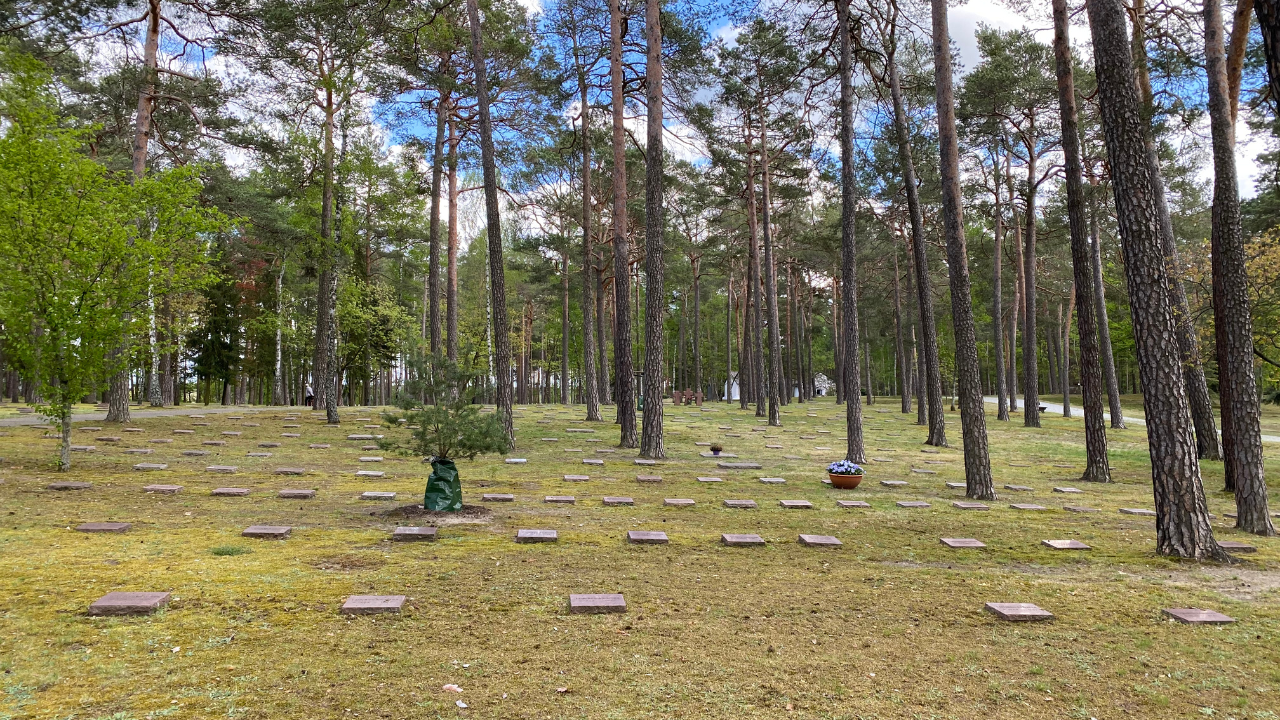
Hale Forest Cemetery
Why Halbe Remains Forgotten
Despite its scale and significance, the Battle of Halbe remains largely unknown, even to many Germans living in the region. Several factors contribute to this historical amnesia, especially in the context of post-war Germany, where the memory of such battles has often been overshadowed or deliberately neglected.
First, Western audiences naturally focus on battles involving their own forces, such as those in Normandy, Market Garden, and the Rhine crossing, rather than the purely German-Soviet confrontations on the Eastern Front. The Eastern Front’s complexity, involving multiple nationalities and ideologies, makes it harder for Western audiences to understand and relate to.
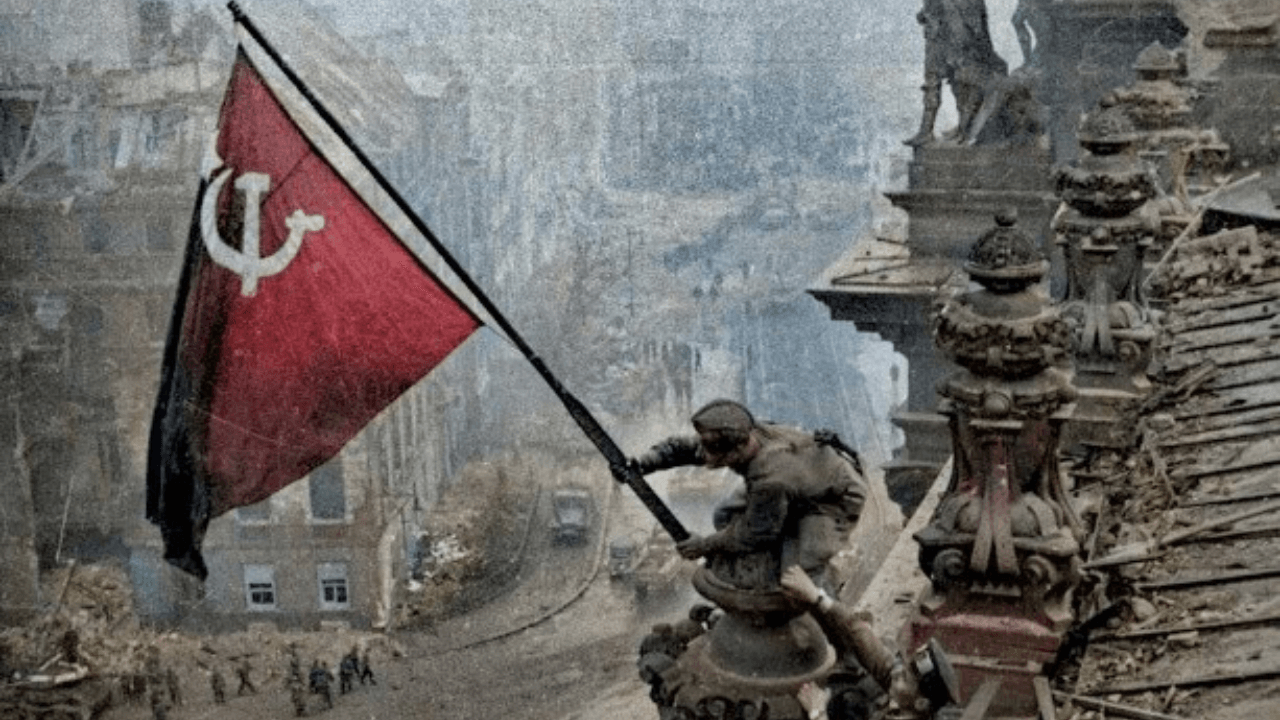
Second, the battle gets lost in the broader narrative of the Battle of Berlin. When people think of Berlin’s fall, they focus on the city itself – Hitler’s bunker, the Reichstag, the famous Soviet flag photograph. But the Battle of Berlin actually began 90 kilometres outside the city, at places like the Seelow Heights and Halbe. The Seelow Heights alone involved 1 million men, including 768,000 infantry, four times larger than the entire Normandy operation.
Third, post-war sensitivities have kept the story buried. The Soviets didn’t want to discuss what many viewed as war crimes against civilians. The Germans, as the losing side, couldn’t bring attention to their own victimisation. And in modern Germany, there’s hypersensitivity to anything that might be seen as sympathizing with Nazi causes, even when discussing genuine human suffering.
Ultimately, the battle challenges comfortable narratives about the end of World War II. It reveals the savage reality of the Eastern Front, where both sides committed atrocities and the line between liberation and conquest became hopelessly blurred.
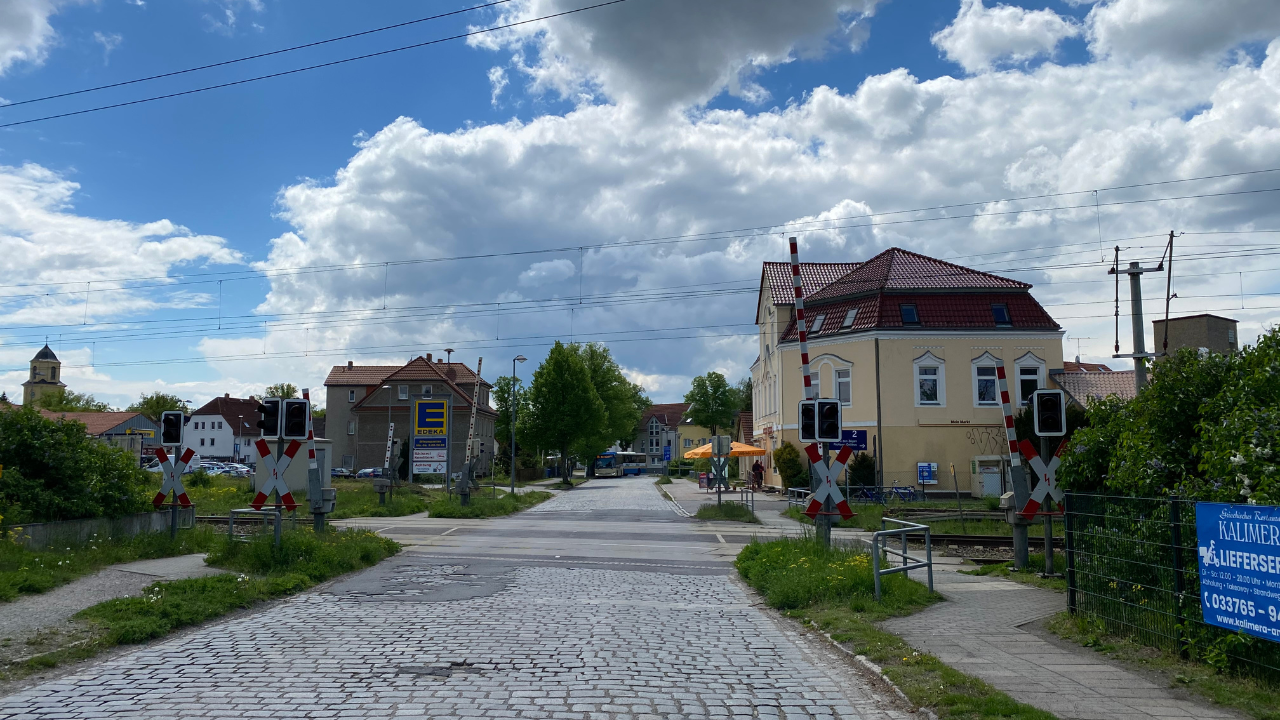
The line of advance for German soldiers into the town of Halbe today.
The Scale That Defies Comprehension
To understand why Halbe has been overlooked, it’s crucial to grasp the almost incomprehensible scale of Eastern Front operations. The Battle of Berlin involved over 3 million Soviet soldiers – a number that dwarfs most Western Front operations. These massive battles were coordinated by large army group formations, with German Army Group Centre and Army Group Vistula playing key roles in the final defensive efforts. The Seelow Heights, just one component of three Soviet fronts, was four times larger than the entire Normandy campaign, which landed 250,000 Allied troops. The scale and effectiveness of Soviet force dispositions during these operations were decisive in encircling and overwhelming German forces.
These numbers become even more staggering when considering Soviet record-keeping practices. The Soviets only officially recorded deaths of Communist Party members, leading to massive underreporting of casualties. Before the Battle of Berlin, party membership applications swelled as soldiers wanted their families notified if they were killed. Polish casualties – 80,000 Poles fought at the Seelow Heights – were never officially recorded at all.
The German War Graves Commission has recovered 1 million German war dead from Eastern Europe since 1945, recently completing a “Million for a Million” campaign to raise funds for repatriation. But there’s no equivalent Russian effort to recover Soviet remains, and Eastern European countries often bury their citizens who fought for Germany quickly and quietly, viewing their service as a source of shame.

Soviet artillery firing the opening barrage during the Battle for the Seelow Heights, April 1945
The Human Story Behind the Statistics
At its core, the Battle of Halbe reveals warfare as an inherently human story, not just a clash of machines and strategies. The soldiers on both sides had similar characteristics, similar hopes and fears. In any other circumstances, they might have been friends. But the cauldron of war, particularly the ideological war of the Eastern Front, brought out humanity’s ugliest side.
For the average German soldier at Halbe, part of the encircled army facing impossible odds, the motivation to keep fighting wasn’t ideological fanaticism but something more basic: “For the average man on the ground, it’s this sense of, well, I’m here now. I can’t do anything about my situation. I can’t run away, I can’t do anything about that. And then there’s a man next to me, who’s in the same boat that I am. So I gotta fight.”
This sense of duty to the soldier beside you, combined with the very real threat of execution by German military police for desertion, meant that for many, there simply was no choice. Roving court martials publicly executed soldiers and civilians for fleeing the battlefield, hanging them from street lamps with placards calling them cowards and traitors.

The Bundeswehr conducted a burial ceremony for bodies recovered after German unification.
Lessons from Hell's Cauldron
The Battle of Halbe offers several crucial insights into the nature of warfare and human behaviour under extreme stress. Author Eberhard Baumgart, who collected eyewitness accounts from the battle, identified key factors that determined who survived and who didn’t.
Success in the breakout depended largely on belonging to units where military authority and discipline remained intact: “To put it bluntly, the answer is those who belonged to regiments, battalions and companies where authority had remained intact and where there was a direct link between order and obedience. That’s where the combative spirit triumphed.” The discipline and organisation maintained by German units played a crucial role in preserving order and enabling coordinated attempts at breakout, even as chaos mounted.
The resolve displayed by German forces was rooted in their firsthand experience of Red Army cruelty: “The resolve displayed by the Ninth Army was also rooted in their firsthand experience of the Red Army’s cruelty. It was this certainty and the relentless barbarity shown in the ensuing slaughter which led to the scream ‘Run for your lives!’ reverberating through the ranks.” The Ninth Army's situation during the encirclement was especially dire, with their desperate actions and determination standing out as a testament to their resolve under extreme pressure.
But this desperation also led to the collapse of military effectiveness. Demoralised troops would retreat at the first obstacle, waiting for others to take casualties while hoping to tag along with successful breakthrough attempts. Those who did attempt the breakout faced continuous battles over 60 kilometres: “Those who embarked on the breakthrough ended up having to tackle one battle after another. The minute one obstruction had been surmounted, there was another one ahead of them, and then another. That happened day after day, for sixty long kilometres.”
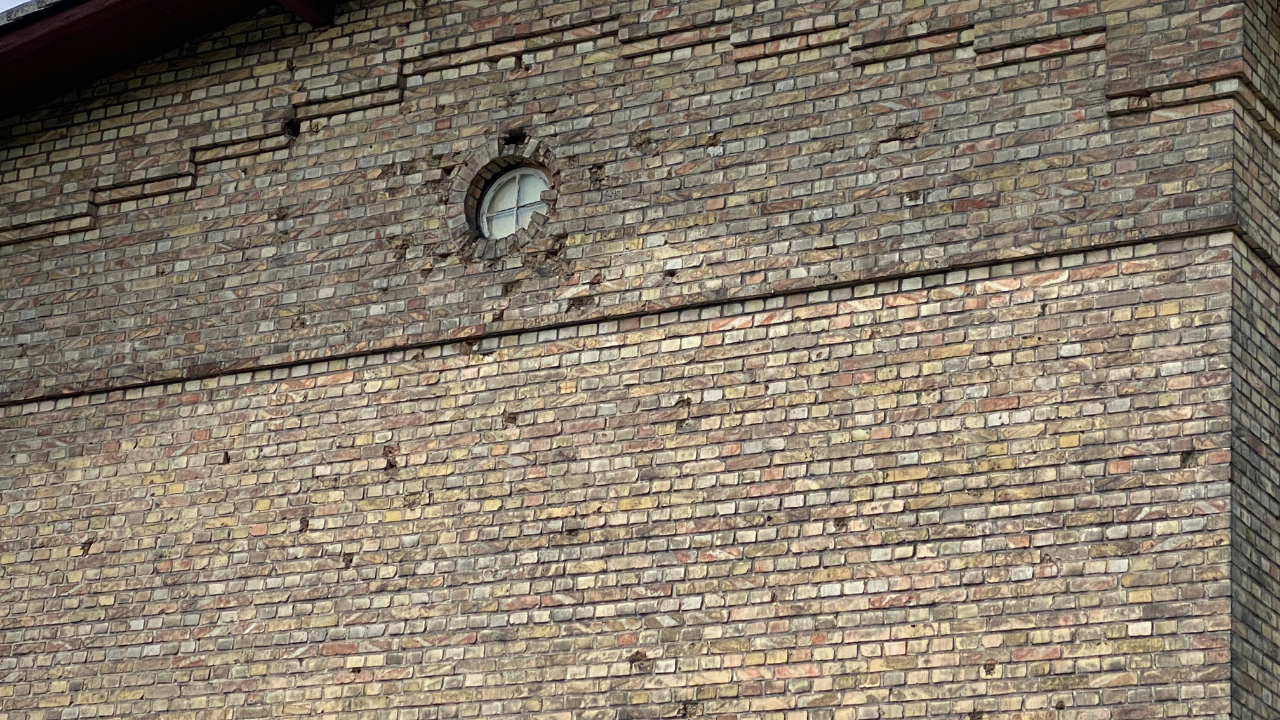
Battle scares still visible today on a residential property near the Halbe train station
The Aftermath: Success and Tragedy
Despite the horrific casualties, the Battle of Halbe achieved its primary objective for many participants. Approximately 30,000 German soldiers – just over one-third of those originally encircled – successfully reached the Twelfth Army’s lines. Combined with civilian refugees, these survivors then continued their westward retreat, eventually crossing the Elbe River at Tangermünde between May 4-7, 1945, to surrender to elements of the U.S. 102nd Infantry Division. In the final stages of the battle, Soviet forces plugged the last escape routes, sealing the fate of the encircled Germans and preventing further breakouts.
But the cost was enormous. The remaining 50,000 soldiers were killed or captured. The Red Army claimed to have taken tens of thousands of prisoners and reported significant victories in the destruction of German forces. Soviet casualties were also heavy, with thousands of Red Army soldiers buried at the Sowjetische Ehrenfriedhof cemetery near Baruth. The civilian toll may never be fully known, but it represents one of the war’s final tragedies – non-combatants caught between armies in the conflict’s dying days.

German POW’s April 1945
Conclusion: Remembering the Forgotten
The Battle of Halbe deserves to be remembered not as a footnote to the Battle of Berlin but as a crucial chapter in understanding the end of World War II and the human cost of ideological warfare. It reveals the desperate lengths people will go to when faced with impossible choices, the breakdown of military and social order in war’s final stages, and the blurred lines between combatant and civilian that characterised the Eastern Front and the brutal conflicts that swept across central Europe.
Today, as we approach the 80th anniversary of these events, the forests around Halbe remain a powerful memorial to those who died there. The silence that now pervades these woods stands in stark contrast to the hell that unfolded here in April 1945. Every year, more remains surface, reminding us that the full story of this battle – and the full accounting of its human cost – may never be complete.
The Battle of Halbe forces us to confront uncomfortable truths about warfare, ideology, and human nature. It challenges simple narratives of good versus evil, liberation versus conquest. Most importantly, it reminds us that behind every statistic, every casualty figure, every strategic decision, lie individual human stories of courage, desperation, and tragedy.
In remembering Halbe, we honour not just the soldiers who fought there but all those caught in war’s machinery – the civilians who had no choice but to flee, the young soldiers pressed into service, and the families torn apart by ideology and violence. Their stories deserve to be told, their sacrifices remembered, and their humanity acknowledged, even 80 years after the guns fell silent in the forests of Brandenburg.

This article was written by Matthew Menneke.
Matt is the founder and guide of 'On the Front Tours', offering military history tours in Berlin. Born in Melbourne, Australia, Matt's passion for history led him to serve in the Australian Army Reserve for eight years. With a degree in International Politics and a successful sales career, he discovered his love for guiding while working as a tour guide in Australia. Since moving to Berlin in 2015, Matt has combined his enthusiasm for history and guiding by creating immersive tours that bring the past to life for his guests.
10 Fascinating Facts You’ll Discover on Our World War II Walking Tours in Berlin
Explore 10 fascinating WWII facts on our Berlin walking tours. Dive into history, landmarks, and stories that shaped the city's past.
Berlin is a city with a deeply complex and powerful history, and at On the Front Tours, we bring that history to life. Our World War II walking tours offer more than just a glimpse into the past—they immerse you in the stories, events, and places that shaped the course of history. In this post, we’ll share 10 fascinating facts that will not only enhance your tour experience but also deepen your understanding of this pivotal period. Whether you’re a dedicated history enthusiast or simply curious about Berlin’s role in World War II, these insights will captivate your interest and leave you eager to explore more.
1. The Legacy of the Berlin Wall

Remains of the Berlin Wall at the Bernauer Str. Memorial
The Berlin Wall is often seen as a defining symbol of the Cold War, but its roots are deeply tied to the fallout of World War II. Constructed in 1961, this wall physically represented the divide between East and West, a separation not just geographical but ideological, that arose after Germany's defeat. Our walking tours bring this history to life as you walk along the remnants of the wall. Understanding how post-war tension between the Soviet Union and the Western Allies shaped the construction of the Berlin Wall. Our tour offers profound insights into how divided societies operate and the long-lasting effects of such divisions.
You can feel the weight of history as you stand by the Brandenburg Gate, a site that once embodied the East-West split. The risk many took trying to cross this deadly barrier serves as a sobering reminder of the human cost of division and the extreme measures taken to maintain it. Exploring the legacy of the Berlin Wall during your tour connects you to a broader narrative about conflict, freedom, and the constant struggle for unity and peace.
2. The Secrets of Hitler’s Bunker
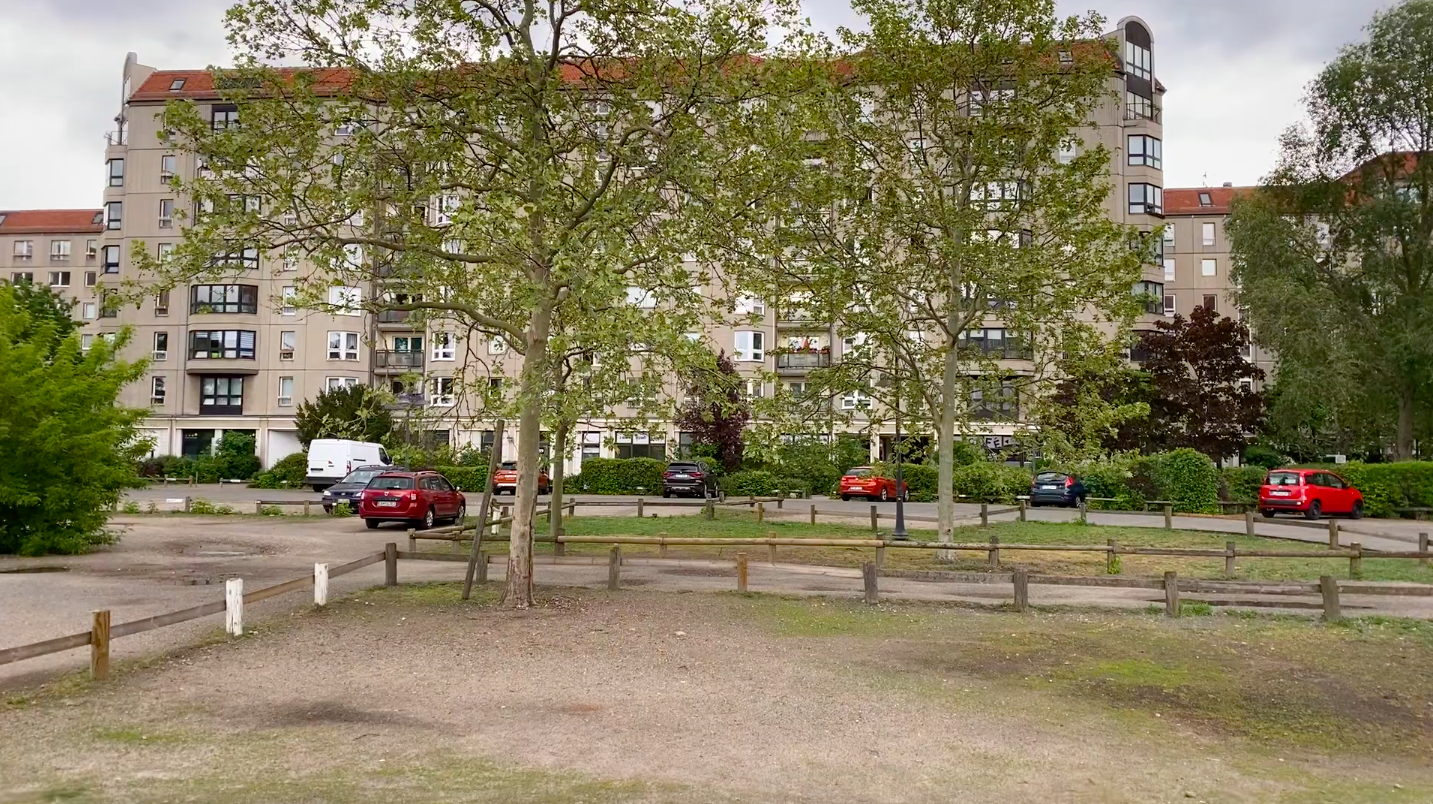
Site of the Führer Bunker today.
Beneath the bustling streets of Berlin lies an unsettling yet fascinating piece of history: Hitler’s bunker. This underground fortress, located near the heart of the city, was the scene of some of the most pivotal and grim decisions of World War II, including Hitler’s final days. On our walking tours, you’ll pass through the area where the bunker once stood, revealing stories of betrayal, despair, and the ultimate collapse of a regime that shaped the course of history. What makes this site even more intriguing is the contrast between the life that now flourishes above ground and the grim atmosphere that defined this hidden space during its last days. To fully explore Berlin, visiting significant sites like Hitler’s bunker is essential.
Visitors are captivated by the bunker’s historical and symbolic secrecy. For decades, it was buried both literally and metaphorically as post-war Germany sought to distance itself from this dark chapter. Yet, the stories of those who sought refuge in this space offer a window into the desperation, paranoia, and psychological collapse of a dictatorship in decline. These accounts force us to confront uncomfortable truths about human nature, power, and the consequences of unchecked authority—questions that remain deeply relevant to this day.
Soviet photo taken inside the bunker, May 1945
3. The Ghosts of the Reichstag

Still visible Soviet soldier graffiti on the rooftop facing Potsdamer Platz.
The Reichstag building is a cornerstone of German history, its walls bearing witness to some of the most chaotic and transformative events of the 20th century. Originally built in the late 19th century, the Reichstag’s role has shifted dramatically over time. Damaged extensively during World War II, its ruins became a powerful symbol of the collapse of the old regime. Today, the Reichstag stands tall as a beacon of German democracy, fully restored and open to the public—a living monument to Germany’s rebirth and a highlight of any tour of Berlin.
One of the most striking moments on our walking tours is recalling the 1933 Reichstag fire, an event Hitler used as a pretext to severely curtail civil liberties and consolidate power. As you approach this historic building, the air feels thick with the echoes of the past, where the balance between power and freedom was irrevocably altered. The Reichstag’s history is intertwined with Berlin’s own story—a city once shattered by war but now united under the principles of democracy and freedom. Walking through its shadows, you are reminded of the struggles, the resilience, and the eventual rebirth of a city that continues to stand as a symbol of hope.
4. The Allied Bombings of Berlin

German Civilians clearing the building rubble from Berlin Streets
Berlin endured relentless bombing during World War II, a campaign that reshaped the city’s future both physically and psychologically. From 1943 to 1945, the city faced wave after wave of Allied bombing, with the intent of breaking not only Germany’s military capacity but also the spirit of its people. The destruction was widespread and devastating. As you walk through the streets of modern Berlin today, the remnants of these bombings serve as constant, silent reminders of the city’s turbulent past. These scars in the city’s landscape infuse a sense of gravitas into every step of your tour, drawing you closer to the history that unfolded beneath your feet.
The bombings were meant to demoralise the population and force Germany’s surrender. However, Berliners demonstrated remarkable resilience. Amidst the chaos, they rebuilt and adapted, defying the very purpose of the attacks. Taking a guided walking tour gives you the historical context and the personal stories of those who lived through these dark times. Through these accounts, you will understand how Berlin’s wartime destruction fostered a sense of community, strength, and survival among its people. Our tour guides provide detailed accounts of the bombings and their impact on Berlin. Seeing the rebuilt city today is a testament to the indomitable spirit that has defined Berlin for generations.
5. Memorials That Tell the Truth

Often overlooked Stumbling Stones marking the last address of Holocaust victims
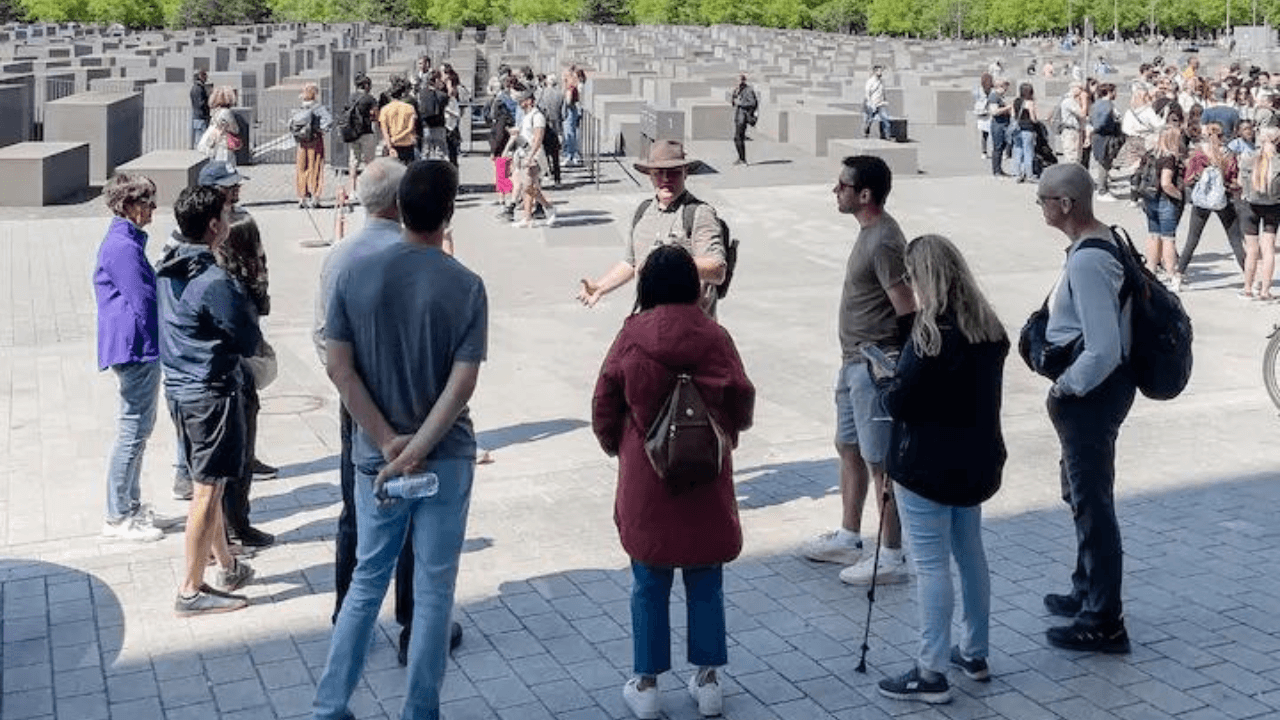
Berlin has several memorials to the horrors of World War II, each telling a different story. One of the most important is the Memorial to the Murdered Jews of Europe, a brutal reminder of the Holocaust. As you walk through the concrete blocks, you are asked to think about the millions who died. This is even more powerful during a walking tour, as the memorial’s brutality is in contrast to the life all around it.
Each memorial invites a broader conversation about rememberance, accountability, and healing. The design of the spaces forces you to engage with history. The stories of victims, survivors, and resistors come together and offer lessons for today and tomorrow. So, memorials are not just places of reflection but also a trigger for conversation, reminding us of our responsibility to never let this happen again. Private tours are a personal way to visit these memorials with local guides who will provide more context and tailor-made itineraries.
6. The Power of Propaganda

Matt standing on the steps of the Pergamon Museum. The Lustgarten played host to many NS rallies.
Propaganda was one of the most powerful tools wielded by the Nazi regime during World War II, shaping public opinion and controlling the narrative to support their destructive goals. On our Berlin walking tours, you’ll witness firsthand the remnants of this propaganda machine, which permeated nearly every aspect of daily life. From massive posters glorifying the Führer to subtle, insidious messages designed to instil fear and manipulate behaviour, propaganda was omnipresent in Nazi Germany. Its influence extended beyond the public square and into homes, schools, and workplaces, becoming an inescapable part of life in Berlin during the war.
As you encounter sites where Nazi propaganda once flourished, you’ll gain valuable insights into how such messaging shaped the mindset of a nation. These historical lessons also serve as a lens through which to view modern media and the information we consume today. The legacy of Nazi propaganda reminds us of the dangers of misinformation and manipulation, urging us to critically engage with the narratives that influence our own worldviews. Our knowledgeable guides will present these insights with a careful balance of reflection and engagement, making your tour both informative and thought-provoking. They strike just the right tone when discussing sensitive topics like propaganda.
7. The Strategic Role of Topography
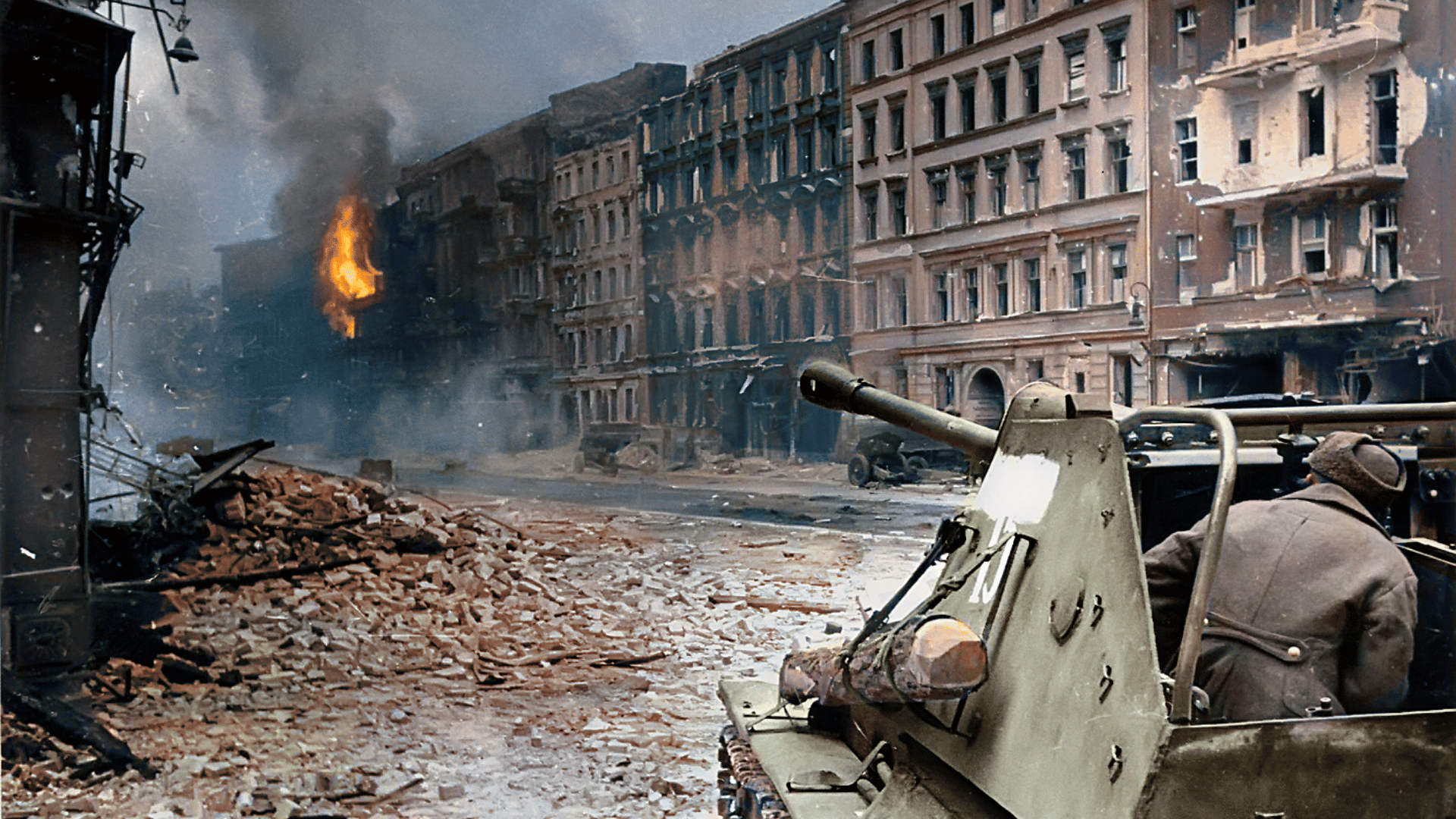
Soviet soldiers battle their way through Berlin streets.
Berlin’s unique landscape played a crucial role during World War II. The city’s rivers, bridges, and open spaces weren’t just features of a bustling metropolis—they were key elements that shaped military strategy. As you walk through Berlin on our tours, a knowledgeable guide will help you understand how these geographical features influenced both defensive and offensive military actions, adding depth to your experience. From the dense woodlands of the Tiergarten to the city’s winding streets and extensive waterways, Berlin’s topography offered both strategic advantages and significant challenges during the war. Our tour guide will help you understand the military significance of Berlin’s topography.
The urban grid, originally designed for commerce and daily life, became critical for troop movements and resource deployment during moments of crisis. Bridges over the Spree River and open squares like Alexanderplatz were pivotal in facilitating defence and occupation. These logistical dynamics contributed to the city’s resilience and vulnerability during bombings. By examining Berlin’s geographical features, you’ll gain unique insights into the logistics of warfare and its human toll. Every building, bridge, and tree tells a story of survival and endurance in the face of destruction.
8. Stories of Resistance
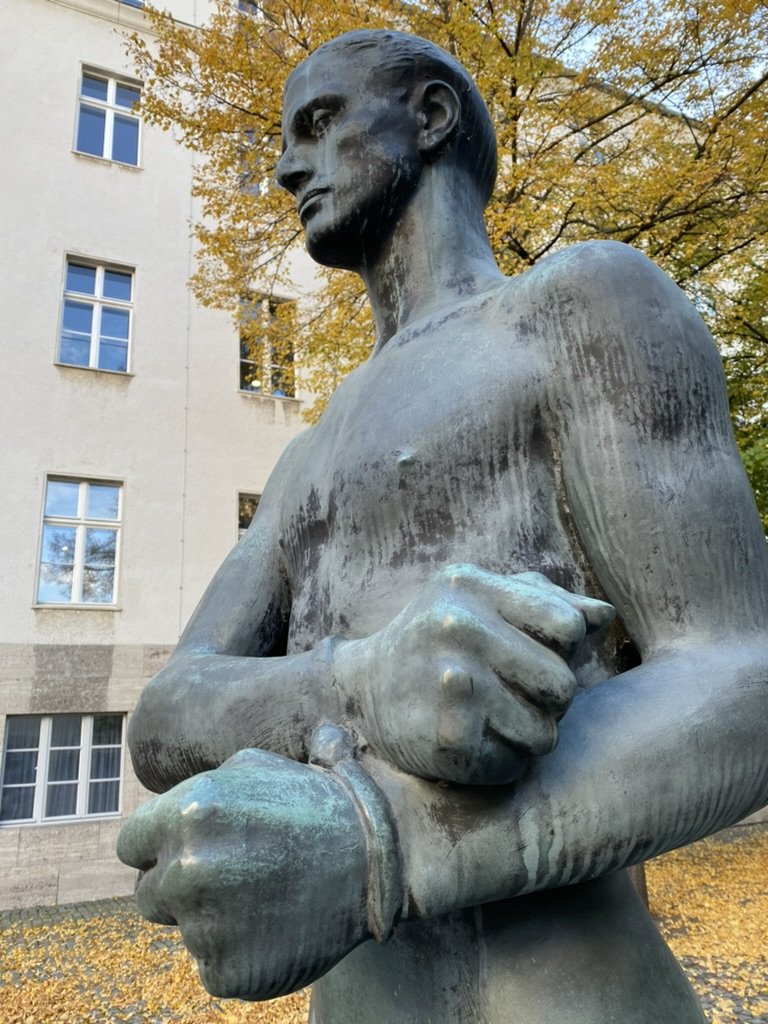
Statue located in the courtyard of the German Resistance Museum
Amidst the chaos and oppression of World War II, countless unsung heroes emerged from the shadows of Berlin, risking their lives to resist the Nazi regime. On our walking tours, you’ll encounter stories of remarkable courage, from non-violent movements like the White Rose to individuals who bravely helped Jews escape persecution. These acts of defiance provide a glimpse into the courage and humanity that persisted during some of the darkest times in history. As you walk the streets of Berlin, these stories will resonate, reminding us that resistance can come in many forms, often led by ordinary people who refuse to accept tyranny. Hearing these stories makes for a fantastic tour experience.

Hitler shows Mussolini the aftermath of the July 20th bomb plot
The stories of resistance challenge our conventional definitions of heroism. The people behind these efforts were often students, teachers, soldiers, and everyday citizens who understood the risks but believed in the necessity of standing up for what was right. The White Rose movement, for example, stood as a powerful symbol of moral resistance, distributing leaflets that called for non-violent opposition to the Nazi regime. Seeing these sites and learning about these individuals adds depth to your tour, prompting reflection not only on the past but on the present—reminding us that standing up for justice and compassion is as important today as it was then.
9. The Jewish Quarter

The New Synagogue on Oranienburger Strasse in the district of Mitte is a building of outstanding importance for the history of Judaism in Berlin.
Berlin’s Jewish Quarter is a powerful reminder of the city’s complicated and painful past. Once a vibrant centre of culture and commerce, it underwent a profound transformation during and after World War II. As you walk through this area on a tour, you will see how it once was full of life and creativity—a hotbed of intellectualism and art—before it became a site of unimaginable tragedy during the Holocaust.
Today, the Jewish Quarter is experiencing a renaissance, a symbol of remembrance and renewal. Heartfelt memorials and new cultural spaces sit alongside historical landmarks, telling a story of resilience and hope. By walking through the quarter, visitors pay homage to the past and celebrate the rebirth of community and culture. This evolution teaches us to acknowledge our past and shape a more inclusive future. Walking in the Jewish Quarter in Berlin will give you a deep understanding of the city’s history and culture.
10. Cultural Resilience after the War

Modern Berlin Skyline
In the aftermath of World War II, Berlin rose from the ashes with extraordinary cultural resilience. The devastation that had reduced much of the city to rubble also provided a blank canvas for artists, intellectuals, and creators who transformed trauma into creativity. Berlin’s cultural rebirth was fueled by a desire to reclaim and redefine its identity, leading to the emergence of art, music, and ideas that would shape not only the city but also modern Germany. As you explore the city on our walking tour, you’ll witness how Berlin’s spirit of resilience is woven into its post-war cultural landscape.
The Cold War that followed the war’s end further shaped Berlin, as the city became a symbol of the ideological divide between East and West. Our Cold War tours delve into this period of Berlin's history to provide a deeper understanding of how Berliners navigated a city split in two by walls but united in their pursuit of freedom and creativity. From the rise of underground art movements in East Berlin to the bustling cultural scene that flourished in the West, Berlin’s post-war history is one of defiance, survival, and artistic innovation.
Conclusion
Walking through Berlin on one of our tours is much more than a chance to see historical landmarks—it’s a journey through time, offering you a deeper understanding of the city and the people who live here. From stories of resistance to the powerful memorials that stand as reminders of the past, each step on your tour will deepen your knowledge of World War II and how its impact shaped modern Berlin. Every fact, every site, and every story adds layers of meaning, allowing you to connect with the resilience and spirit that define this incredible city.
At On the Front Tours, we are dedicated to providing an immersive experience that resonates with each visitor. Our expert guides are passionate about Berlin’s history and will ensure that you leave not just with vivid memories of the places you visited but also with a deeper appreciation for the lessons this period in history continues to teach us.
Let’s walk through history together and discover what awaits you in the heart of Berlin.

This article was written by Matthew Menneke.
Matt is the founder and guide of 'On the Front Tours', offering military history tours in Berlin. Born in Melbourne, Australia, Matt's passion for history led him to serve in the Australian Army Reserve for eight years. With a degree in International Politics and a successful sales career, he discovered his love for guiding while working as a tour guide in Australia. Since moving to Berlin in 2015, Matt has combined his enthusiasm for history and guiding by creating immersive tours that bring the past to life for his guests.

Berlin WWII Tours: What to Expect and How to Prepare
Explore Berlin's WWII history with expert guides. Visit iconic sites, engage in interactive learning, and gain deep insights. A powerful journey through time that stays with you. CopyRetry
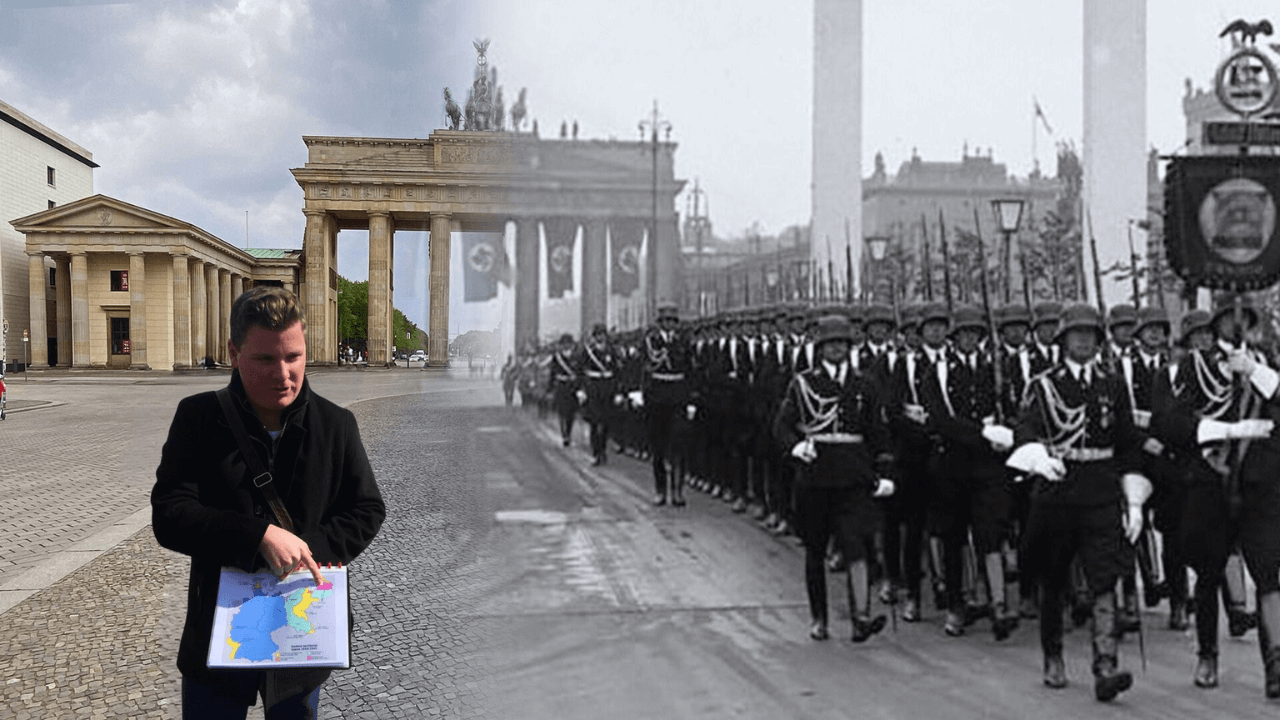
Planning a visit to Berlin and considering a World War II tour? You're about to embark on an unforgettable journey through History with On the Front Tours. Before you lace up your walking shoes and grab your camera, there are a few things you should know to make the most of this powerful experience.
In this guide, we'll walk you through what to expect on Berlin WWII tours and how to prepare for your historical adventure. We'll explore:
The key sites and stories you'll encounter
How to prepare for your tour
The importance of understanding Berlin's WWII history
The Cold War's impact on the city's landscape
Berlin's historical significance extends beyond World War II, with the Cold War adding another fascinating layer to the city's rich past. Our tours offer a unique perspective on both periods, helping you understand how these events shaped modern Europe.
Join us as we delve into why these tours are so important and how they can transform your understanding of one of the most significant chapters in world history. Whether you're a history buff or simply curious about Berlin's past, our WWII tours promise an educational and moving experience you won't forget.

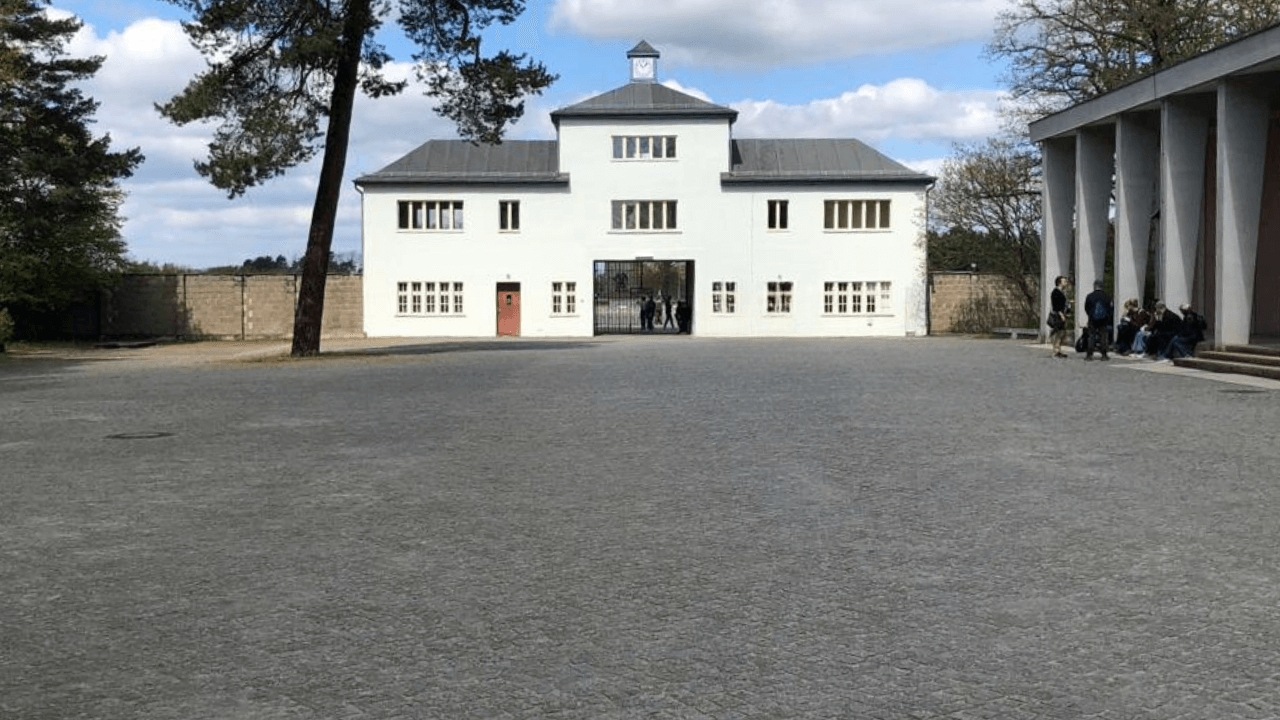
What to Expect on a Berlin WWII Tour
Our WWII tours in Berlin offer more than just sightseeing. They're immersive experiences that bring HistoryHistory to life, providing a unique perspective on the events that shaped the 20th century. If you or your friends plan to visit Berlin, recommend these tours for an unforgettable journey through time.
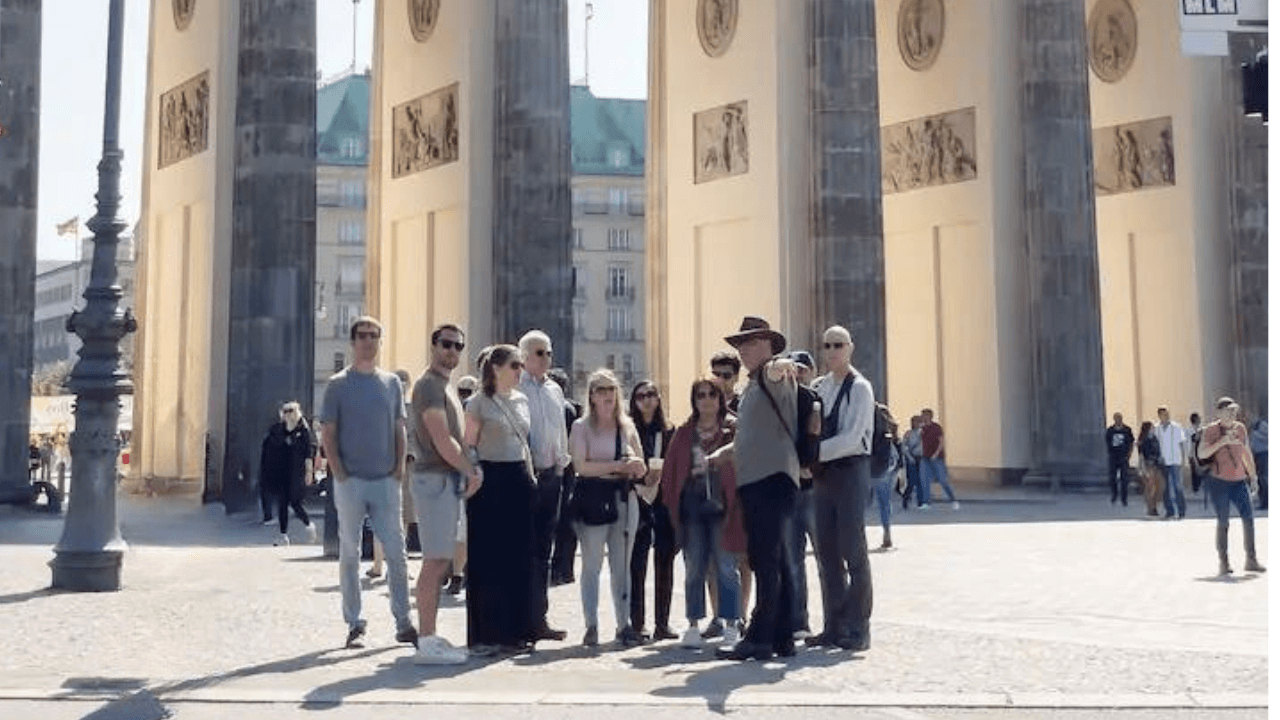
Key Historical Sites You'll Explore:
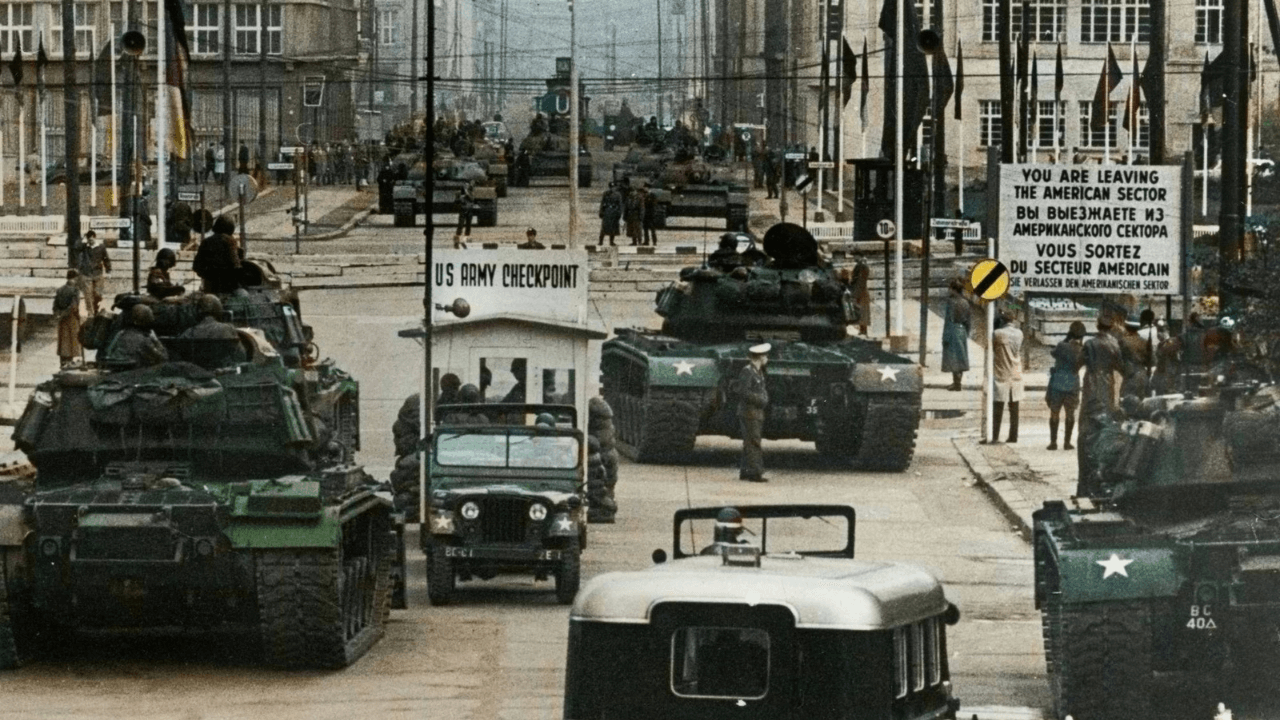
Brandenburg Gate: This iconic landmark played a significant role during both World War II and the Cold War. It's an essential stop that offers insights into Berlin's tumultuous past.
Hitler's Bunker: Visit the site of the infamous underground complex where Hitler spent his final days, gaining a chilling glimpse into the last moments of the Third Reich.
Reichstag Building: Explore the historic parliament building that was a key target during the Battle of Berlin and later became a symbol of German reunification.
Topography of Terror: Located at the former Gestapo headquarters, this museum offers a sobering look into the Nazi regime's secret police operations.
Holocaust Memorial: Experience the powerful and thought-provoking Monument to the Murdered Jews of Europe, commemorating the six million Jewish victims of the Holocaust.
Soviet War Memorial: This stark Monument in Tiergarten serves as a reminder of the Soviet Union's role in defeating Nazi Germany.
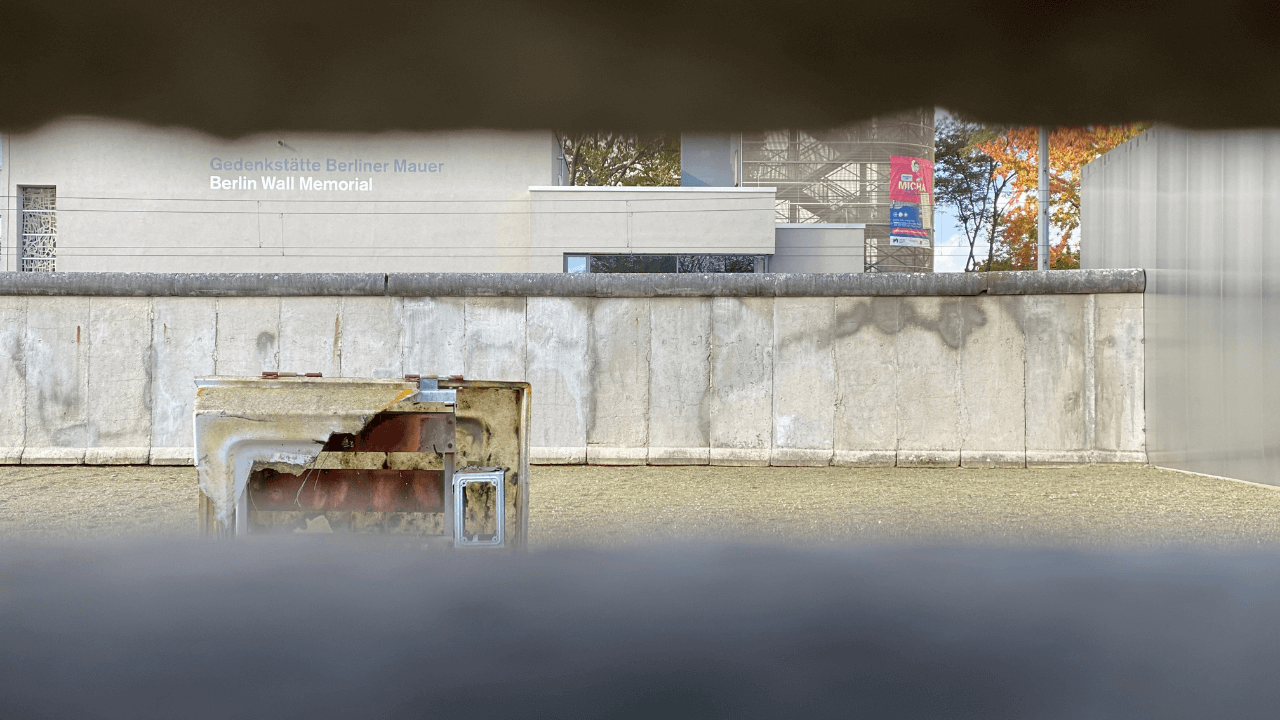
Berlin Wall Memorial: While not strictly a WWII site, this landmark illustrates the war's long-lasting impact on the city and the subsequent Cold War division.
Our knowledgeable guides will provide context and personal stories at each site, helping you understand the historical significance of these locations. You'll better appreciate Berlin's complex history and the events that shaped modern Europe.
Expert Guides: Your Key to Berlin's WWII History
Expert historians lead our Berlin WWII tours with deep knowledge of the Third Reich and World War II. You're not just getting a tour guide; you're gaining access to a walking encyclopedia of WWII history. These specialists have dedicated years to studying this crucial period and offer insights that go far beyond what you'll find in history books.
What Sets Our Guides Apart:
In-depth historical context: On tours like "Hitler's Berlin," your guide will provide detailed information about Hitler's rise to power, the Nazi regime's impact on the city, and Berlin's eventual fall.
Lesser-known facts: Discover intriguing details often overlooked in mainstream historical accounts.
Personal stories: Hear moving anecdotes that bring the HistoryHistory to life, making your tour educational and emotionally impactful.
Answering your questions: Our knowledgeable guides are ready to address your curiosities about this complex period in history.
Beyond WWII: Exploring the Cold War
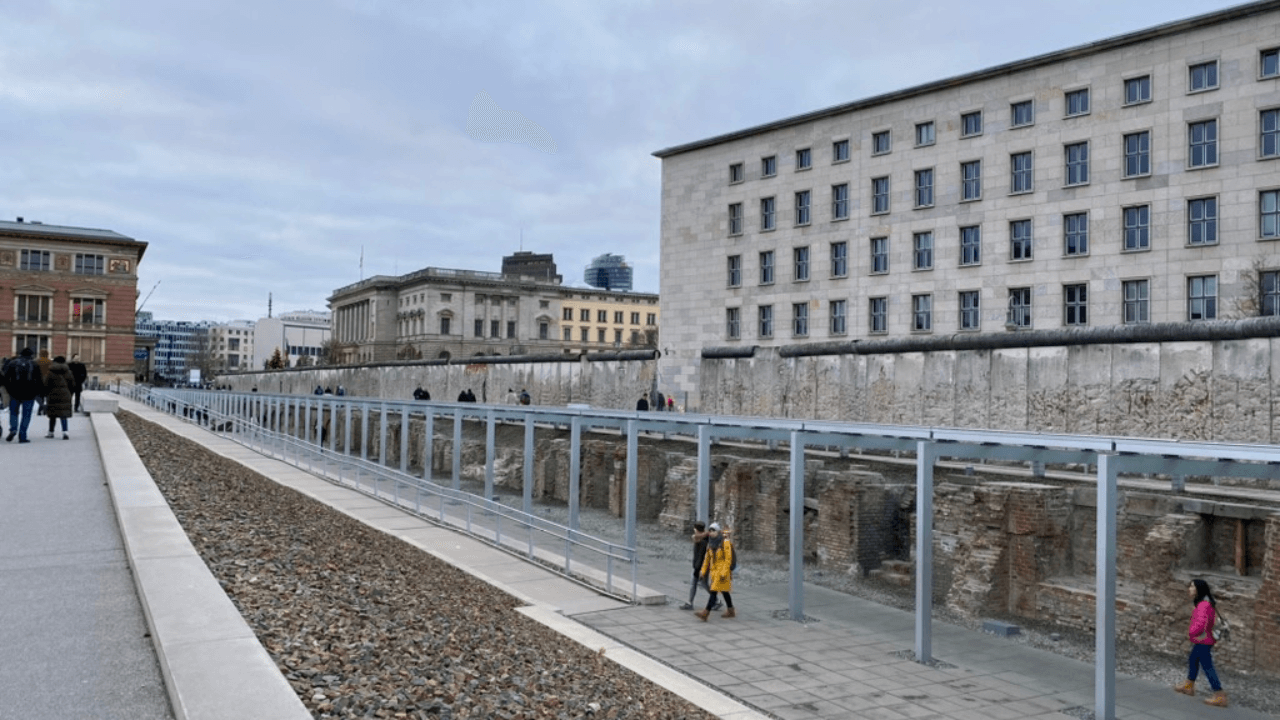
For those interested in Berlin's more recent past, we also offer a Cold War Tour. This experience delves into:
Life in communist East Germany
The Berlin Wall and its impact on the city
Key events of the Cold War era
The fall of the Wall and German reunification
Whether you're a history buff or simply curious about Berlin's past, our tours offer an unparalleled look into the events that shaped modern Europe. If you have friends planning to visit Berlin, recommend our tours for an unforgettable journey through HistoryHistory. Our expert-led experiences provide a unique perspective on WWII, the Cold War, and their lasting impact on Berlin and the world.
Sachsenhausen Concentration Camp Tour: A Powerful Journey into History
For those seeking a deeper understanding of World War II and the Holocaust, our Sachsenhausen Concentration Camp Tour offers a profound and educational experience. Located just outside Berlin, this Memorial and museum preserves the Memory of those who suffered under Nazi rule.
Tour Highlights:
Guided visits to key areas of the camp:
Prisoner barracks
Execution trench
Crematorium
Camp's unique triangular layout
Historical context and individual prisoner stories
Insights into camp construction and the Nazi regime
Exploration of the camp's liberation and post-war use
What to Expect:
An educational and emotionally impactful experience
Comfortable transportation from Berlin
Knowledgeable guides offering in-depth insights
Discussions on the camp's HistoryHistory and significance
Time for reflection on the importance of remembrance
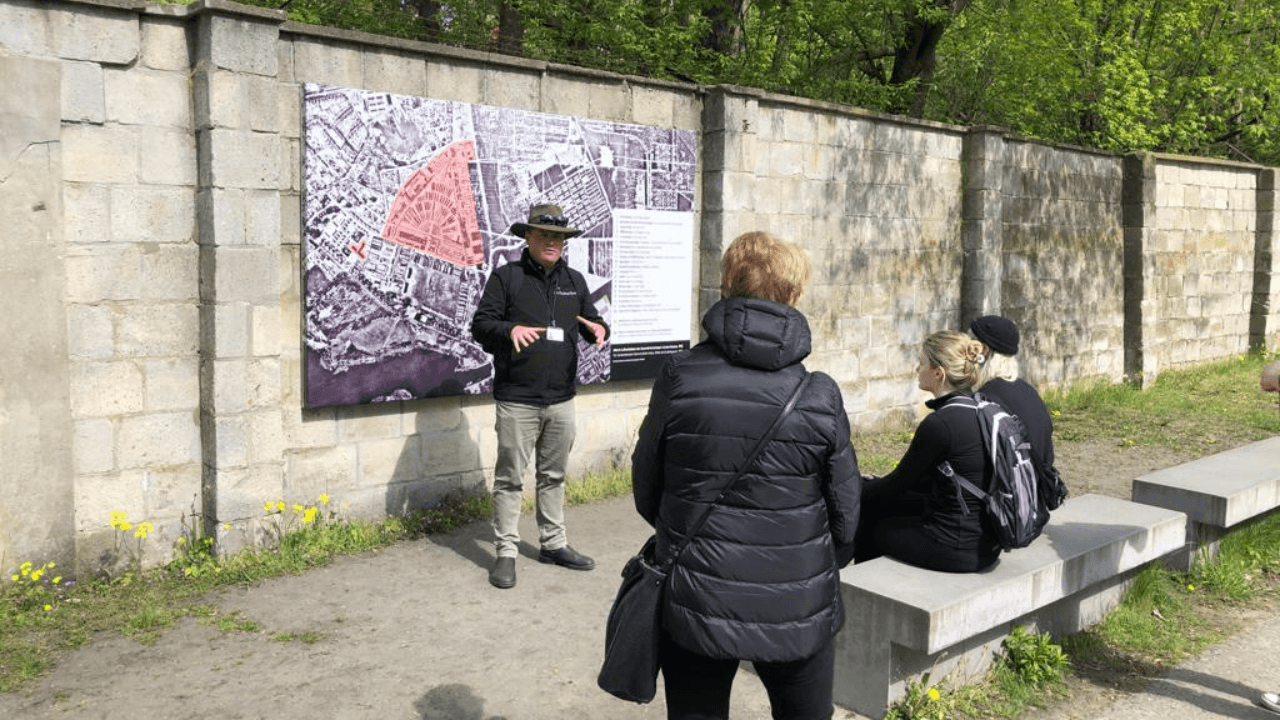
Book Your Tour
Why Visit Sachsenhausen:
Gain valuable insights into World War II history
Understand the Holocaust's lasting impact
Engage with difficult subject matter in a meaningful way
Participate in honoring the Memory of those who suffered
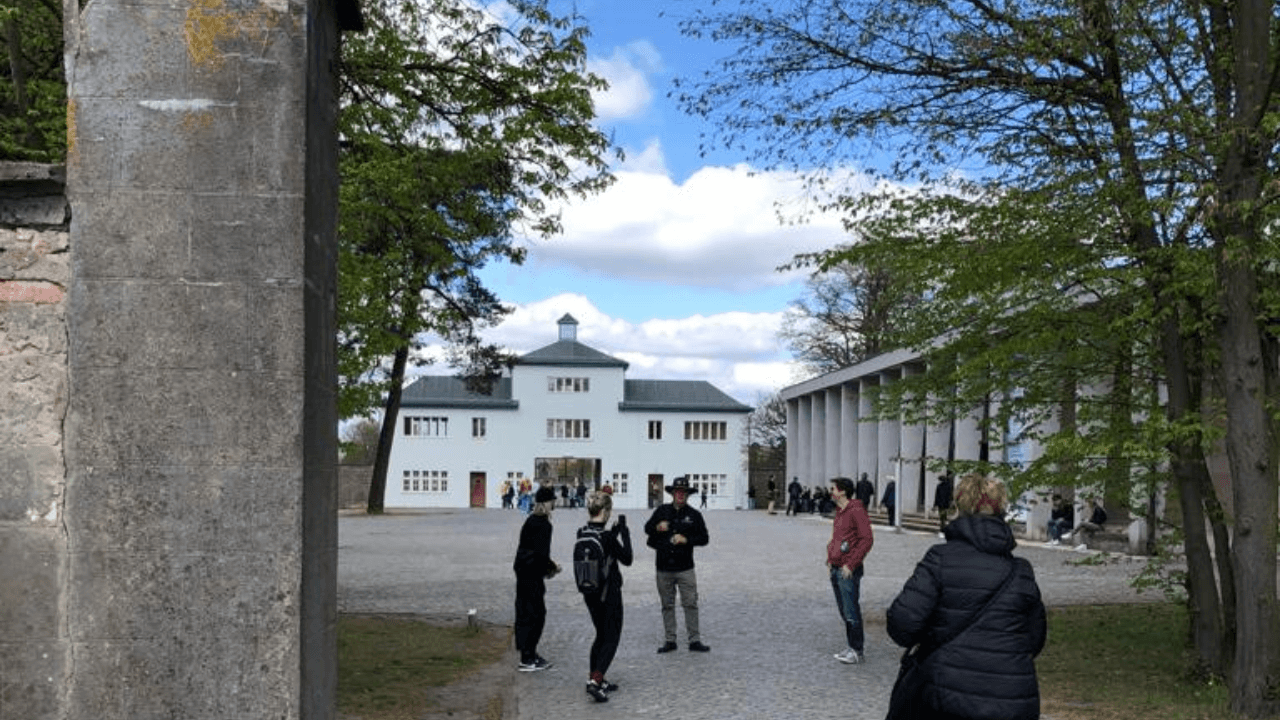
Our Sachsenhausen tours are designed to be respectful and informative, encouraging a deeper understanding of this dark chapter in HistoryHistory. We welcome questions and discussions, fostering critical thinking about the Holocaust and its relevance to contemporary issues.
Join us for this thought-provoking journey through HistoryHistory. Our expert guides will provide context, share personal stories, and help you navigate this emotionally challenging but important site. The Sachsenhausen Concentration Camp Tour is an essential experience for anyone interested in World War II history or seeking to understand the full impact of the Nazi regime.
If you have friends planning to visit Berlin, we highly recommend suggesting this tour. It's an opportunity to gain profound insights into one of the most significant periods of the 20th century.
Book your tour today and take part in this crucial educational experience. Together, we'll explore the past to better understand our present and shape a more informed future.
Interactive Learning: Bringing Berlin's WWII History to Life
Our Berlin WWII tours are designed to be engaging and interactive, offering history buffs and curious visitors alike a chance to truly immerse themselves in the city's rich 20th-century history. We believe the best way to understand the past is to actively engage with it.
Engaging Features of Our Tours:
Open Q&A Sessions: Our knowledgeable guides encourage curiosity. Feel free to ask questions throughout the tour, allowing you to delve deeper into topics that interest you.
Thought-Provoking Discussions: Engage in conversations about historical events and their impact. Share your thoughts and perspectives, creating a richer learning experience for everyone.
Visual 'Then & Now' Comparisons: View compelling photographs that compare past and present Berlin. These visual aids help you understand how the city has evolved (in some ways, remained unchanged) since World War II.
Historical Reenactments: On select tours, participate in brief role-playing exercises. These immersive experiences help you better understand people's daily lives and challenges during the war.
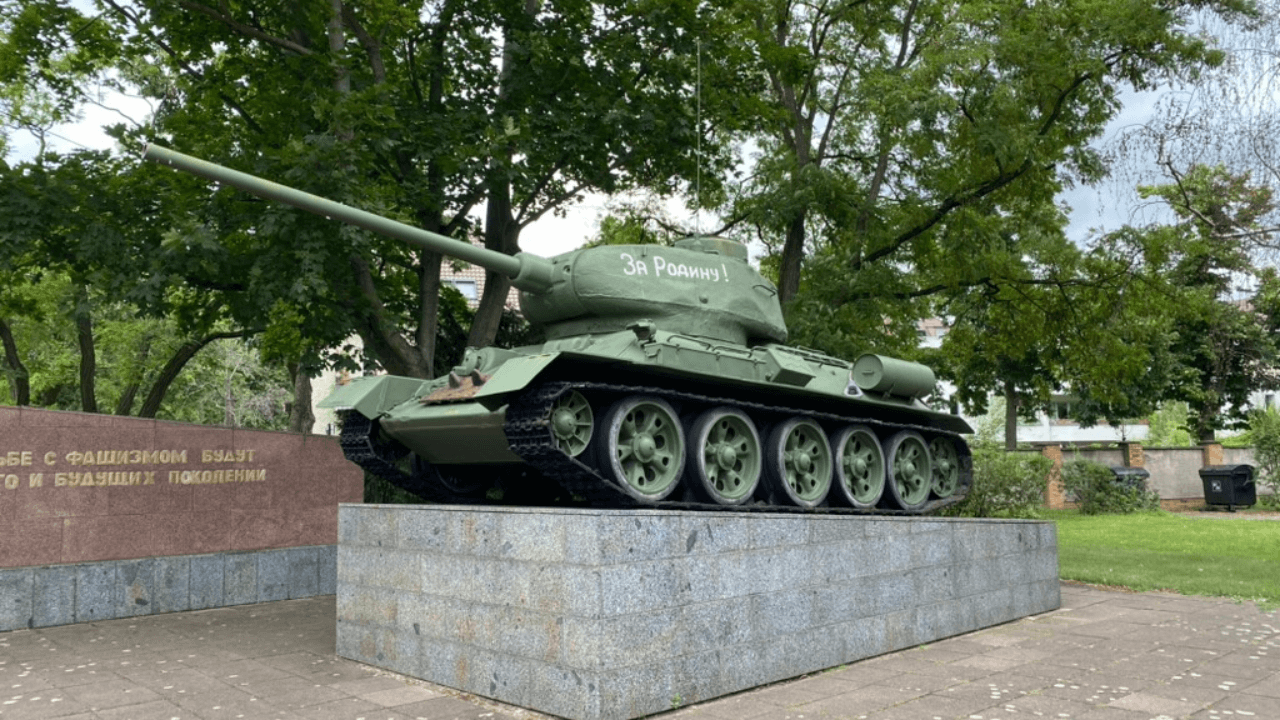
Why Our Interactive Approach Works:
Deepens Understanding: By actively participating, you'll gain a more profound grasp of Berlin's WWII history.
Makes HistoryHistory Tangible: Our methods bring the past to life, making it more relatable and memorable.
Encourages Critical Thinking: Discussions and reenactments prompt you to consider different perspectives on historical events.
Appeals to Various Learning Styles: Whether you're a visual, auditory, or kinesthetic learner, our tours cater to all.
Our interactive approach goes beyond memorizing dates and facts. It's about truly grasping the human experiences of this tumultuous time in Berlin's History. For history enthusiasts eager to explore the complexities of WWII and its impact on Berlin, our tours offer an unparalleled educational experience.
Small Group Tours: Personalized Berlin WWII Experiences
At On the Front Tours, we believe that the best historical experiences come in small packages. That's why we limit our Berlin WWII tours to intimate groups, ensuring you get the most out of your journey through time.
Why Choose Our Small Group Tours:
Personalized Attention: With an average of 8-10 participants and a maximum of 15, you'll receive individualized attention from our expert guides. This allows for a more tailored experience, catering to your specific interests in WWII history.
Enhanced Engagement: Smaller groups mean more opportunities to ask questions and engage in meaningful discussions about Berlin's wartime past. You'll have ample time to satisfy your curiosity about the Third Reich, the Holocaust, and the city's role in WWII.
Intimate Atmosphere: Our small group setting creates a more comfortable and intimate atmosphere. This is particularly beneficial when exploring sensitive historical sites and discussing the complex emotions that WWII history can evoke.
Better Access to Sites: Smaller groups can quickly navigate historical sites, allowing better access to critical areas and artifacts. You'll have clearer views and more space to absorb the significance of each location we visit.
Peer-to-Peer Learning: Get to know your fellow tour participants, sharing perspectives and insights that can enrich your understanding of Berlin's WWII history. This collaborative learning environment often leads to thought-provoking discussions and new friendships.
Flexibility and Customization: With fewer participants, our guides can be more flexible, adjusting the pace and focus of the tour based on the group's interests and energy levels.
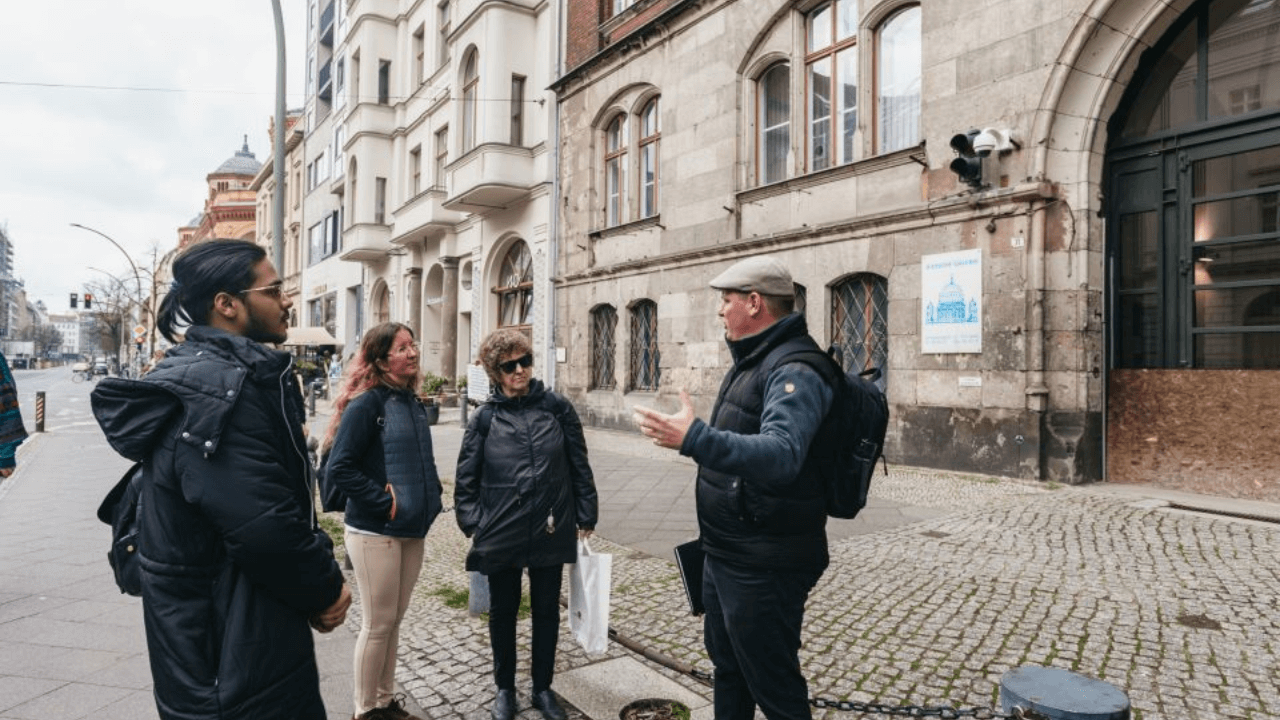
Our small group format is ideal for history buffs who want an in-depth exploration of Berlin's WWII sites and stories. It's also perfect for those who prefer a more personal and interactive tour experience.
Book your small group Berlin WWII tour today and prepare for an intimate journey through one of History's most impactful periods. Spaces are limited to ensure the best possible experience for all participants.
Emotional Journey: Experiencing the Holocaust Memorial in Berlin
A WWII tour in Berlin is not just an educational experience; it's a profound emotional journey, particularly when visiting the Holocaust Memorial. This site, officially known as the Memorial to the Murdered Jews of Europe, offers a powerful and moving encounter with one of history's darkest chapters.
What to Expect at the Holocaust Memorial:
Architectural Impact: The Memorial's unique design, with its undulating field of concrete slabs, creates an immersive and disorienting experience that reflects the senseless loss of life during the Holocaust.
Personal Reflection: As you walk through the Memorial, you'll have time for quiet contemplation, allowing the weight of HistoryHistory to resonate personally.
Information Center: Beneath the Memorial, an information centre provides historical context, personal stories, and exhibits that deepen your understanding of the Holocaust.
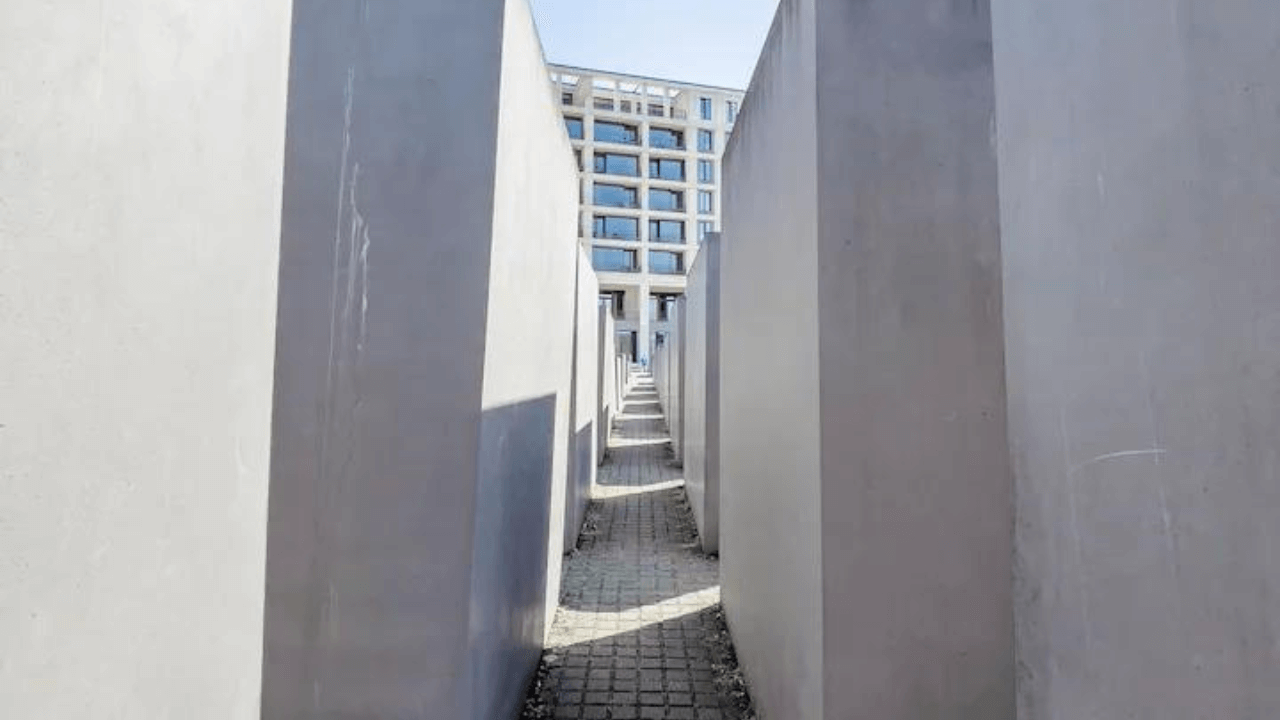
Emotional Aspects of the Visit:
Confronting Dark Realities: In History, you'll face the harsh truths of this period, which can be challenging but ultimately rewarding.
Range of Emotions: Visitors often experience a spectrum of feelings - from sadness at the tragedy to anger at injustices and even hope inspired by acts of resistance and heroism.
Human Connection: These emotional responses help us connect with the past on a human level, understanding why it's crucial to remember and learn from these events.
Book Your Tour
Our Approach:
Our expert guides are trained to handle these sensitive topics with care and respect. They provide:
Historical Context: Balancing emotional impact with factual information
Respectful Narration: Treating the subject matter and victims with utmost respect
Space for Processing: Allowing time for personal reflection and group discussion
Support: Being available to answer questions and provide additional context as needed
The Holocaust Memorial visit is a cornerstone of our Berlin WWII tours, offering a powerful way to engage with this crucial history. It's an experience that goes beyond facts and dates, touching the heart and leaving a lasting impact.
Join us on this moving journey through History. Book your Berlin WWII tour today and prepare for an experience that will educate, commemorate, and inspire.
How to Prepare for Your Berlin WWII Tour: Essential Tips
To get the most out of your historical journey through Berlin, follow these preparation tips:
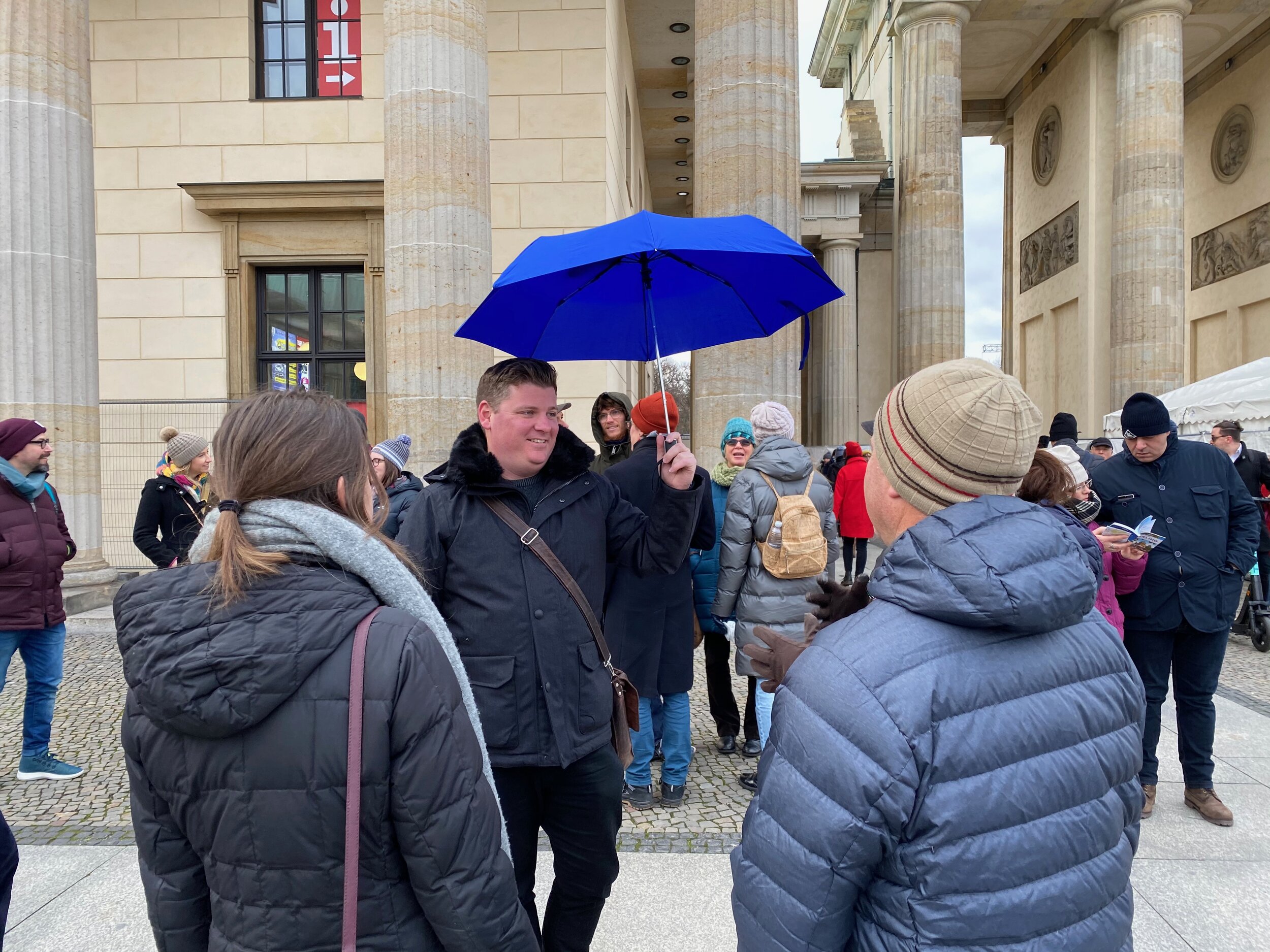
Wear Comfortable Shoes. Our tours involve significant walking, often on uneven cobblestone streets or grassy areas. Opt for well-broken-in walking shoes or sneakers with good support to ensure comfort throughout the tour.
Dress for Berlin's Weather. Berlin's weather can be unpredictable. Check the forecast and dress in layers. Bring an umbrella or rain jacket if needed. In summer, remember sun protection. In winter, warm layers, gloves, and a hat are essential.
Stay Hydrated and Energized. Bring water and small snacks to keep your energy up during the tour. While we take breaks, having refreshments on hand helps you stay focused during this mentally and emotionally engaging experience.
Come with an Open Mind. Our tours delve into the complex and often challenging history. Be prepared to engage with complex topics and think critically about WWII events. Approach the experience with curiosity and a willingness to learn and reflect.
Brush Up on Basic WWII History. While not required, a basic understanding of WWII can enhance your tour experience. Consider these resources:
"The Rise and Fall of the Third Reich" by William L. Shirer
"Berlin: The Downfall 1945" by Antony Beevor
"World War II in HD Colour" documentary series
Bring a Notebook. Consider bringing a small notebook to jot down interesting facts, questions, or personal reflections. This can help you process the experience and create a meaningful memento of your tour.
Charge Your Camera or Phone. While we encourage being present at the moment, you may want to take photos at specific points. Ensure your device is fully charged, but be mindful of photography restrictions at some sites.
Plan Your Transportation. Public transportation, such as the U-Bahn and S-Bahn, makes traveling between East Berlin and West Berlin easy. Familiarize yourself with these systems before your tour.
Consider Visiting Museum Island In Berlin. Before or after your tour, visit Museum Island for additional historical context. It's home to world-class museums like the Pergamon and the Neue Museum.
Prepare Emotionally. Our WWII tours can be emotionally impactful. Take some time to prepare mentally to engage with challenging historical topics.
Following these tips will prepare you for an insightful and meaningful Berlin WWII tour experience. If you have friends planning to visit Berlin, I recommend this tour for a profound journey through HistoryHistory.
Remember, our expert guides are here to support your learning experience every step of the way. Book your tour today and get ready to explore Berlin's rich WWII history!
Why Berlin WWII Tours Matter: Preserving History, Promoting Understanding
Understanding World War II history, particularly in a city as central to the conflict as Berlin, is crucial for several reasons. Our tours, including the day trip to the Sachsenhausen concentration camp, offer profound insights into this pivotal period. Here's why these experiences are so meaningful:
Preserving Memory. As time passes and fewer WWII eyewitnesses remain, it becomes increasingly vital to maintain the Memory of what happened. Our Berlin WWII tours help ensure that the lessons of this period are not forgotten, providing a tangible link to the past.
Learning from History. By understanding how events unfolded before and during WWII, we can better recognize warning signs and work to prevent similar atrocities in the future. Our knowledgeable guides offer context that helps visitors draw parallels to contemporary issues.
Promoting Empathy and Understanding. Walking in the footsteps of those who lived through WWII in Berlin helps develop empathy for the experiences of others, both in the past and in current conflicts worldwide. This perspective is compelling when visiting sites like the Sachsenhausen concentration camp.
Contextualizing Modern Berlin. WWII had a profound impact on Berlin's physical landscape and cultural identity. Understanding this history helps visitors appreciate the city's remarkable recovery and ongoing evolution, especially when exploring remnants of the Berlin Wall and other Cold War sites.
Honouring Victims and Survivors. Our tours pay respect to the millions of lives lost and forever changed by the war. We ensure these experiences are not reduced to mere statistics by visiting memorials and learning about individual stories.
Encouraging Critical Thinking. Our WWII tours challenge visitors to think critically about history, propaganda, and individuals' choices during this period. This analytical approach fosters a deeper understanding of complex historical events.
Inspiring Peace and Reconciliation. By confronting history's darkest chapters, our tours ultimately highlight the importance of peace, democracy, and international cooperation in preventing future conflicts.
Connecting Past and Present. Our tours draw connections between WWII events and contemporary issues, demonstrating how this history continues to shape our world today.
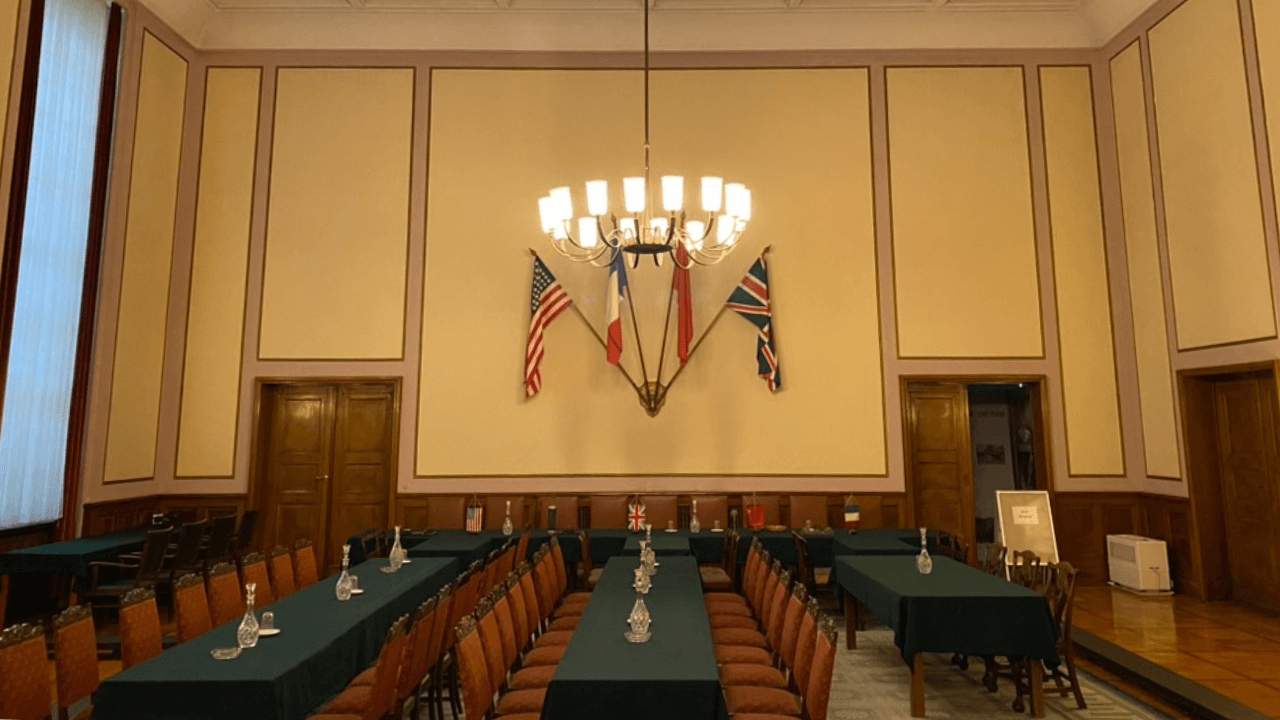
The Berlin WWII tour experience, including the Sachsenhausen concentration camp visit, offers a unique opportunity to engage meaningfully with this crucial period of history. Our expert guides provide the context and insights needed to thoroughly appreciate the significance of each site visited.
Book your Berlin WWII tour now and embark on a journey that will deepen your understanding of history and its lasting impact on our world.
Booking Your Berlin WWII Tour: Simple Steps and Flexible Policies
Booking a Berlin WWII tour with us is quick and easy. Follow these steps to secure your spot on this unforgettable historical journey:
Booking Process:
Visit our website and select your preferred tour date and time.
Choose the number of participants and any additional options.
Complete the secure online payment process.
Receive a confirmation email with your details and meeting point information.
Pro Tips:
Book in advance, especially during peak tourist seasons, to ensure availability.
Consider a private tour for a more personalized experience.
Group sizes are limited to maintain an intimate and engaging experience.
Cancellation Policy:
We understand plans can change. Our flexible cancellation policy includes:
Full refund: Cancellations made 48 hours or more before the tour start time.
50% refund: Cancellations made between 24 and 48 hours before the tour.
No refund: Cancellations made less than 24 hours before the tour or for no-shows.
Important Notes:
In case of severe weather or unforeseen circumstances, we may cancel or reschedule tours. You'll be offered a full refund or the option to reschedule.
Our customer service team is available to address any questions or special requests.
Why Choose Our Berlin WWII Tours:
Expert Guides: Knowledgeable historians bring Berlin's WWII history to life.
Small Groups: Intimate experiences ensure personalized attention.
Comprehensive Coverage: Visit key sites like the Brandenburg Gate, Holocaust Memorial, and Hitler's Bunker.
Emotional Journey: Gain deep insights into the war's impact on Berlin and its people.
Interactive Learning: Engage in discussions and historical reenactments.
Flexibility: Options for private tours and customized experiences.
Don't miss this opportunity to explore Berlin's rich WWII history. Book your tour today and prepare for an educational and moving experience that will stay with you long after you've left Berlin.

Ready to book? Visit our website now to secure your spot on a Berlin WWII tour that promises to be informative and unforgettable.
Conclusion: Embark on an Unforgettable Journey Through Berlin's WWII History
A Berlin WWII tour is more than just a history lesson; it's a profound journey through one of the 20th century's most significant periods. Understanding what to expect and how to prepare will ensure a powerful and enriching experience that resonates long after your visit.
Key Takeaways:
Immersive Learning: Our tours offer a tangible, immersive way to engage with history, bringing the past to life in Berlin's streets.
Expert Guidance: Knowledgeable guides provide context, stories, and insights that deepen your understanding of WWII's impact.
Emotional Journey: Confront brutal truths about human nature while discovering inspiring stories of resilience and renewal.
Modern Relevance: Gain perspective on how WWII's legacy continues to shape our world today.
Comprehensive Experience: From the Brandenburg Gate to the Holocaust Memorial, explore key sites that tell Berlin's WWII story.
Beyond WWII: Don't miss other significant landmarks like the Olympic Stadium Berlin, which adds another layer to your historical journey.
Small Group Advantage: Intimate tour sizes ensure personalized attention and opportunities for discussion.
As you walk through Berlin, witnessing the scars of war alongside the vibrancy of the modern city, you'll gain a new perspective on WWII's enduring impact and the remarkable capacity of human societies to rebuild. This understanding is not just academically enriching - it's a powerful tool for shaping a better future.
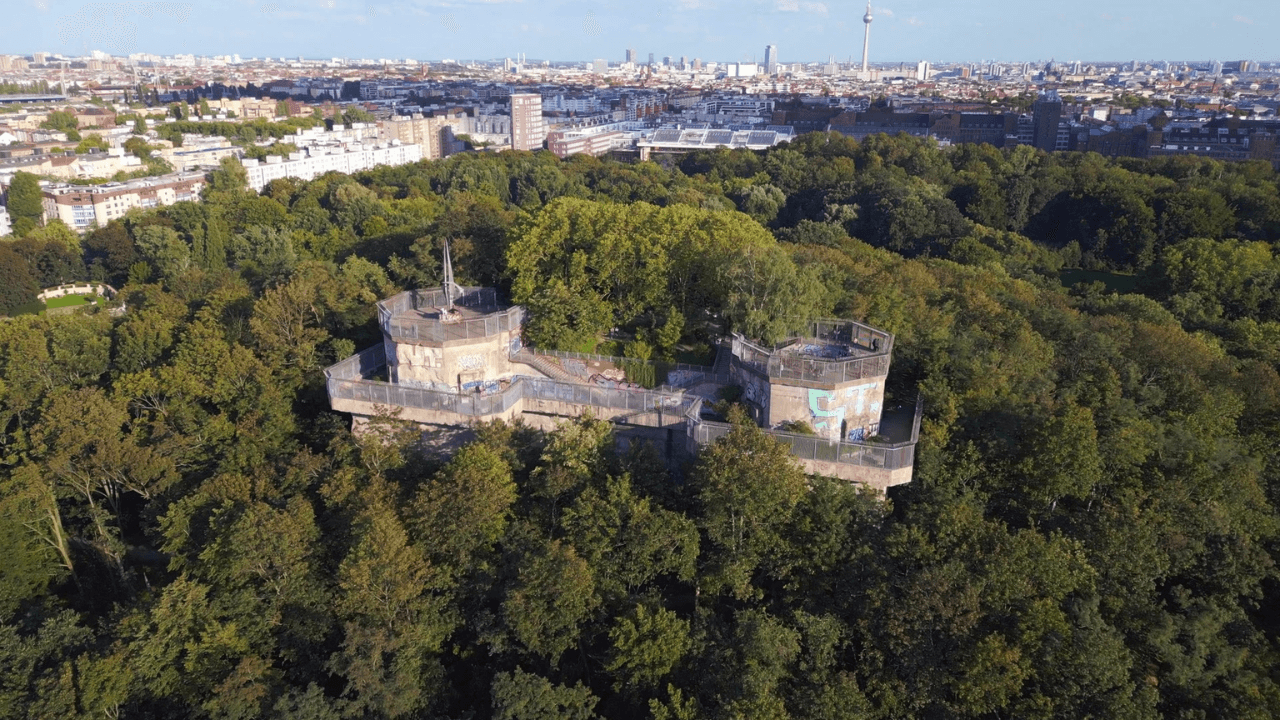

Are you ready to step into history? Join us on one of our Berlin WWII tours and experience the past in a way you never have before. It's an opportunity that will influence how you see not just Berlin or Germany, but the entire world and your place in it.
Visiting Berlin offers a unique blend of historical insight and modern energy that makes it an unforgettable destination. If you have friends planning a trip to Berlin, we highly recommend suggesting our WWII tours for an experience that will leave a lasting impression.
Book your Berlin WWII tour today and prepare for a journey that educates, challenges, and inspires. Discover the power of history to inform our present and shape our future.
The article was written by Matthew Menneke.
Matt is the founder and guide of 'On the Front Tours’, offering military history tours in Berlin. Born in Melbourne, Australia, Matt's passion for history led him to serve in the Australian Army Reserve for eight years. With a degree in International Politics and a successful sales career, he discovered his love for guiding while working as a tour guide in Australia. Since moving to Berlin in 2015, Matt has combined his enthusiasm for history and guiding by creating immersive tours that bring the past to life for his guests.

Hitler's Bunker Berlin Location: The Ultimate Guide for History Buffs on How to Find It
Explore the eerie site of Hitler's Führerbunker in Berlin. Learn its history, how to find it today, and gain insights into the Nazi dictator's final days.
Written By Matthew Menneke

Emergency Exit of Hitler’s Bunker, July 1947

Location of the Bunker courtayrd today, 2020
For World War II history enthusiasts, few sites are as intriguing as the location of Adolf Hitler’s final days in the Führerbunker, where he spent his last moments before his suicide.
Inside Hitler’s bunker in the spring of 1945, the scene was eerie and surreal, with abandoned furniture and debris, bloodstains on the sofa, papers, an SS officer’s cap, a looted safe, and the shallow trench where the bodies of Hitler and Eva Braun were burned after their suicides. While the bunker no longer exists, you can visit where this concrete fortress once stood.
In this post, we’ll guide you to the exact location and share some fascinating facts about Hitler’s last hideout.
Where is the site of Adolf Hitler's Bunker?
The remains of the Führerbunker lie beneath a rather nondescript parking lot in central Berlin's government district. Here are the key details:
Address in Central Berlin
Gertrud-Kolmar-Straße, 10117 Berlin, Germany
Coordinates
52°30′45″N 13°22′53″E
Nearby Landmarks
Just south of the Memorial to the Murdered Jews of Europe
120 meters north of the former site of the New Reich Chancellery building on Voßstraße
A short walk from the Brandenburg Gate and the Reichstag building
The bunker's emergency exit once led to the garden of the Old Reich Chancellery, but today, that spot is occupied by the parking lot and some residential apartment buildings constructed by the East German government in the 1980s.
Visiting Hitler’s Bunker in Berlin?
See the Führerbunker site as part of our Hitler's Berlin walking tour
The bunker may be gone, but much of the history surrounding it is still visible if you know where to look. On our Hitler's Berlin – The Rise and Fall Tour, we visit the former Führerbunker site and explore the nearby locations that tell the story of the rise of Nazi Germany, the regime's crimes and its eventual destruction in 1945.
2-hour guided walking tour · Central Berlin · From €35
A Brief History of the Führerbunker
The Führerbunker was part of a large subterranean bunker complex constructed in two phases - a Vorbunker in 1936 and the Führerbunker proper in 1944. Some quick facts:
Located 8.5 meters (28 ft) beneath the garden of the Old Reich Chancellery
Consisted of about 30 small rooms
It had a roof up to 3 meters thick made of reinforced concrete
It included an emergency exit to the Chancellery Gardens and a connection to the Vorbunker
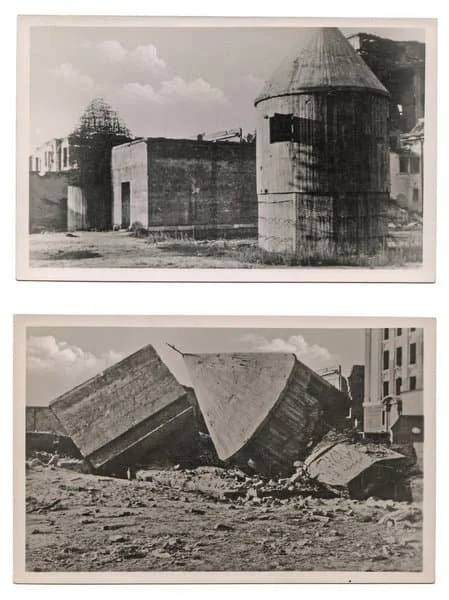
Stages of Soviet demolition in 1947.
Adolf Hitler spent the last months of his life in the Führerbunker, moving in on January 16, 1945, as the Red Army closed in on Berlin. It was here that Hitler married Eva Braun on April 29, just one day before the couple committed suicide on April 30 as the Soviet troops reached the nearby Reichstag.
According to Hitler’s instructions, the bodies were burned in a shell crater in the Chancellery garden near the bunker’s emergency exit. Today, a small information panel marks this location for visitors. Hitler’s death marked the end of the Thousand-Year Reich as Russian troops approached Berlin amidst constant bombing raids.
Finding the Führerbunker Today near the Reich Chancellery
After the war, the Soviet forces made some attempts to demolish the bunker with explosives, but much of the underground complex remained intact. The bunker was partially burned and stripped of valuables by the retreating German troops.

Guided tour my Matthew, discussing the history of the bunker

Guided tour my Matthew, showing the bunker location
However, the East German government undertook several initiatives to destroy or fill the underground rooms in the following years. The hinge of the door to Hitler's bunker was burned off by advancing Russian combat engineers.
When the area was redeveloped in the late 1980s, some sections of the old bunker complex were uncovered, but for the most part, these were destroyed. The site was intentionally left unmarked for many years.
It wasn't until 2006 that a small plaque with a schematic of the bunker was installed at the corner of In den Ministergärten and Gertrud-Kolmar-Straße. The panel provides some historical details in both German and English.
Tips for Visiting
The site is outdoors and publicly accessible 24/7, free of charge.
Closest public transport is the Mohrenstrasse U-Bahn station (U2 line) or the Brandenburger Tor station (S1, S2, S25, S26)
Combine your visit with other nearby WWII sites like the Topography of Terror museum, the Memorial to the Murdered Jews of Europe, and the Soviet War Memorial in Tiergarten.
For more context, consider joining a guided walking tour that covers Hitler's bunker and other Third Reich sites.
Layout and Interior of the Führerbunker
The Führerbunker was divided into the upper Vorbunker and the lower Führerbunker. The Vorbunker contained Hitler’s private suite, offices for his secretaries, and a guard room.
The lower level housed Hitler’s personal study, bedrooms for Hitler and Eva Braun, a conference/map room, a medical room, and quarters for high-ranking officers and staff. Hitler’s sitting room was also located on this level, where he spent much of his time during the final days.
Other key features of the bunker included:
A machine gun nest covering the main entrance
An emergency exit stairway to the Chancellery Gardens
Air raid doors that were gas-tight and had a thickness of 1.6 meters
Its own diesel power plant and air-conditioning system
A communications centre with a switchboard connecting to the outside

The diagram above provides a detailed layout of the Führerbunker complex, including the upper Vorbunker and lower Führerbunker levels.
Critical areas like Hitler’s study, the conference room, and living quarters for Hitler, Eva Braun, and other high-ranking Nazi officials are marked. The map helps visualise the claustrophobic, maze-like nature of the underground bunker where Hitler spent his final days as the war came to an end above ground.
Hitler's Final Days in the Führerbunker
As the war turned decisively against Germany in early 1945, Hitler retreated to the relative safety of the Führerbunker, where he could continue to direct the final defence of Berlin. Despite pleas from his generals to leave the doomed city, Hitler stubbornly refused, insisting that he would lead the fight to the end.

Destruction and chaos is the only description of the bunker after Hitler’s suicide

A crushed globe and a bust of Hitler amid rubble outside the ruined Reich Chancellery.
Picturing Hitler’s bunker, photographs taken inside reveal eerie scenes of ruins, abandoned furniture, bloodstains, and other haunting artifacts, providing a detailed glimpse into the last days of the Third Reich.
In the claustrophobic confines of the bunker, Hitler grew increasingly isolated and paranoid, raging against his fate and those he believed had betrayed him. Even as the end drew near, he clung to fantasies of a miraculous reversal, at one point exclaiming, “I will not leave Berlin, I will defend it! I can still win this war!”

Sifting through the debris trench where it was believed Hitler and Eva’s body’s were found

Discarded fuel cans located near the bunker
But as the Soviet troops drew ever closer and all hope of victory evaporated, Hitler finally accepted the inevitable. On April 30, 1945, with the enemy blocks away, he bid farewell to his staff and, together with Eva Braun, whom he had married just hours before, retired to his private quarters.
There, the man responsible for the most destructive war in human history took his own life, shooting himself in the head as Braun swallowed a cyanide capsule. Their bodies were hastily cremated in the shell-cratered garden above.
Myths and Conspiracy Theories Surrounding Hitler's Bunker
In the decades since Hitler's death, the Führerbunker has become a magnet for urban legends and conspiracy theories. Some claim that Hitler did not actually die in the bunker but instead escaped to South America or Antarctica. Others suggest that the bunker held occult artifacts or secret Nazi technology.

A Russian soldier stood in Adolf Hitler’s bunker, Berlin, 1945.
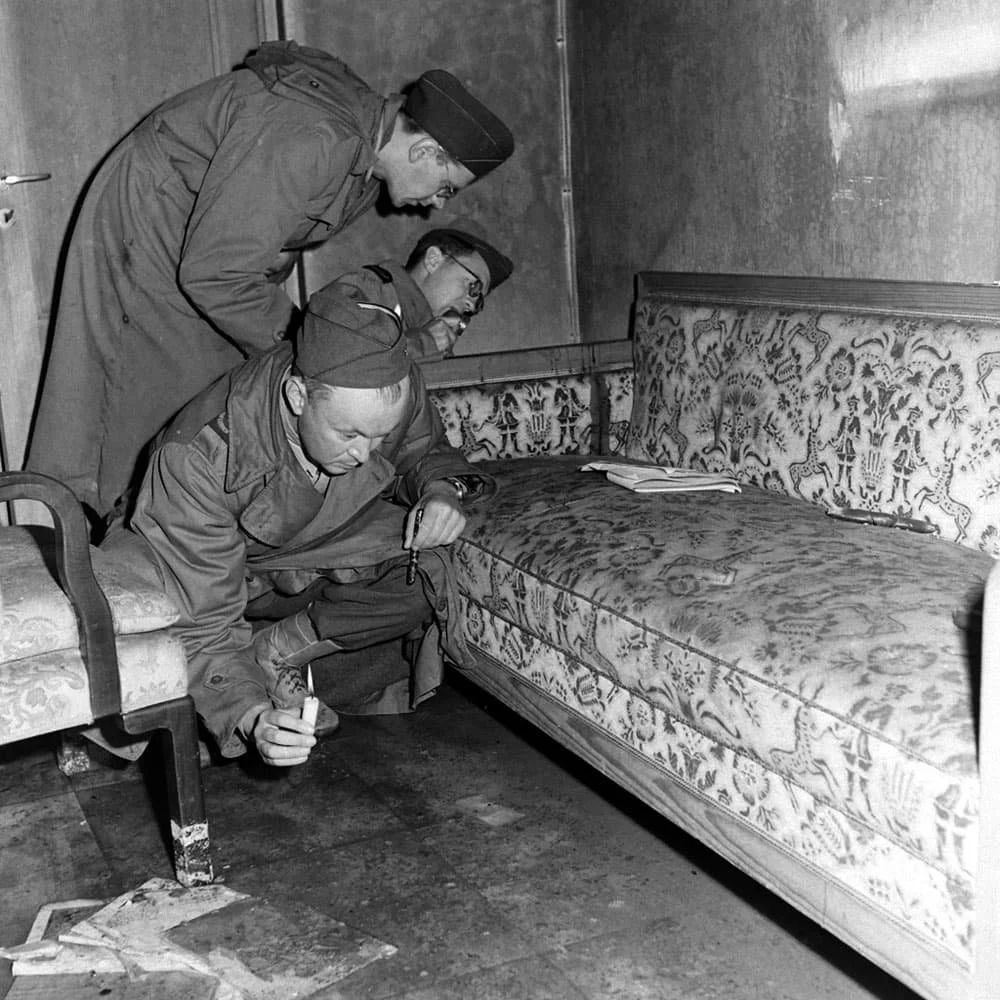
War correspondents examined a couch stained with blood located inside Hitler’s bunker.
Another popular conspiracy theory asserts that Hitler's bunker was connected via underground tunnels to the Berlin subway system, allowing high-ranking Nazis to flee the city undetected. While the bunker did have an emergency exit to the subway, there is no evidence it was used for escape or that such tunnels existed.
Despite the lack of credible evidence, these myths and conspiracies continue to capture the public imagination, a testament to the enduring fascination and revulsion surrounding one of history's most notorious figures. As long as the mysteries of Hitler's final days persist, so too will the legends and theories that swirl around his last refuge.
The Significance of the Führerbunker
For many, the site of Hitler's bunker is a sobering reminder of the evil and destruction wrought by Nazi Germany. It was here that Hitler spent his final days, increasingly detached from reality, as German and Soviet troops fought fiercely in the streets above, marking the downfall of the Third Reich.

An SS officer’s cap, with the infamous death’s-head skull emblem.
The fact that the bunker is now little more than an anonymous parking lot is, perhaps, a fitting end for a man responsible for the deaths of millions. As Berlin historian Sven Felix Kellerhoff puts it, "The National Socialists wanted to build a glorious new metropolis here, but they were only able to build an underground concrete block."
Yet even without visible ruins, the bunker's legacy looms large in the German historical consciousness. It has been the subject of numerous books, films, and documentaries, including the acclaimed 2004 film "Downfall" (Der Untergang).
The Führerbunker in Popular Culture
The Führerbunker has captured the imagination of filmmakers, writers, and game developers, featuring in numerous works of popular culture:
The 2004 German film "Downfall" (Der Untergang) offers a chilling portrayal of Hitler's final days in the bunker. The film's claustrophobic atmosphere and Bruno Ganz's haunting performance as Hitler have left an indelible mark on the public consciousness.
Other notable film appearances include "The Bunker" (1981), "The Death of Adolf Hitler" (1973), and "Speer und Er" (2005).
The Führerbunker has been a setting in video games such as Sniper Elite V2 and Call of Duty: World at War.

Der Untergang film poster
These depictions, while often dramatised for entertainment purposes, have played a significant role in shaping public perceptions of Hitler's final days and the end of World War II in Europe.
They serve as a reminder of the enduring fascination with this dark chapter in history and the ongoing efforts to understand and come to terms with the legacy of the Third Reich.
Germany's Complex Relationship with Its Nazi Past
The Führerbunker's fate also reflects Germany's complex relationship with its Nazi past. For decades after the war, many Germans preferred to ignore or downplay the country's complicity in Hitler's crimes. The bunker, like other Nazi sites, was left to decay - an unpleasant reminder best forgotten.

Nazi Party eagle that once loomed over a doorway of the Reich Chancellery, Berlin, 1945.
But as a new generation has come of age, attitudes have shifted. Many now believe that Germany must confront its history head-on, however painful that may be. The decision to leave the bunker site unmarked has come under particular scrutiny, with some arguing that it allows visitors to overlook or even deny what happened there.
Others, however, believe that the absence of any monument speaks more eloquently than a plaque or statue ever could. By refusing to glorify the bunker, they argue, Germany denies Hitler the immortality he craved and forces us to grapple with the banality of evil.
As the debate continues, the Führerbunker remains a flashpoint - a symbol of Germany's ongoing struggle to come to terms with its darkest chapter. How the country remembers this site in the years to come will say much about its relationship with the past and its vision for the future.
The Führerbunker's Enduring Legacy: From Neo-Nazi Rallies to Dark Tourism Satire
In the years since the war, the site of the Führerbunker has attracted a range of visitors, from curious tourists to neo-Nazi pilgrims. One of the most notable incidents occurred in 1987 when a group of far-right extremists attempted to stage a rally at the site on the anniversary of Hitler’s death. Police swiftly broke up the gathering, but it highlighted the enduring allure of the bunker for those who still harbour fascist sympathies.
The site has recently become a popular destination for historians and documentarians seeking to shed light on the war’s final days. In 2004, a team of researchers used ground-penetrating radar to map out the bunker’s subterranean remains, revealing the extent of the complex and the location of important rooms like Hitler’s study.

Neo-Nazi demonstration in Leipzig, Germany, in October 2009
Other visitors have included survivors of the Nazi regime, some of whom have made emotional pilgrimages to the site to confront their past. In 2013, a group of Holocaust survivors from Israel visited the bunker as part of a trip to Berlin, laying a wreath at the site in memory of those who perished under Hitler’s rule.
In the aftermath of World War II, an American soldier was photographed offering a mocking Nazi salute inside the bombed-out ruins of the Berliner Sportspalast, a site often used for Third Reich political rallies. This gesture was a disrespectful act within the historical context of the war's end.
Despite its dark history, the Führerbunker has been the scene of more lighthearted moments. In 2015, a British artist staged a tongue-in-cheek “holiday” at the site, complete with beach chairs, umbrellas, and a sign proclaiming it “Hitler’s Beach Bunker.” The installation was intended as a satirical comment on the commercialisation of dark tourism.
As the years pass and the living memory of the war fades, the Führerbunker is likely to remain a magnet for those seeking to understand one of history’s darkest chapters. While the site may be unassuming, its legacy continues to loom large in the world’s imagination.
The Contrasting Fates of Notorious Führer Sites
The Führerbunker's understated fate stands in stark contrast to other notorious Nazi sites like the Wolf's Lair and the Eagle's Nest.
Hitler's Eastern Front military headquarters, the Wolf's Lair:
Heavily damaged by retreating German forces
It still attracts thousands of visitors each year
Features extensive ruins and a museum examining the 1944 assassination attempt on Hitler

Hitler's reinforced bunker at the Wolfsschanze
The Eagle's Nest, Hitler's mountaintop retreat in Bavaria:
Captured largely intact by American troops
It turned into a tourist destination
Visitors can tour the lavish complex and take in panoramic views of the Alps

The Eagles Nest
The differing approaches to these sites reflect the complexities of preserving dark heritage:
Some argue that places like the Wolf's Lair and Eagle's Nest provide valuable historical insights.
Others worry that they risk glorifying the Nazi regime.
The Führerbunker, in its unassuming anonymity, sidesteps this dilemma but raises its own questions about remembrance and erasure.
Ultimately, there is no easy answer for dealing with the physical remnants of a painful past. But by grappling openly with these challenges, as Germany continues to do, we can learn from history's darkest chapters and build a more just future.
Further Reading and Resources
For those interested in delving deeper into the history of Hitler's bunker and its role in the final days of World War II, consider exploring these additional resources:
"The Bunker" by James P. O'Donnell - This classic book, based on interviews with survivors, provides a gripping account of the last days in the Führerbunker.
"Inside Hitler's Bunker: The Last Days of the Third Reich" by Joachim Fest - Renowned historian Fest offers a meticulously researched and vividly written chronicle of the bunker's final chapter.
"Berlin: The Downfall 1945" by Antony Beevor - While not solely focused on the Führerbunker, Beevor's acclaimed book gives a comprehensive overview of the Battle of Berlin and the regime's collapse.
The German Resistance Memorial Center - Located in Berlin, this museum is dedicated to those who fought against the Nazi regime, including the July 20 plotters who attempted to assassinate Hitler at the Wolf's Lair.
Conclusion
A pilgrimage to the site of Hitler's bunker is a must for any WWII history buff visiting Berlin. While the bunker itself is long gone, standing where the Führer met his ignominious end is a powerful experience that brings the war's final days to vivid life.
By understanding what happened in this small patch of Berlin real estate, we can better grasp the magnitude of the conflict that reshaped the 20th century - and honour the memory of the millions who suffered under Hitler's brutal regime.
Explore the history on the ground
If you're visiting Berlin and want to understand what happened here beyond simply finding the bunker location, join us on our Hitler's Berlin – The Rise and Fall Tour.
Walk through the former government district with an expert guide and explore the locations connected to Hitler's rise to power, the Nazi dictatorship and the final collapse of the Third Reich in 1945.
2 hours · Central Berlin · From €35
The article was written by Matthew Menneke.
Matt is the founder and guide of 'On the Front Tours', offering military history tours in Berlin. Born in Melbourne, Australia, Matt's passion for history led him to serve in the Australian Army Reserve for eight years. With a degree in International Politics and a successful sales career, he discovered his love for guiding while working as a tour guide in Australia. Since moving to Berlin in 2015, Matt has combined his enthusiasm for history and guiding by creating immersive tours that bring the past to life for his guests.

The Tragedy of Halbe: A Forgotten Battle of WWII's Final Days and the Battle of Berlin
The Battle of Halbe, a tragic last stand in WWII's final days, saw German forces desperately attempt to surrender to the Allies rather than face Soviet retribution.
Destroyed vehicles in the Spreewald forest
Introduction: World War II
The Battle of Halbe, fought in the final days of April 1945, remains one of the most brutal and least-known clashes of World War II’s endgame on the Eastern Front. As Soviet forces tightened their noose around Berlin, the beleaguered German Ninth Army found itself trapped in a shrinking pocket near the small village of Halbe, 30 miles southeast of the Nazi capital of Nazi Germany. Faced with the prospect of Soviet captivity, the Ninth Army’s only hope was a desperate breakout attempt against all odds. The ensuing struggle would consume thousands of lives, both military and civilian, in a maelstrom of fire, steel, and close-quarters fighting. This is the tragic story of the Halbe Pocket.
Strategic Context: Soviet Advance
By mid-April 1945, the Red Army had the German capital, Berlin, firmly in its sights. As part of their final offensive to capture the city and end the war in Europe, Soviet commanders sought to isolate and destroy the German Ninth Army. Positioned east of Berlin and defending the Oder River line, the Ninth Army, commanded by General Theodor Busse, represented a significant threat to the Soviet advance.
The Soviet Army, with its 2.5 million strong force, played a pivotal role in this final offensive, relentlessly pushing towards Berlin.
To eliminate this obstacle, Stalin ordered his two most formidable front commanders, Marshal Georgy Zhukov of the 1st Belorussian Front and Marshal Ivan Konev of the 1st Ukrainian Front, to encircle the Ninth Army and sever their lines of retreat. Zhukov would attack from the east, while Konev closed in from the south. Their ultimate objective was to trap the Germans in a pocket and prevent them from reinforcing Berlin’s defenses. This maneuver was part of a broader strategy to break through Army Group Centre and tighten the siege on Berlin.

Marshal Georgy Zhukov and Marshal Ivan Konev respectively
For General Busse and his men, estimated at around 200,000 soldiers along with thousands of refugees fleeing the Soviet advance, the prospect of being captured was unthinkable. The Soviets’ reputation for brutality towards prisoners, fueled by years of bitter fighting and Nazi atrocities on Soviet soil, meant that surrender was not an option. The Ninth Army’s only hope was to attempt to break out of the impending encirclement to the west and reach the relative safety of General Walther Wenck’s Twelfth Army.
However, any breakout attempt would have to punch through multiple layers of Soviet forces in the dense, swampy terrain of the Spreewald forest. This labyrinthine region of marshes, rivers, and thick woods presented a daunting challenge for mechanized warfare. The Germans would have to navigate narrow, easily congested roads and bridges, all while under constant Soviet fire. The stage was set for a desperate battle of attrition.
The Pocket Forms:
Under intense pressure from Zhukov’s 1st Belorussian Front from the east and Konev’s 1st Ukrainian Front from the south, the Ninth Army’s defensive lines, manned by German forces, began to crumble. Soviet armour and infantry, backed by a formidable array of artillery and air support, tore through German positions along the Oder and Neisse Rivers. Despite determined resistance, Busse’s divisions could not hold back the Red Army tide.

Hitler and Busse at the last front-line meeting at the CI Army Corps, Harnekop Castle, March 3, 1945
By April 25th, Soviet pincers had closed around the Ninth Army, trapping them in a pocket roughly 15 miles wide and 8 miles deep in the Spreewald south of the village of Halbe. The Soviet 3rd and 28th Armies formed the northern edge of the pocket, while the 3rd Guards Tank Army and 13th Army sealed off the south. The Germans were now cut off from outside help and faced the daunting prospect of a fighting retreat through the Spreewald.
Soviet soldiers hoisted flags and banners to mark their victory, leaving graffiti as a testament to the liberation of the Reichstag.
Inside the “Halbe pocket,” conditions quickly deteriorated into a living nightmare. Cut off from resupply, the Germans soon began to run perilously low on food, ammunition, and medical supplies. Columns of vehicles, both military and civilian, jammed the narrow forest roads, presenting prime targets for marauding Soviet aircraft. Artillery fire rained down incessantly, shattering the woods and turning the roads into killing zones littered with burned-out wrecks and corpses of men and horses.

Map of the formation of the 9th Army pocket
As the pocket shrank under constant Soviet pressure, soldiers and refugees were forced into an ever tighter space, enduring intense privation and a mounting sense of claustrophobic doom. Makeshift field hospitals overflowed with wounded while the dead lay unburied. Food and water grew scarce. The hellish conditions eroded morale and unit cohesion, with some soldiers resorting to looting and abandoning their posts. The once-formidable Ninth Army was disintegrating.
Choosing Surrender: German Fears and Preferences in the War's Final Days
As the war in Europe drew to a close, German forces increasingly sought to surrender to the Western Allies rather than the Soviet Union. Several factors drove this preference. Firstly, there was a profound ideological enmity between Nazi Germany and the Soviet Union. The Nazis viewed the Soviets as racially inferior and their communist ideology as a mortal threat to the German way of life.
Surrendering to the Soviets was thus seen as a deeply humiliating betrayal of core Nazi beliefs. Secondly, the Germans feared the prospect of brutal Soviet reprisals. They were acutely aware of the atrocities committed by Soviet forces as they advanced through Eastern Europe and anticipated harsh treatment and retribution as prisoners.
The Germans' own guilt compounded this fear; they had waged a pitiless war of annihilation against the USSR, seeking to destroy it as a political entity, murder and enslave its Slavic population, and colonize its territory. With the Soviets having suffered over 20 million deaths at German hands, the desire for vengeance was palpable. In contrast, the Germans had much less animosity towards the Western Allies, whom they had primarily fought to secure their rear before turning on the USSR.
Surrendering to the Americans or British was thus seen as a far preferable fate. This dynamic played out vividly in the Battle of Halbe, where desperate German forces fought to break out to the west and surrender to the Americans rather than fall into Soviet hands.
Halbe: The Eye of the Needle and Soviet Forces
Realizing that the pocket could not hold out for long, General Busse ordered his troops to mass west of Halbe to prepare for a breakout towards the spearheads of General Wenck’s Twelfth Army, which was advancing from the west. The small riverside village of Halbe, strategically located at a crossroads in the heart of the Spreewald, would be the focal point of the escape attempt. Troops soon began calling it “the eye of the needle” through which the entire Ninth Army would have to pass. The Army Group Vistula, under immense pressure, played a crucial role in the defensive preparations and strategies during this period.
Destroyed German vehicles
Starting on April 28th, the breakout began in earnest, spearheaded by the SS Panzer Division “Kurmark” and elements of the 502nd SS Heavy Tank Battalion. The Germans threw their remaining armour and veteran infantry units into the thrust, hoping to punch a corridor through the Soviet lines. However, the narrow confines of the forest roads and the density of Red Army soldiers meant that the battle rapidly devolved into a chaotic, brutal slugfest at close quarters.
Savage fighting erupted at strong points like the Halbe cemetery and railway embankment. At the cemetery, the struggle reached a crescendo of horror, with German troops using the stacked corpses of their own dead as makeshift breastworks against Soviet attacks. The armoured vehicles of both sides duelled at point-blank range amidst the tombstones while infantry grappled in hand-to-hand combat among the crypts.
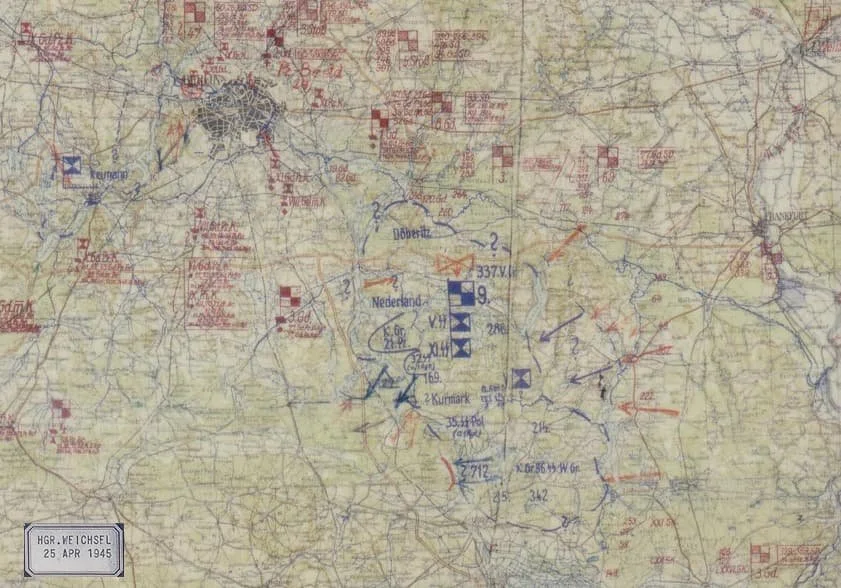
Soviet war map showing the battle lines of the 9th Army encirclement.
Nearby, the elevated railway embankment became a scene of equal carnage. Soviet troops entrenched along its length poured fire into the advancing Germans, turning the railbed into a charnel house. Burned-out tanks and shattered bodies choked the narrow confines. The fighting devolved into a series of ruthless small-unit actions, with squads and platoons clashing in a maelstrom of bullets, grenades, and flamethrowers.
As the battle raged, thousands of terrified refugees found themselves caught in the crossfire. Desperate columns of civilians, their meagre possessions piled on carts and wagons, clogged the roads. Many were killed by stray shells or machine-gun fire as they tried to flee westward. Others fell victim to vengeful Soviet troops, who viewed them as complicit in German crimes. The fate of the refugees added an especially tragic dimension to the unfolding disaster.
Breakout and Aftermath of German Forces
After days of brutal fighting that gutted the Ninth Army, a group of about 25,000 haggard German troops finally managed to break through the Soviet gauntlet and reach the temporary safety of Wenck’s lines. The survivors emerged from the Spreewald battered, bloodied, and traumatized by their ordeal. Many had lost everything—their units, their comrades, their families. The physical and psychological scars would linger long after the guns fell silent.
The Soviet Union commemorated the battle by honouring the Hero of the Soviet Union recipients and awarding medals to Soviet personnel for their actions during the Battle of Berlin.

Twisted metal still visible from the aftermath of the Halbe Pocket breakout attempt.
But the Germans’ escape had come at a staggering cost. In their wake, they left scenes of unimaginable devastation and carnage. Corpses carpeted the forest floor, piled in grotesque tangles where they had fallen. Burned-out hulks of tanks, trucks, and wagons littered the roadsides for miles, a testament to the ferocity of the fighting. The pungent stench of death hung over the battleground.
The human toll of the Halbe pocket was appalling. Scholars estimate that at least 40,000 German soldiers perished in the breakout attempt, with another 20,000 wounded. Between 20,000 and 30,000 hapless refugees were also killed, cut down in the crossfire or deliberately targeted by Soviet troops. The Red Army claimed to have taken 60,000 prisoners, many of whom would endure years of forced labour in Soviet gulags.
The Battle of Halbe, while small in scale compared to the titanic clashes of the Eastern Front’s earlier years, nonetheless epitomized the relentless brutality and human tragedy of the war’s endgame. It laid bare the utter collapse of the once-vaunted Wehrmacht, ground down by years of attrition and material disadvantage. It highlighted the pitiless calculus of total war, in which entire armies and civilian populations could be sacrificed in the pursuit of victory. And it underscored the Third Reich’s dismal moral bankruptcy, as Nazi leaders consigned thousands to senseless death in a battle already lost.
Halbe also represented a microcosm of the “total war” that had engulfed the Eastern Front, erasing distinctions between soldiers and civilians. Alongside the doomed German military units fought the Volkssturm, a ragtag people’s militia of old men and teenagers pressed into service in the regime’s final days. Refugees fleeing the Soviets found themselves thrust onto the front lines, where they perished alongside the troops meant to protect them. In the Spreewald inferno, all became targets.
German POWs
The fall of Berlin, marked by Adolf Hitler's death by suicide in the bunker beneath the Old Chancellery building, signalled the end of the Third Reich. The subsequent Battle of Berlin led to the city's fall to Soviet forces, resulting in significant casualties and the razing of the city. The Soviet War Memorial at Tiergarten commemorates this pivotal event and serves as a pilgrimage site for Red Army veterans and their families.
Remembering Halbe:
Despite the intensity of the fighting and the scale of the tragedy, the Battle of Halbe has long remained a historical footnote, overshadowed by the high-profile fall of Berlin unfolding simultaneously just 30 miles to the north. The chaotic nature of the final days on the Eastern Front, combined with the thorough Soviet conquest of eastern Germany, meant that many records of the battle were lost or deliberately suppressed.
For decades after the war, East Germany’s communist authorities actively discouraged research into the Halbe pocket and other desperate battles fought on what became their territory. The story of Halbe complicated the triumphalist postwar Soviet narrative, which emphasized the Red Army’s heroic liberation of Germany from Nazism. Acknowledging the scope of civilian suffering and the brutal realities of the Spreewald fighting did not align with the official historiography.
German Army soldiers bury remains in Halbe cemetery, 2013
The Soviet War Memorial in Tiergarten, Berlin, constructed using materials from destroyed Nazi office buildings, serves as a significant reminder of the Red Army's role and the sacrifices made, including the surrounding cemetery for fallen Red Army soldiers and the annual VE-Day commemorations.
As a result, the Battle of Halbe faded into relative obscurity, mourned by veterans and families of the fallen but little known to the broader public. Only after German reunification in 1990 did historians begin to document and chronicle the battle extensively. Halbe has since become a subject of intensive research and sombre commemoration.
Today, the memory of Halbe is preserved by a melancholy war cemetery in the nearby forest, where over 22,000 German soldiers and civilians are interred in mass graves. A small museum in the village also endeavours to tell the story of the doomed breakout attempt. In recent years, several powerful and harrowing books have brought the battle’s history to a wider audience, including Tony Le Tissier’s “Slaughter at Halbe” and Anne-Katrin Müller’s “The Battle of Halbe: The Destruction of the Ninth Army.”

Halbe War Grave Cemetery
Beyond its memorials and chroniclers, however, Halbe endures as a sobering reminder of the human suffering unleashed by war at its most unsparing. On this small, blood-soaked battlefield, where shell-shocked conscripts fought alongside hardened veterans, where terrified families fleeing an implacable foe fell beside the fanatical remnants of the Waffen-SS, we glimpse the Eastern Front distilled to its brutal essence. It is a harrowing picture of depravity, desperation, and ordinary people caught in the meat grinder of total war. The broader context of the war's end also saw German troops seeking to surrender to the Western Allies, fearing the fate of Soviet captivity, and the Western Allies' subsequent withdrawal to agreed-upon boundaries after Germany's unconditional surrender.
Conclusion:


The Battle of Halbe, while a small chapter in the vast saga of World War II, nonetheless looms large in the bloody drama that played out in central Europe during the spring of 1945. It offers a microcosmic glimpse into the agonizing final days on the Eastern Front, with all their attendant chaos, horror, and moral ambiguity. It reveals the human face of the German army's collapse—from the travails of General Busse's doomed divisions to the plight of the terrified refugees swept up in their wake.
Halbe deserves to be remembered not only as a testament to the immense suffering and sacrifice of those caught in its maelstrom but also as a cautionary tale about the profound costs of war fought to the bitter end. In an age when "total war" became an all-consuming reality, erasing distinctions between soldier and civilian, front line and home front, Halbe reminds us of the price paid by all—the vanquished no less than the victors—when nations clash without restraint or mercy.
As we reflect on this tragic battle 75 years later, let us honour the memory of those who struggled, suffered, and perished in the Spreewald cauldron. Germans and Soviets, men and women, young and old—all were consumed in the inferno unleashed by a brutal, rapacious war and the totalitarian ideologies that fueled it. May their sacrifice not be forgotten, and may it stand as a sombre warning to future generations of the horrors lurking in the heart of total war.
The article was written by Matthew Menneke.
Matt is the founder and guide of 'On the Front Tours', offering military history tours in Berlin. Born in Melbourne, Australia, Matt's passion for history led him to serve in the Australian Army Reserve for eight years. With a degree in International Politics and a successful sales career, he discovered his love for guiding while working as a tour guide in Australia. Since moving to Berlin in 2015, Matt has combined his enthusiasm for history and guiding by creating immersive tours that bring the past to life for his guests.

Berlin Concentration Camp - Sachsenhausen: A Visitor's Guide on How to Get There and Understanding Nazi Atrocities
Sachsenhausen, a former Nazi concentration camp near Berlin, offers a haunting yet vital look into Holocaust history. Visitors can explore the memorial site with guided tours to learn about this dark chapter and honour the victims.

Prisoners in front of the Sachsenhausen camp gate. Year unknown.

Sachsenhausen camp gate, 2023
Sachsenhausen concentration camp, located just north of Berlin in Oranienburg, Germany, stands as a haunting reminder of the atrocities committed by Nazi Germany during World War II. As one of the earliest and longest-running concentration camps, Sachsenhausen was not only a site of immense suffering but also served as the model and training camp for the SS. It held a special position as both a training ground and the administrative centre for all concentration camps in the German sphere of power during the National Socialist era.
Today, the Sachsenhausen Memorial and Museum offer visitors a profound opportunity to confront this dark history and honour the memory of the camp’s victims.
In this comprehensive visitor’s guide, we’ll explore Sachsenhausen’s historical significance, provide essential information for planning your visit, and highlight the unique educational value of our expert-led guided tours.
By the end, you’ll understand why a trip to the Sachsenhausen memorial is a must for anyone seeking to deepen their understanding of this pivotal chapter in human history.
Historical Overview: Sachsenhausen Concentration Camp's Role in the Nazi System
Established in 1936, Sachsenhausen was one of the first concentration camps built under the Nazi regime. It functioned as a model camp and training camp for the SS, showcasing the brutal efficiency of the Nazi concentration camp system. Located just 35 kilometres (22 miles) north of Berlin, it held a primary position in the Nazi camp system, serving as the administrative centre for all concentration camps and a training facility for SS officers.

Wilhelm Frick and Heinrich Himmler visit Sachsenhausen concentration camp, 1936

Prisoners in 1938
Over its nine years of operation, Sachsenhausen Concentration Camp imprisoned more than 200,000 people, including political opponents, Jews, Roma, Sinti, homosexuals, Jehovah’s Witnesses, political prisoners, and Soviet POWs. Inmates faced inhumane conditions, forced labour, medical experiments, and systematic extermination, including the murder of 13,000 Soviet POWs in 1941 alone. Tens of thousands died from exhaustion, disease, malnutrition, and summary executions; many of the prisoners were transferred to death camps as part of the extermination process.
As the war turned against Germany, Sachsenhausen Concentration Camp became a destination for prisoners evacuated from other camps, with the population swelling to over 80,000 by early 1945.
In April 1945, with Soviet forces fast approaching, the SS forced 30,000 prisoners on a brutal death march northwest. Soviet and Polish troops liberated the Sachsenhausen Concentration Camp on April 22, 1945.
Following its liberation, the camp entered a new phase of its history within the Soviet occupation zone, evolving into one of the largest of three special camps where prisoners, including former SS functionaries, political dissidents, and those convicted by Soviet military tribunals, were held.
Hitler’s Camps - Sachsenhausen Concentration Camp Tour
Exploring the Memorial: What to Expect on Your Visit
Today, the Sachsenhausen Memorial and Museum preserves the former Sachsenhausen concentration camp site as a witness to the suffering of its victims and a warning for future generations.
Visitors can explore the former concentration camp, including the surviving buildings, execution sites, and crematorium, as well as exhibits detailing the camp’s history and the experiences of its prisoners.
Key areas of the memorial include:
The camp entrance, bearing the cynical motto “Arbeit Macht Frei” (“Work Sets You Free”)
The roll call area, where prisoners were forced to stand for hours in all-weather
The Jewish barracks, the site of a 1992 neo-Nazi arson attack now preserved as a memorial. Other camp barracks have been destroyed, marked by an outline on the ground.
Station Z, the execution complex with a neck shot facility, gas chamber, and crematorium
The prison building, including cells for “special prisoners” and political enemies. It also served as a Soviet special camp, the largest of three special camps in the Soviet occupation zone, where approximately 60,000 people, including former SS functionaries, political dissidents, and those convicted by Soviet military tribunals, were imprisoned under harsh conditions leading to over 12,000 deaths due to malnutrition and disease.
The pathology building, where gruesome medical experiments were conducted
National memorials erected by survivor groups and countries whose citizens were imprisoned

Entering the camp administration area

Watch tower visible on the way into the camp
Visitors should be prepared for an emotionally challenging experience, as the memorial does not shy away from presenting the brutality of the camp. Guided tours, like those offered by our expert team, can provide valuable historical context and insights to help process this difficult history.
Planning Your Visit: Practical Information and Tips
Sachsenhausen is open year-round, with extended hours from March 15 to October 14. While visiting independently is possible, a guided tour offers a richer understanding of the camp's history and significance.
Our tour meets at the conveniently located Park Inn hotel in central Berlin. From there, we take a private van directly to the Sachsenhausen concentration camp, which is just a 40-minute drive away. This is a far more practical approach than other tours, which require taking the train and walking. The entire tour lasts approximately 5 hours.
To make the most of your visit, we recommend:
Wearing comfortable shoes and weather-appropriate clothing, as much of the tour is outdoors
Bringing water and snacks, as there are limited food options on-site
Allowing ample time for reflection and processing after the tour
Considering the age and sensitivity of group members, the content may not be appropriate for children
Our expert guides are deeply knowledgeable about Sachsenhausen and the broader history of the Holocaust and are available to answer questions and provide support throughout the tour.
Dressing for the Weather: Seasonal Considerations for Your Sachsenhausen Visit
When planning your visit to Sachsenhausen, it's essential to consider the weather conditions in Berlin and dress accordingly.
Spring (March to May):
Temperatures gradually warm up
Average highs range from 8°C to 19°C (46°F to 66°F)
Summer (June to August):
Warmest season
Average highs around 23°C (73°F)
Temperatures can occasionally reach 30°C (86°F) or higher
Autumn (September to November):
Cooling temperatures
Average highs decrease from 18°C to 7°C (64°F to 45°F)
Winter (December to February):
Cold, with average highs around 3°C (37°F) and lows around -1°C (30°F)
Snowfall is possible, especially in January and February
Visitors should be prepared for rain regardless of the season by bringing appropriate gear, such as a waterproof jacket or umbrella.
Getting to Sachsenhausen: Transportation Options from Berlin
Sachsenhausen is located in Oranienburg, approximately 35 kilometres north of central Berlin. Visitors have several options for reaching the memorial site:

Public Transport in Berlin
1. Public Transportation:
Take the S-Bahn (S1) from central Berlin to Oranienburg station. The journey takes about 45 minutes.
From Oranienburg station, it's a 20-minute walk or a short bus ride to the memorial entrance.
2. Private Tour Shuttles:
Many guided tours, including those offered by our company, provide convenient shuttle service from central Berlin directly to the memorial site.
Private shuttles offer a comfortable and efficient way to reach Sachsenhausen, and they offer expert guidance throughout your visit.

On the Front Tours Meeting Point - Park Inn, Alexanderplatz
3. Driving:
Sachsenhausen can be reached by car via the A10 and A111 highways.
Parking is available near the memorial site, but spaces may be limited during peak times.
Regardless of your transportation choice, we recommend planning your visit and allowing ample time for travel and parking at the memorial entrance.
Sachsenhausen vs. Dachau: Choosing the Right Memorial for Your Visit
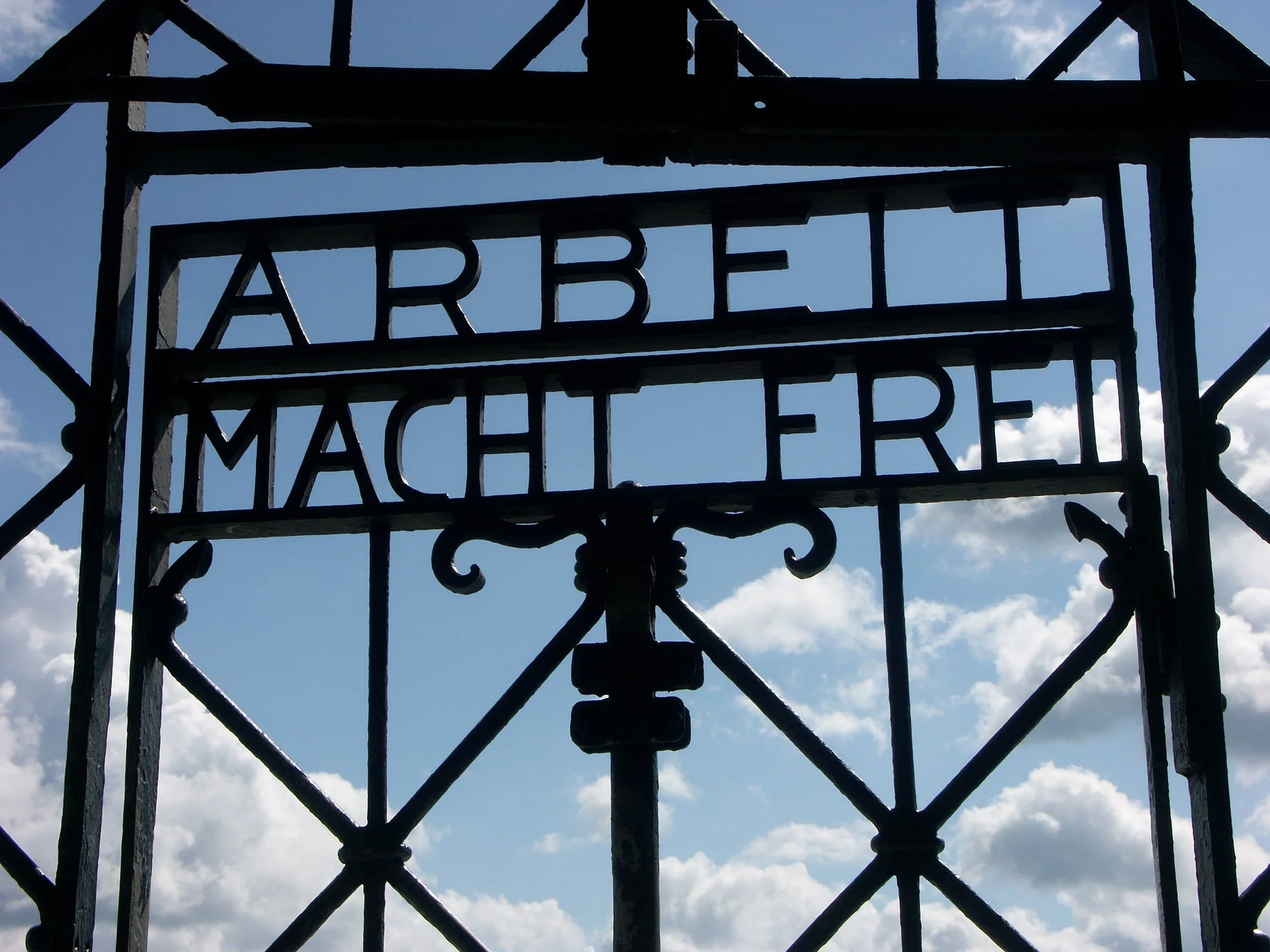
Entrance Gate to Dachau Concentration Camp
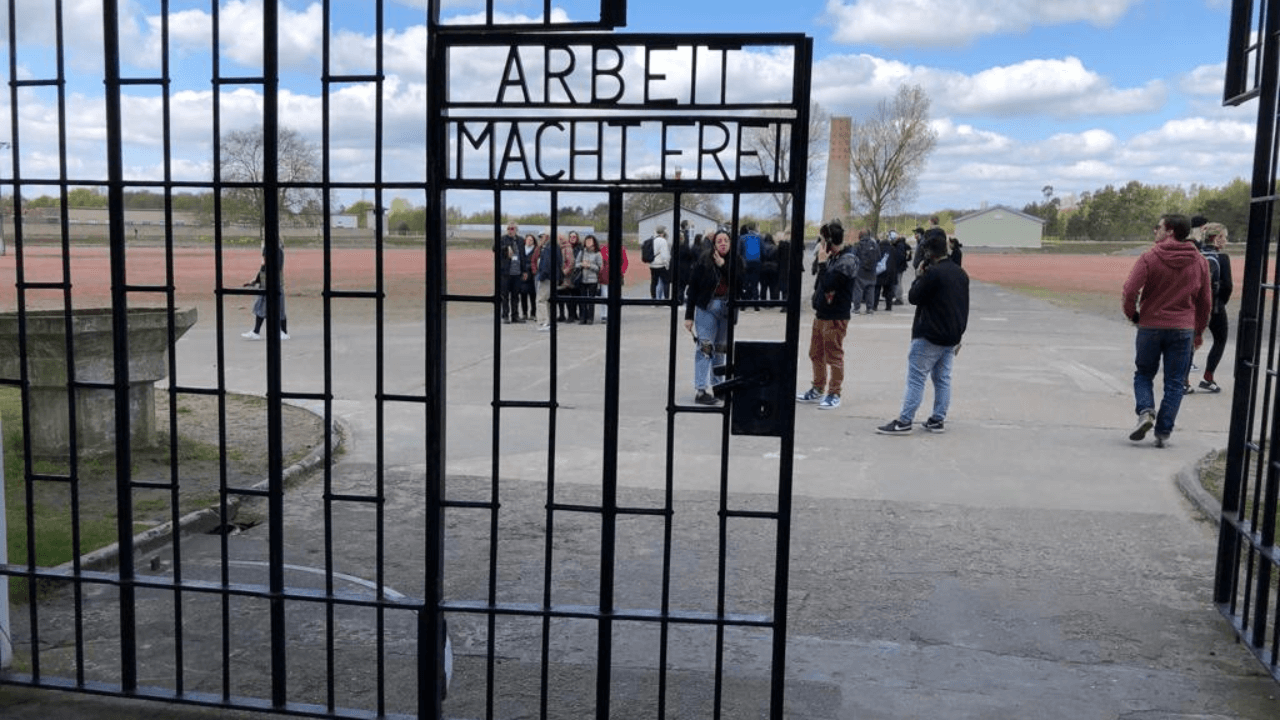
Entrance Gate to Sachsenhausen Concentration Camp
For those interested in visiting a concentration camp memorial, Sachsenhausen and Dachau are two of the most significant and frequently visited sites in Germany. While both offer powerful and emotionally challenging experiences, there are some key differences to consider when deciding which one to see.
Key features of Dachau:
Dachau, located on the outskirts of Munich, holds a unique place in history as the first Nazi concentration camp was established in 1933. It served as a model camp and training ground for the vast network of camps that followed.
A larger number of surviving original buildings
Chilling barracks where prisoners were housed
Crematorium where countless lives were tragically cut short
Exhibits providing a comprehensive overview of the rise of the Nazi party and the evolution of their brutal camp system
Critical features of Sachsenhausen:
Sachsenhausen, located in Oranienburg near Berlin, offers a more focused look at a single camp's history and its unique role within the Nazi regime.
Served as an SS training centre and administrative hub for the entire concentration camp network
Proximity to the Nazi power centre meant many high-level decisions affecting the camps were made here
Provides a chilling glimpse into the bureaucratic machinery behind the Holocaust
Ultimately, both Dachau and Sachsenhausen offer invaluable learning, reflection, and remembrance opportunities. They serve as powerful reminders of one of the darkest chapters in human history and the importance of standing up against hatred and bigotry
The choice between the two may come from practical considerations like travel plans and available time. Our Sachsenhausen tours are an excellent choice for those seeking a focused, in-depth experience and the benefit of expert guidance.
Our knowledgeable guides provide the following:
Historical context and insights
Help navigate the complex history and emotions these sites evoke
A range of tour options to suit different interests and schedules
Visit our website for more information and to book your tour:

Hitler’s Camps - Sachsenhausen Concentration Camp Tour
No matter which site you choose, visiting a concentration camp memorial is a profoundly moving and thought-provoking experience that will stay with you long after you leave. It is an essential way to honour the victims, learn from the past, and commit ourselves to building a more just and peaceful future.
The Importance of Remembrance: Why Visiting Sachsenhausen Matters
More than 75 years after the liberation of Sachsenhausen, keeping the memory of the Holocaust alive is more crucial than ever. The Sachsenhausen National Memorial serves as a critical reminder of the perils of hatred, bigotry, and authoritarianism. It embodies the memorial site's history, inauguration, and political significance, including its symbolic elements and the political control and instrumentalisation in the German Democratic Republic (GDR). As survivors pass away and new generations grow up disconnected from these events, places like Sachsenhausen National Memorial emphasise the vital importance of remembrance.
Visiting a concentration camp memorial is a deeply personal and often emotionally challenging experience, but one that offers profound insights and perspectives. It’s an opportunity to honour the victims, learn from the past, and commit ourselves to building a more just and peaceful future.
At Sachsenhausen, our expert guides are dedicated to helping visitors engage with this history meaningfully, asking difficult questions and reflecting on the lessons it holds for us today. We can build a stronger foundation for a better tomorrow by confronting the darkest chapters of our shared past.
Book Your Sachsenhausen Tour Today
If you're planning a trip to Berlin and want to deepen your understanding of this pivotal history, we invite you to join one of our expert-led Sachsenhausen tours. With small group sizes, personalized attention, and a commitment to historical accuracy and sensitivity, our tours offer an unparalleled opportunity to engage with the history of the Holocaust and its enduring lessons.
Hitler’s Camps - Sachsenhausen Concentration Camp Tour
To learn more or book your tour, visit our website or contact us today. We look forward to guiding you on this powerful and transformative journey.
Frequently Asked Questions
-
While the decision ultimately depends on the child's maturity level, Sachsenhausen is generally not recommended for children under 14 due to the disturbing nature of the history presented. Teenagers may benefit from the educational experience if prepared for the emotional impact. Parents should use discretion based on their child's sensitivity and readiness to engage with this complex history.
-
Plan to spend at least half a day (approximately 5 hours) at Sachsenhausen to explore the memorial site and exhibitions fully. Guided tours typically last 5-6 hours. Allow additional time for transportation to and from the site, as well as time for reflection and processing of the experience afterwards. A full-day trip from Berlin is recommended to avoid feeling rushed.
-
Yes, guided tours of Sachsenhausen are offered in several languages, including German, Spanish, Italian, French, Russian, and English. Private tours with professional guides can also be arranged in other languages upon request. Check the memorial's official website or inquire with tour operators about your preferred language availability.
-
Photography is permitted for personal, non-commercial use in outdoor areas of the Sachsenhausen Memorial as long as it is done respectfully. However, photography is prohibited inside the museum buildings, exhibitions, and the crematorium area. Visitors are asked to refrain from taking selfies or posed photos out of respect for the solemnity of the site. When in doubt, observe any posted signs regarding photography restrictions in specific areas.
-
Wear comfortable, weather-appropriate clothing and sturdy walking shoes. You will spend several hours exploring the expansive memorial site. Bring layers, as the temperature can vary. It's advisable to bring water and snacks, as there are limited food options on-site. Remember to charge your camera or phone to take photos in the permitted outdoor areas. A small backpack to carry your essentials is recommended.

The Battle of Berlin: The Final Blow to Hitler's Third Reich
The Battle of Berlin in 1945 was the final major offensive in Europe, marking the end of World War II.
Introduction:
In the spring of 1945, as the Second World War in Europe drew to a close, the once-mighty German Reich lay in ruins. The Soviet Red Army, having turned the tide of the war in the East, stood poised on the banks of the Oder River, ready to strike the final blow against Nazi Germany. Their target: Berlin, the capital and heart of Hitler's crumbling empire. The Battle of Berlin, which raged from April 16 to May 2, 1945, would be the last major offensive in Europe and the death knell for the Third Reich.
The battle was a culmination of years of bitter fighting between Germany and the Soviet Union, a titanic clash of ideologies and armies that had left millions dead and reshaped the map of Europe. For Stalin and the Soviet leadership, the capture of Berlin was not just a military objective but a matter of national pride and vengeance for the immense suffering inflicted on their country by Hitler's invasion. For the Germans, the defence of their capital was a desperate last stand, a fight to the finish in which surrender was not an option.
Soviet tanks advance through Berlin
Battle of Berlin - Battlefield Tour
The Importance of Berlin:
Berlin in 1945 was not just the administrative capital of Germany but the symbolic heart of the Nazi regime. It was here that Adolf Hitler rose to power in the early 1930s, consolidating his grip on the nation and transforming Germany into a totalitarian state. The city was a showcase for the grandiose vision of the Third Reich, with wide boulevards, massive government buildings, and imposing monuments designed to project an image of strength, power, and permanence. Berlin was the nerve centre of the Nazi war machine, home to the regime's top leaders and decision-makers.
But Berlin was more than just a political capital - it was also a crucial industrial and transportation hub. The city's factories churned out a steady stream of weapons, vehicles, and other supplies to feed the voracious appetite of the German military. Berlin's extensive rail network and its position at the crossroads of Europe made it a vital link in the supply chain that sustained the Nazi war effort on multiple fronts.
As the Red Army approached Berlin in April 1945, the city took on an even greater significance. For the Soviets, capturing Berlin would be the ultimate prize, a way to avenge the staggering toll of 26 million Soviet citizens killed in the war and to assert their dominance in postwar Europe. Stalin was determined to take the city before his Western allies, advancing from the other direction. The Soviet leader knew that whoever controlled Berlin would have a major say in the future of Germany and the continent as a whole.
For Hitler and the Nazi leadership, the fall of Berlin would mean the end of their "Thousand Year Reich." The Führer had ordered the city to be defended to the last man, vowing never to leave the capital alive. He and his top lieutenants retreated to a bunker deep beneath the Reich Chancellery, directing the city's defences and clinging to increasingly unrealistic hopes of a last-minute reprieve. Hitler's propaganda minister, Joseph Goebbels, called on Berliners to fight to the death, warning that the Soviets would unleash a wave of destruction and atrocities if they took the city.
The Bleak Situation for the German Army:

The frontlines in late April 1945
As the Soviet forces prepared for their final offensive, the situation for the German Army was dire. The Wehrmacht, once the pride of the Third Reich, was a shadow of its former self. Years of continuous warfare had depleted its ranks, and the relentless Allied bombing campaigns had shattered its industrial base, making it increasingly difficult to replace lost equipment and personnel.
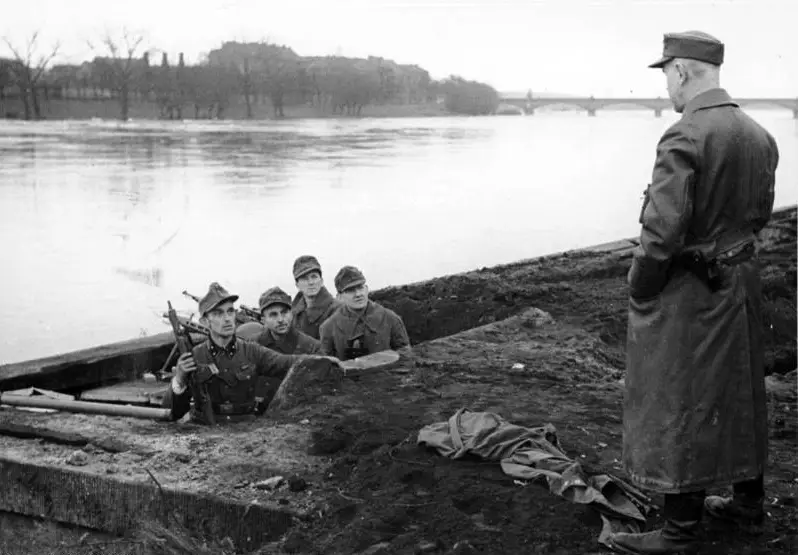
German soldiers dug in along the Oder river
The German High Command was acutely aware of the desperate situation. Resources were scarce; the troops were often young, inexperienced, or elderly men hastily conscripted from the Volkssturm, a national militia. The once-feared Panzer divisions were now few in number, and many tanks were old or in disrepair. Fuel shortages meant that even those that were operational could not be effectively deployed.
Despite these challenges, the German Army prepared to defend Berlin with a grim determination. General Helmuth Weidling, the commander of the Berlin Defense Area, organized the city's defences, knowing full well that there would be no reinforcements. The strategy was to turn Berlin into a fortress, with barricades, anti-tank obstacles, and fortified positions throughout the city. Civilians, including women and children, were pressed into service to dig trenches and build defences.
The German soldiers, many of whom were aware that they were fighting a losing battle, were motivated by a combination of fear, loyalty, and the knowledge that surrender to the Soviets could mean death or harsh captivity. Propaganda played a role as well, with Nazi officials exhorting the troops to fight to the last man to protect their homeland from the perceived barbarism of the advancing Red Army.
The German Army, under-equipped and outnumbered, faced the overwhelming might of the Soviet juggernaut. The stage was set for a brutal, no-quarter struggle that would reduce much of central Berlin to rubble. The battle for Berlin would not only determine the fate of the city but would also seal the fate of the Third Reich.

Seelow Heights Battlefield Tour
The Soviet Offensive:
The Soviet assault on Berlin codenamed "Operation Berlin," was a monumental military undertaking that involved some 2.5 million soldiers from the 1st Belorussian Front under the command of the renowned Marshal Georgy Zhukov and the 1st Ukrainian Front led by the equally formidable Marshal Ivan Konev. This massive force was supported by an awe-inspiring array of military hardware, including 6,250 tanks, 7,500 aircraft, and a staggering 41,600 artillery pieces. It was, by any measure, one of the largest and most complex military operations ever undertaken in the history of warfare.

Soviet artillery firing on German positions, 3 am April 16 1945
The offensive began on April 16 with a massive, earth-shaking bombardment of the German defences along the Oder-Neisse line. The sky lit up with the flash of thousands of guns, and the ground trembled under the weight of the explosive barrage. Zhukov's forces, the hammer of the Soviet offensive, attacked from the centre and north, while Konev's men, the anvil, hit the German lines from the south. Despite fierce and determined resistance from the outnumbered and outgunned Germans, who fought with the desperation of men who knew they were the last line of defence for their capital, the Soviets managed to break through. Slowly, inexorably, they pushed the defenders back towards the outskirts of Berlin.
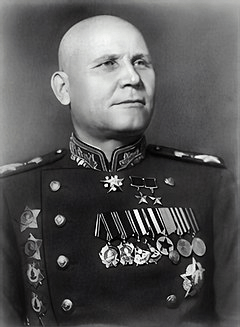
Marshal Ivan Konev
“It is we who shall take Berlin, and we will take it before the Allies.” - Six Meetings that Changed the 20th Century (2007)

Marshal Georgy Zhukov
“The longer the battle lasts the more force we'll have to use!” - A History of the Modern Age (1971)
In these opening days, one of the most critical and brutal battles was the fight for the Seelow Heights, a heavily fortified area east of Berlin that represented the last major obstacle before the city itself. Here, the Germans had constructed three formidable defensive lines bristling with trenches, anti-tank ditches, and extensive minefields. The battle raged for four long, bloody days, with the Soviets suffering heavy casualties as they threw themselves against the German defences. German guns cut down wave after wave of Soviet infantry and armour. However, still, they came on, driven by a combination of courage, desperation, and the implacable will of their commanders. Finally, on April 19, after a titanic struggle that left the ground littered with the dead and dying, the Soviets overran the last German positions on the heights, and the road to Berlin lay open.
The Battle for the City:
As the Soviet troops entered the outskirts of Berlin, they faced determined, even fanatical resistance from a hodgepodge of Wehrmacht and Waffen-SS units, Hitler Youth, and Volkssturm militia. The city had been turned into a fortress, with streets barricaded, buildings fortified, and critical intersections turned into strong points bristling with machine guns, anti-tank weapons, and panzerfaust-wielding defenders. The Soviets had to fight for every block and building in brutal, close-quarters combat, clearing out cellars and attics with grenades and flamethrowers and engaging in hand-to-hand fighting in the rubble-strewn streets.
One of the most iconic and symbolic moments of the battle came on April 30, when Soviet troops stormed the Reichstag, the historic parliament building that had been the seat of German power. The fighting was fierce and unrelenting, with the Soviets having to clear the building room by room, floor by floor, in a deadly game of cat and mouse with the die-hard German defenders. Snipers, machine guns, and booby traps took a heavy toll on the attackers, but they pressed on with grim determination. Finally, as the sun began to set on the evening of May 1, a group of Soviet soldiers managed to fight their way to the roof of the shattered building and raise the Soviet flag over the Reichstag, a red banner fluttering in the smoke-filled air. It was a moment of immense symbolic significance, signalling to the world that the heart of Nazi Germany had fallen and that the end of the war in Europe was at hand.

Soviet T-34 engaged in battle along a Berlin street

Staged Soviet photograph showing a sniper position
Meanwhile, in his dank, claustrophobic bunker deep beneath the Reich Chancellery, Adolf Hitler, the once all-powerful Führer of the Third Reich, lived out his final, desperate days. As the Soviet troops drew ever closer, the sounds of battle echoing through the concrete walls, Hitler, his mind and body ravaged by disease and despair, prepared for the end. In a hastily arranged ceremony, he married his longtime mistress Eva Braun, and then, on April 30, as Soviet soldiers fought their way into the Chancellery garden above, Hitler and Braun committed suicide, the Führer shooting himself in the head while his bride took poison. Their bodies were hastily cremated in a makeshift pyre in the Chancellery garden, a grim and ignominious end to the man who had once dreamed of conquering the world and establishing a thousand-year Reich.
Hitler’s Berlin - the rise and fall
Aftermath and Legacy:
The Battle of Berlin, which raged from April 16 to May 2, 1945, ended with the unconditional surrender of the city's remaining defenders. The once-proud capital of the Third Reich lay in ruins, its streets littered with debris and the bodies of the fallen. The human cost of this final, decisive battle had been staggering: over 80,000 Soviet soldiers were killed, and more than 250,000 were wounded in the fierce fighting. German losses, both military and civilian, numbered in the tens of thousands. The civilian population of Berlin also suffered terribly, with countless thousands killed in the crossfire or by suicide as the Red Army closed in.

Soviet soldiers celebrate the fall of Berlin

White flags flow from windows - symbolising total surrender
The fall of Berlin marked the effective end of the Third Reich. With Hitler dead by his own hand in his underground bunker and the country occupied by Allied forces, the German High Command had no choice but to agree to unconditional surrender. The final capitulation came on May 8, 1945, bringing an end to the war in Europe and the nightmare of Nazi tyranny that had plagued the continent for six long years.
The battle also had far-reaching political consequences that would shape history for decades to come. The Soviet capture of Berlin, ahead of their Western allies, gave Stalin a significant bargaining chip in the following postwar negotiations. The division of Germany and Berlin into Soviet and Western zones of occupation set the stage for the Cold War, which would dominate global politics for the next four decades. The Iron Curtain that divided Europe into communist and capitalist spheres was born in the ruins of Berlin.
Today, the Battle of Berlin stands as a warning to the immense destructive power of modern warfare and the depths of human suffering it can cause. The scale of the fighting, the devastation wrought on the city, and the sheer loss of life on all sides serve as a grim reminder of the horrors of war. At the same time, the battle also serves as a tribute to the courage and sacrifice of those who fought to end the tyranny of Nazi Germany and bring peace back to Europe. The soldiers of the Red Army, who bore the brunt of the fighting and suffered the heaviest losses, showed incredible bravery and determination in the face of fierce resistance from a fanatical enemy.

Allied victory parade July 1945
The scars of the battle can still be seen in the streets and buildings of Berlin, a city that has risen from the ashes to become a symbol of resilience and renewal. The bullet holes and shrapnel marks on the facades of old buildings, the memorials to the fallen, and the museums dedicated to the history of the war all serve as reminders of the city's painful past. But Berlin has also become a vibrant, multicultural metropolis, a hub of art, culture, and innovation that looks to the future with hope and optimism.
In the end, the legacy of the Battle of Berlin is a complex one, marked by both tragedy and triumph. It represents the end of one of the darkest chapters in human history but also the beginning of a new era of peace, democracy, and international cooperation. As we reflect on the events of those fateful days in April and May 1945, we must remember the sacrifices made by those who fought and dedicate ourselves to the cause of building a world free from the scourge of war.
Conclusion:
Clearing the ravished streets of Berlin
The Battle of Berlin was the final cataclysmic act in the European theatre of World War II. It pitted the full might of the Soviet war machine against the fanatical but crumbling defences of the Third Reich in a struggle for the very heart of Germany. The battle left the city in ruins and cost tens of thousands of lives, but it also brought an end to the Nazi regime and its dreams of conquest and racial supremacy. Today, as we mark the 75th anniversary of this historic event, we remember the courage and sacrifice of those who fought and died in the battle, and we renew our commitment to building a world of peace and understanding.
The article was written by Matthew Menneke.
Matt is the founder and guide of 'On the Front Tours', offering military history tours in Berlin. Born in Melbourne, Australia, Matt's passion for history led him to serve in the Australian Army Reserve for eight years. With a degree in International Politics and a successful sales career, he discovered his love for guiding while working as a tour guide in Australia. Since moving to Berlin in 2015, Matt has combined his enthusiasm for history and guiding by creating immersive tours that bring the past to life for his guests.
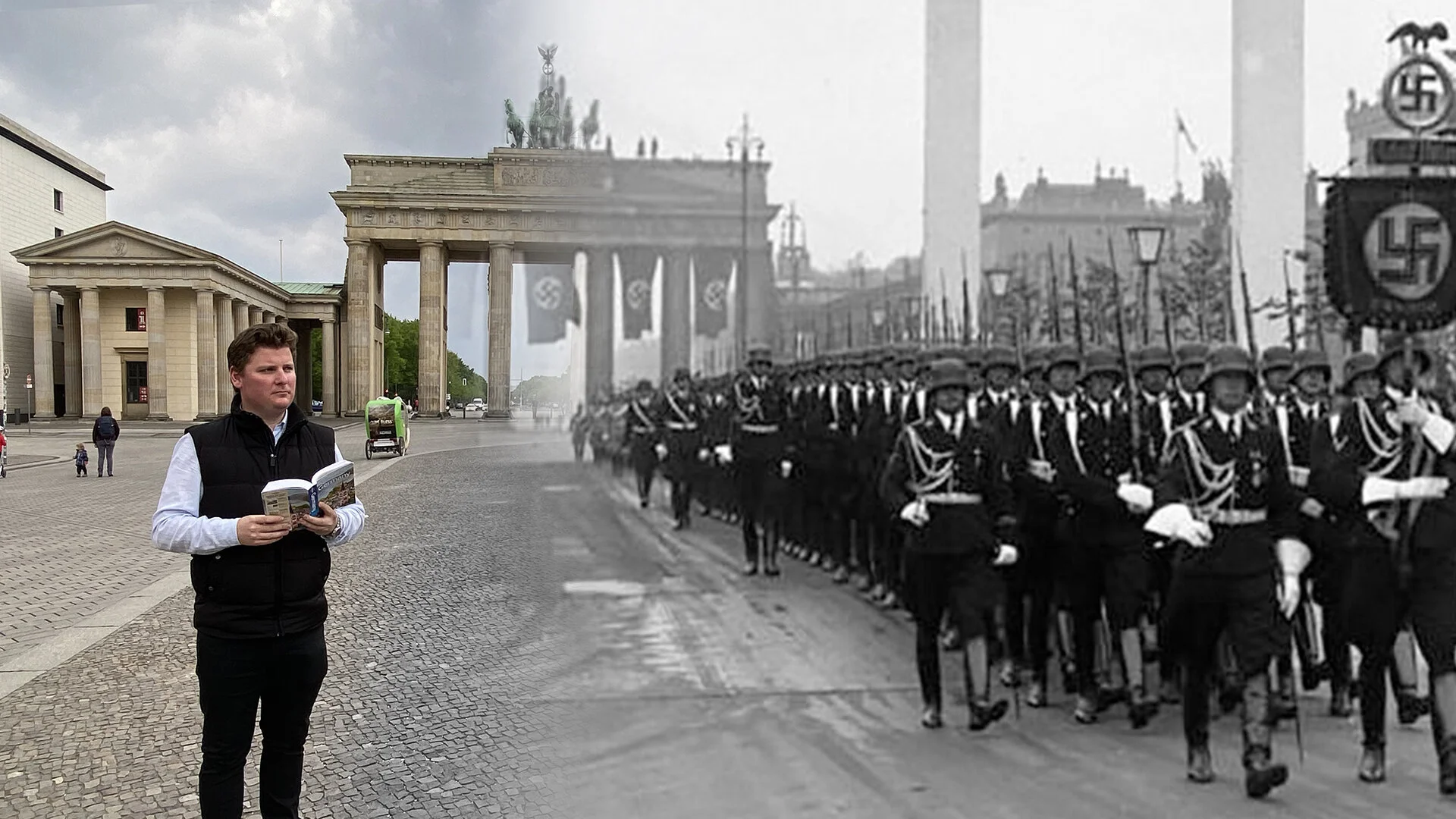
Reichstag: Among Top 10 WWII Sites to Visit in Berlin — On the Front Tours
Top 10 WWII Sites in Berlin: History, Memorials & Must-See Locations
Welcome to the On the Front blog, where we discuss all things WW2.
In this blog, I provide a breakdown of my top 10 World War II sites that everyone should see when visiting Berlin. Now I know what you are thinking: there is a lot of history in Berlin, and you are right, so for this list I based my decision on 3 main criteria:
First: These sites are significant for both History buffs and those just wanting to learn more about the Second World War
Second: These sites tell the story of the Nazi Party's rise and fall
Third: They are all within walking distance of each other
Introduction: Berlin at the Crossroads of History
Berlin stands as a city shaped by the tides of history, its streets and buildings bearing witness to both moments of brilliance and times of darkness. As the capital of Germany, Berlin played a pivotal role during the rise of the Nazi regime and throughout World War II. The city’s legacy is marked by cultural achievements and intellectual vibrancy but also by the scars of war, destruction, and oppression. Among the most notorious episodes in Berlin’s history are the Nazi book burnings of 1933, when university students and professors gathered to destroy books written by Jewish authors and other works labelled as “un-German”. These book burnings were more than just the destruction of written materials—they were a symbolic act of political and cultural opposition, signalling the start of a new era of state censorship in Nazi Germany. Today, Berlin’s history serves as a powerful reminder of the dangers of intolerance and the importance of safeguarding freedom of expression
The Reichstag
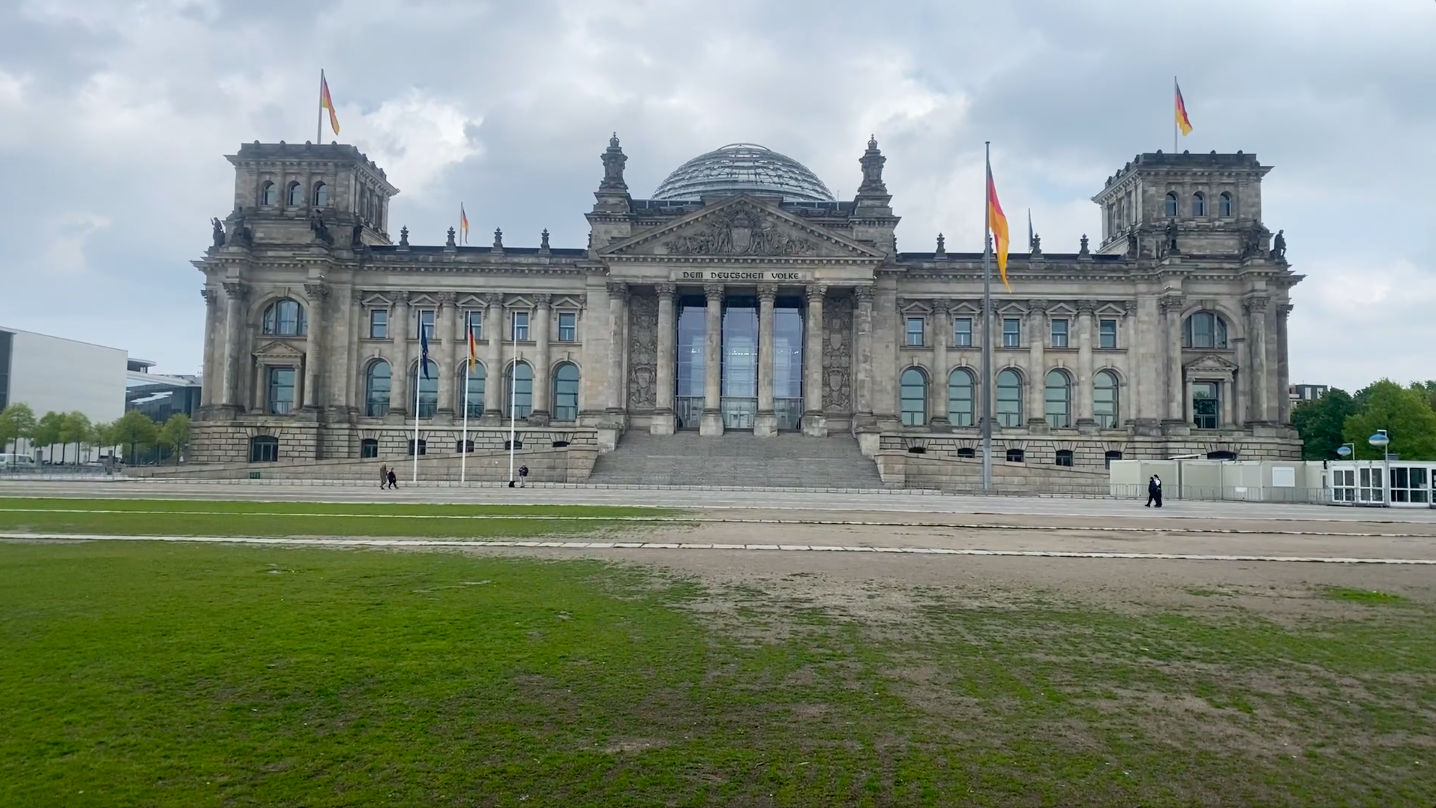
Commissioned in 1871 by Otto von Bismarck, the Reichstag was a symbol of the political unification of Germany, uniting the German-speaking states, with the exception of Austria, to form the German Empire.
The Reichstag, though, was not important to the Nazis, as it was left as a ruin after being destroyed by fire on the 27th of February 1933. Although the building itself was not important, the Nazis were able to capitalise on the fire and bring about sweeping reforms to solidify their hold on power. The Nazis used the Reichstag fire as a pretext to suppress political opposition, targeting dissenters and consolidating their control.
Fast forward 12 years, and you have the Soviets knocking on the door of Berlin. Seen symbolically as the crowning jewel for the Soviets, the Red Army fought bitterly to take the building, capturing the site on April 30th, 1945. The scars from the battle can still be seen in the façade today, although great effort has been made to patch the damage.
After the war, the Reichstag was left as a ruin until the collapse of the Soviet Union and Germany’s reunification in 1991. Extensive renovation was needed before the site officially reopened again as the German Parliament in 1999, once again reunifying the country politically.
The Brandenburg Gate

Undoubtedly, the national symbol for Germany, the Brandenburg Gate, was constructed in 1791. The Brandenburg Gate in many ways became the focal point of much of Nazi propaganda and celebrations, perhaps none more spectacular than Hitler's 50th birthday celebration. The streets were lined with National Socialist flags and pillars adorned with the swastika and the Nazi eagle.
The Brandenburg Gate today, however, represents a very different message. One of unity and freedom, not just for Germany but I think also for wider Europe and even the world. The symbolism has evolved over time, shifting from a political symbol to a symbol of unity following the fall of the Berlin Wall.
New Guardhouse

Constructed in 1813 in commemoration of the War of Liberation against Napoleon. In 1931, the New Guardhouse became a monument to the fallen German soldiers of the First World War under President Hindenburg and was used extensively by the Nazis for parades and to highlight German victimisation after the war under the unpopular Treaty of Versailles. Regular changing of the guard ceremonies would also take place, attracting large crowds.
After the Second World War, the monument was converted to a memorial to the Victims of Fascism and Militarism under the German Democratic Republic (GDR). The remains of an unknown soldier and concentration camp victim were interred under an eternal flame, surrounded by soil from taken battlefields and concentration camps.
Rededicated in 1993, the remains still lie in the monument under the statue of the “Mother”. The Käthe Kollwitz sculpture in the centre of the monument depicts a “mother” embracing her dead son, helpless and turned to stone in silent pain.
The monument is a moving sight in the middle of this busy city and stands as Germany's central memorial for the victims of war and tyranny.
The burning of the books

On 10 May 1933, German students and student leaders, particularly from university towns across Germany, gathered at Bebelplatz, adjacent to the historic and prestigious Humboldt University. These student leaders, acting in a nationwide action “against the un-German spirit,” organised the book burnings, not as a direct order from the Nazi Party, but through their own initiative and the involvement of local chapters. Students burned upwards of 25,000 volumes of books that were deemed “un-German.” The book burnings took place in many university towns, notably Berlin, with local chapters sometimes choosing different dates for their events based on local chapter preference—some aligning with the traditional date of the summer solstice for such bonfire celebrations.
During these events, students threw books onto the bonfires as part of scripted rituals, often performing the Nazi salute and following the lead of high Nazi officials present at the ceremonies. Radio broadcast time was carefully scheduled, and radio broadcasts brought the speeches, propaganda songs, and ceremonial chants to countless German listeners across the country. The books that student leaders burned included works by Jewish authors, socialists, critics of fascism, and other writers, such as Albert Einstein, Sigmund Freud, and Ernest Hemingway, among many others. This deliberate destruction of literature represents an attempt to erase foreign influences, Jewish intellectualism, and other forms of dissent from German culture. The phrase “wo man Bücher verbrennt” (“where they burn books”) became a chilling symbol of this cultural purge, echoing the warning in Heine’s famous quote. The book burnings were seen as an ominous sign of the regime’s broader intent to suppress intellectual freedom, using the public context of these events to send a message of cultural purification and the creation of the “future German man” moulded by Nazi ideals. The campaign also targeted the German language and national language, aiming to purify them from perceived corruption and non-Aryan elements. The evil spirit of past ideas and philosophies was invoked as justification for this literary purge, as the regime sought to overwrite Germany’s intellectual heritage.
The monument today depicts a sunken library showing what is missing with the ominous quote from Heinrich Heine:
“That was but a prelude; where they burn books, they will ultimately burn people as well.” - Heinrich Heine
The Nazi book burnings were not isolated incidents but rather a key part of the Nazi regime’s broader campaign to reshape German society according to their ideology. In the years leading up to World War II, the Nazis sought to eliminate dissent and enforce traditional German values by targeting any ideas or works they considered “un-German”. This literary purge was accompanied by widespread newspaper coverage and orchestrated radio broadcasts, which brought the Nazi message into countless German homes. The regime’s efforts extended far beyond burning books—they also persecuted Jewish authors, intellectuals, and anyone whose views did not align with Nazi ideology, destroying other written materials and silencing opposition. Institutions like the US Holocaust Memorial Museum offer further information on the significance of these events, helping us understand how the Nazi book burnings fit into the larger context of cultural control and propaganda in Germany during this era. The campaign to synchronise German culture was a crucial step in the Nazis’ path to power, setting the stage for the horrors of World War II.
Soviet memorial - Tiergarten

The overwhelming early success of the German Wehrmacht, aided by the use of Blitzkrieg tactics, enabled the German Army to conquer all of Western mainland Europe in just two years. Overconfident, Hitler now turns his attention to the east to defeat what he saw as the real enemy of National Socialism, the Soviet Union. Operation Barbarossa, launched on June 22nd, 1941, was the largest land invasion the world had ever seen. Expecting the Soviet Army to collapse, a quick victory was anticipated by Christmas.
The invasion would ultimately be their undoing. We cannot underestimate the brutality of the fighting in Eastern Europe, with Stalingrad serving as the turning point for the Soviets in 1942.
Three years later, on April 20th, 1945, the Soviet Red Army reached the outer city limits. The ensuing battle would be one of the bloodiest during the war, resulting in over 80,000 Soviets killed, 2,000 of whom are buried in the grounds. The Soviets quickly erected the memorial following Germany's surrender, using recycled material from Hitler's Reich Chancellery and the surrounding political buildings. Battle scars can still be seen in the moment from the recycled stone used in the construction.
Built in the British sector of Berlin, the move was initially welcomed until the construction of the Berlin Wall in 1961, after which it quickly became seen as a sign of communist provocation. Soviet Honour Guards were used to protect the monument from vandalism, but as tensions rose, the British government was forced to intervene and station British soldiers here as well to protect the monument from protestors.
Memorial to the murdered Jews of Europe
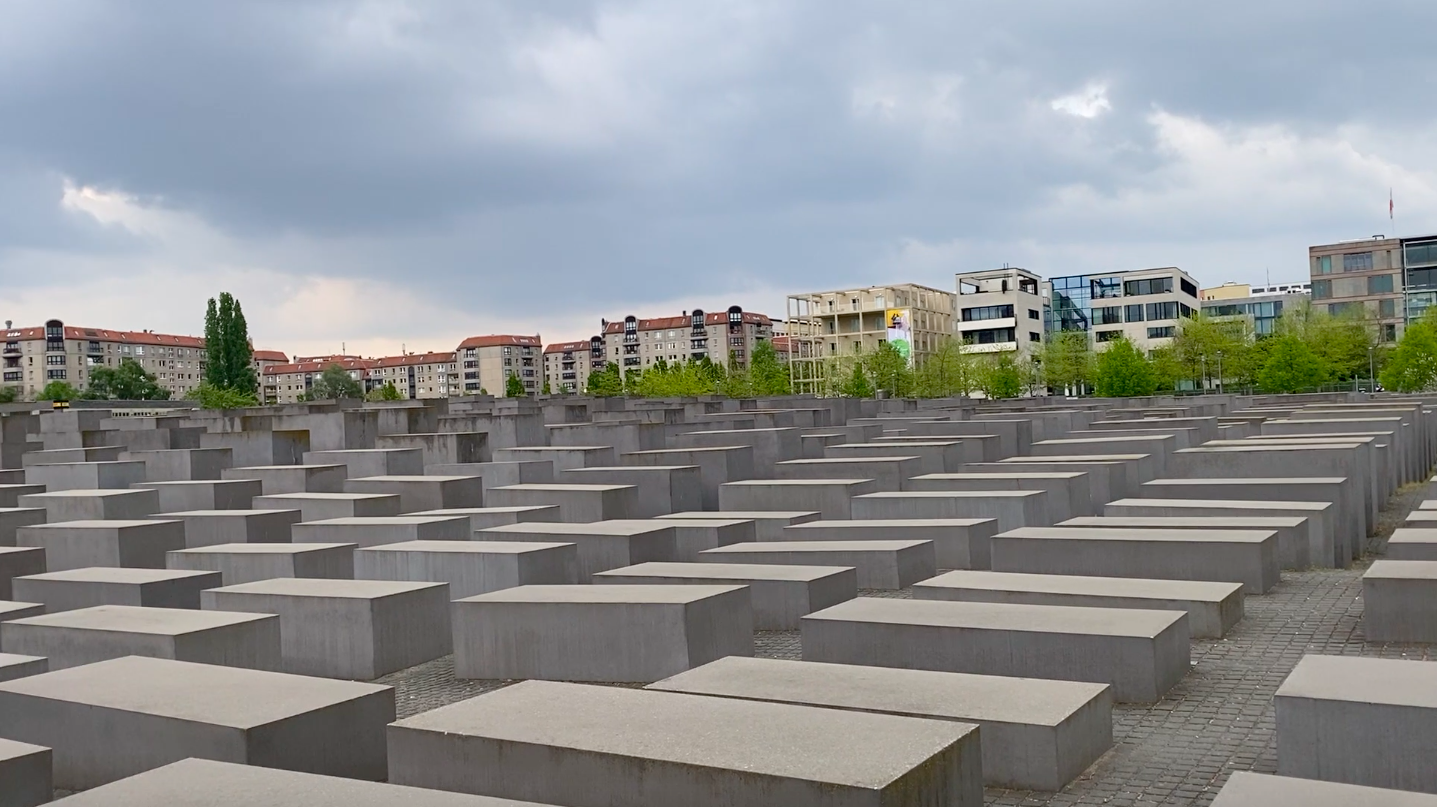
Located in the heart of Berlin, the memorial serves as a striking place of remembrance. Designed by New York architect Peter Eisenmann in 2005, there is no official explanation, making the memorial unique.
Open on all four sides, the space features 2,711 concrete blocks of varying sizes. The memorial slopes inward on uneven ground in an almost wave-like fashion, giving visitors a feeling of instability or uncertainty.
What I think makes this monument so special is that, as no official explanation has been provided, it is up to the visitor to develop their own understanding through interaction with the space. This, in my opinion, creates a much longer-lasting impression on the visitor. Located in close proximity are also the memorials to the murdered homosexuals and the Roma and Sinti, two further groups persecuted by the Nazis.
The Führerbunker / Hitler’s Bunker
Located underneath what was the Reich Chancellery, Hitler's main office, was the Führerbunker. Construction first began in 1936, with an added phase of construction being completed in 1944.
Hitler moved into the bunker complex on the 16th of January 1945, along with his senior staff. Seldom leaving the safety of the bunker, he expected to attend military conferences in the undamaged sections of the Reich Chancellery or to walk his dog Blondi in the gardens. Hitler made his last trip to the surface on his 56th birthday, April 20, 1945, where he awarded the Iron Cross to boy soldiers fighting in the Hitler Youth.
In the days that followed, the situation in the bunker became desperate, with Hitler's ramblings of wonder weapons and moving fictitious army units with dreams of launching counterattacks to win the war becoming more and more delusional.
As the Soviet Army drew closer, Hitler accepted his time was up and, as an acknowledgement of her loyalty, would marry his long-time mistress, Eva Braun, in a civil ceremony on April 29th. Early the next morning, on the 30th of April, both Hitler and Eva would commit suicide. Hitler was adamant he did not want their bodies discovered out of fear they would be paraded through the streets and tasked his remaining loyal staff to have his and Eva's bodies incinerated. According to survivor testimony, the bodies wrapped in blankets were placed in a bomb crater and subsequently cremated—Hitler's remains have never been discovered.
Ministry for Aviation

At the time of its completion in 1936, in time for the Berlin Olympic Games, the Ministry for Aviation was the largest office building in Europe. Designed by architect Ernst Sagebiel, the building is the typical expression of National Socialist intimidation architecture, as its size and grandeur dominate the landscape.
The ministry, under the command of Hermann Goering, had a sole purpose: to support the Luftwaffe (the German Air Force) with aircraft and to design and develop new aviation technologies. The Luftwaffe was a key component of the German military and instrumental in the early success of the German Wehrmacht during World War II. Consequently, high-profile military parades took place in the streets. The ministry collapsed in 1945 due to severe shortages of fuel and material in the late stages of the war.
The building survived the war in remarkably good condition, suffering only minor damage. After the war, the building would serve as the headquarters of the Council of Ministers of the East German Government. Currently, it serves as the German Tax Office.
The Topography of Terror

A site of remembrance today, the Topography of Terror was the location of the SS headquarters under the command of Heinrich Himmler. The building complex housed the SS central command, the Gestapo, and the SS security service. The SS was the primary instrument of terror used by the Nazis to persecute their victims. The site consisted of several buildings, most notably the first-class Prinz Albrecht Hotel, which was commandeered by the SS in 1934. Combined, this location became a ‘house prison' to interrogate, torture, and execute prisoners.
In total, the Gestapo arrested more than 15,000 opponents to the Nazi regime. Who were such opponents? Anyone who dared speak against the Nazi Party: politicians, students, and protestors. Including those who neighbours and friends turned in for simply speaking ill of the Nazi party at home or at social engagements.
All that remains of the site today is the basement where prisoners were interrogated and tortured before being sent to concentration camps. A section of the Berlin Wall above is also managed by the exhibition and was not destroyed during reunification. These two sites combined serve as a warning to the world of what can happen if power is left unchecked. The ruins below represent the consequences of the Nazi Party and top the failures of Soviet communism.
Also on the site is the Topography of Terror exhibition. A fantastic museum that is free to visit, and if you're anything like me and enjoy reading everything, it will take you 3-4 hours to get through.
Anhalter Bahnhof
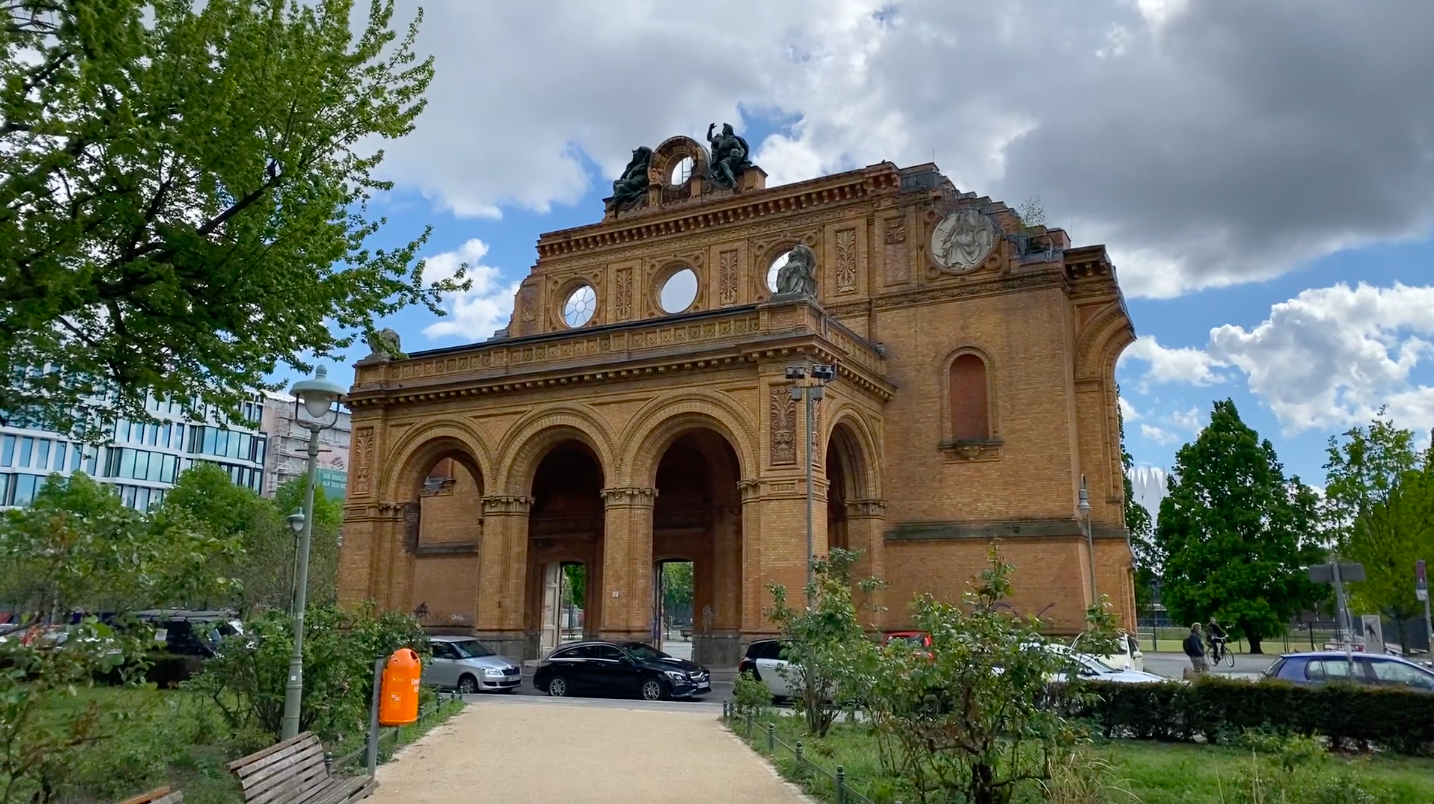
A relatively hidden site, Anhalter Bahnhof is one of the best places to get up close to the ruins of Hitler's Third Reich. Constructed in 1841, Anhalter Bahnhof was Berlin's largest and most opulent train station. With 44,000 passengers passing through the station each day. Badly damaged by Allied bombings, we have been left with the front façade of the station today. This fragment of Anhalter Bahnhof stands as a memorial to the Jewish community in Berlin, as Anhalter Bahnhof was 1 of 3 stations used in Berlin to deport some 55,000 Jews from the city.
In total, 9,500 Jews passed through the doors here in small groups of 50–100. Loaded onto specially marked passenger carriages, so as not to arouse suspicion. They were then transported to Theresienstadt in Nazi-occupied Czechoslovakia and from there to concentration camps.
The modern Anhalter Bahnhof exists today as part of an underground section of the S-Bahn, Berlin's train system. If you follow my top ten list here, it is a great place to end, as the train connection here can take you directly to central Berlin.
The Human Cost: Impact of the War on Berliners
For the people of Berlin, the Nazi regime’s policies—including the infamous book burnings—ushered in a period of fear, repression, and unimaginable loss. Jewish authors, intellectuals, and countless others found themselves targeted, their works destroyed, and their lives upended. The trauma of these events rippled through the city, as tens of thousands were forced to flee, imprisoned, or ultimately murdered. The book burnings were a chilling prelude to the violence that would follow, marking the beginning of a campaign that would devastate Berlin’s vibrant cultural life and lead to the deaths of so many. Today, the city honours the memory of the murdered Jews and all those who suffered under the Nazi regime through powerful memorials and museums. The Memorial to the Murdered Jews of Europe stands in the heart of Berlin as a stark reminder of the human cost of intolerance and the enduring need to remember the victims of the Holocaust.
Preserving Memory: How Berlin Honours Its WWII Legacy
Today, Berlin is deeply committed to confronting its past and ensuring that the lessons of history are not forgotten. The city is home to a wealth of museums, memorials, and historical sites, such as the Holocaust Memorial, the German History Museum, and the Berlin Wall Memorial, each offering insight into the city’s complex journey through the twentieth century. Beyond these physical spaces, Berlin invests in educational programs, cultural events, and commissioned articles that encourage reflection and dialogue about its history. In our digital age, preserving memory has become even more vital, as new generations access history through both traditional and digital means. The city’s dedication to remembrance is a testament to the importance of promoting tolerance and human rights. The words of Heinrich Heine—“Where one burns books, one will soon burn people”—echo through Berlin’s memorials, serving as a powerful warning against the dangers of censorship, oppression, and forgetting the past.
Conclusion
So that is my top 10 WW2 sites in Berlin. Please let me know your thoughts in the comments below if you agree with my list or if there are any other sites you think I should have included.
If you are interested in learning how to access these sites, please download the printable reader below.
Thank you for reading, and I'll see you next time, On the Front.
This article was written by Matthew Menneke.
Matt is the founder and guide of 'On the Front Tours', offering military history tours in Berlin. Born in Melbourne, Australia, Matt's passion for history led him to serve in the Australian Army Reserve for eight years. With a degree in International Politics and a successful sales career, he discovered his love for guiding while working as a tour guide in Australia. Since moving to Berlin in 2015, Matt has combined his enthusiasm for history and guiding by creating immersive tours that bring the past to life for his guests.